Under 17
Structure of the Supreme Court
The Supreme Court of India is the highest judicial authority in the country. It protects the Constitution, safeguards fundamental rights, and serves as the final court of appeal for legal disputes.
Overview
The Supreme Court is the apex judicial institution in India and is located in New Delhi. It serves as the final court of appeal and plays a crucial role in interpreting the Constitution and protecting citizens’ rights. The Court resolves disputes between individuals, governments, and institutions while ensuring that laws are applied fairly and consistently across the country.
Key Points
- Chief Justice of India (CJI): Head of the Supreme Court and its administration
- Supreme Court Judges: Appointed by the President to hear and decide cases
- Constitution Benches: Five or more judges hear major constitutional matters
- Division Benches: Two or three judges hear regular appeals and disputes
- Registry: Manages filing, listing, and procedural work
- Jurisdiction: Original, Appellate, Advisory, and Writ Jurisdiction
Legal Analysis
The structure of the Supreme Court allows it to handle a wide variety of constitutional and legal matters efficiently. Different bench compositions ensure that important constitutional issues receive greater judicial scrutiny.As the guardian of the Constitution, the Court acts as a check on the powers of both the legislature and the executive. Through judicial review, it can invalidate laws that violate constitutional principles.
However, the Court faces significant challenges including case backlogs, delays in hearings, and increasing litigation. These issues can affect access to timely justice.Judicial reforms, improved case management, and technological advancements remain important for reducing pendency and improving efficiency.
Examples
Kesavananda Bharati Case (1973): Established the Basic Structure Doctrine of the Constitution.
Ayodhya Judgment (2019): Constitution Bench resolved a long-standing land dispute.
Maneka Gandhi Case (1978): Expanded the interpretation of the Right to Life and Personal Liberty.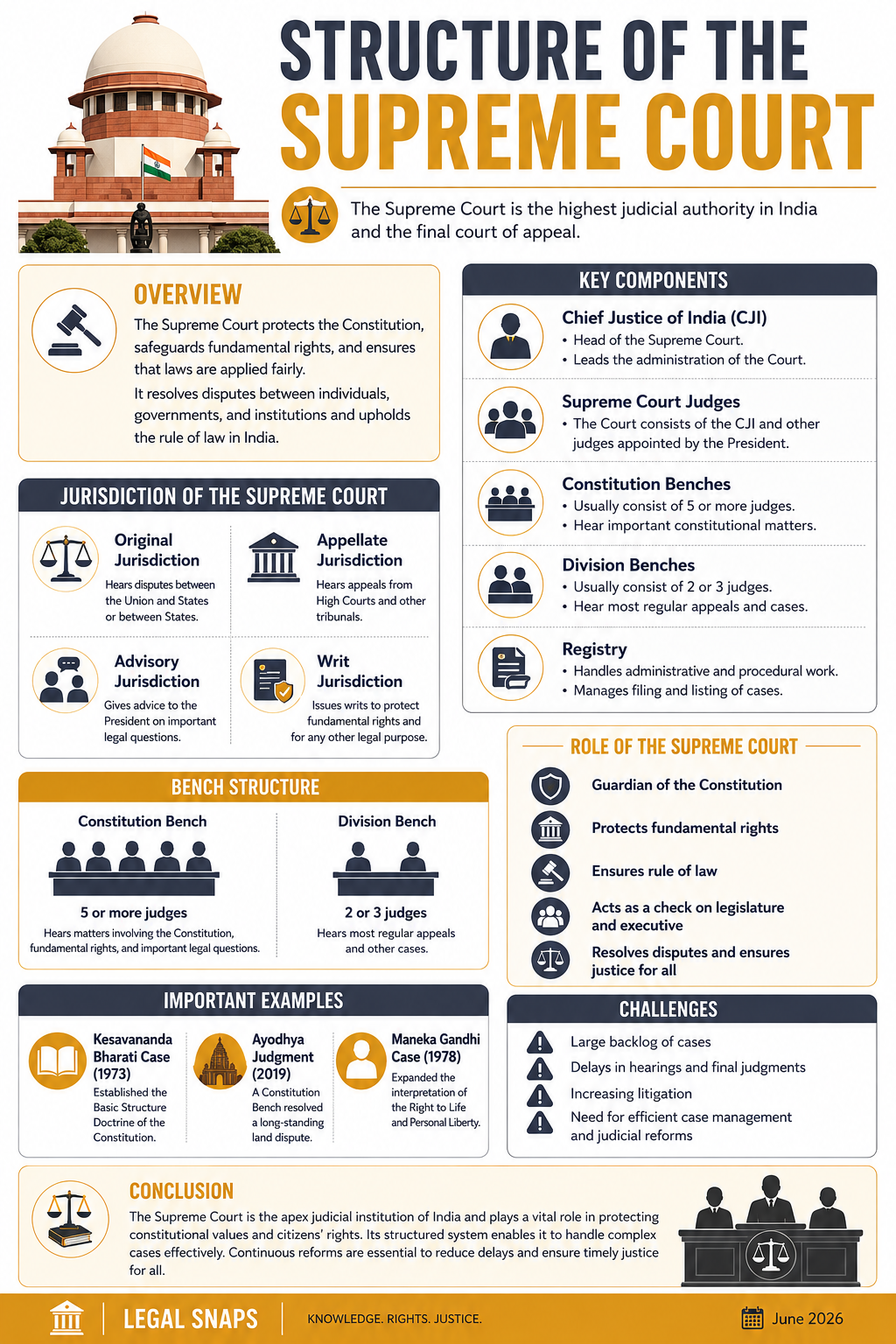
Conclusion
The Supreme Court is the highest judicial authority in India and plays a vital role in protecting constitutional values, democratic principles, and citizens’ rights.Its structured system of judges, benches, and administrative bodies enables it to handle complex legal matters effectively. Continuous reforms and efficient case management are essential to ensure timely justice and strengthen public trust in the judiciary.
“`