Under 17
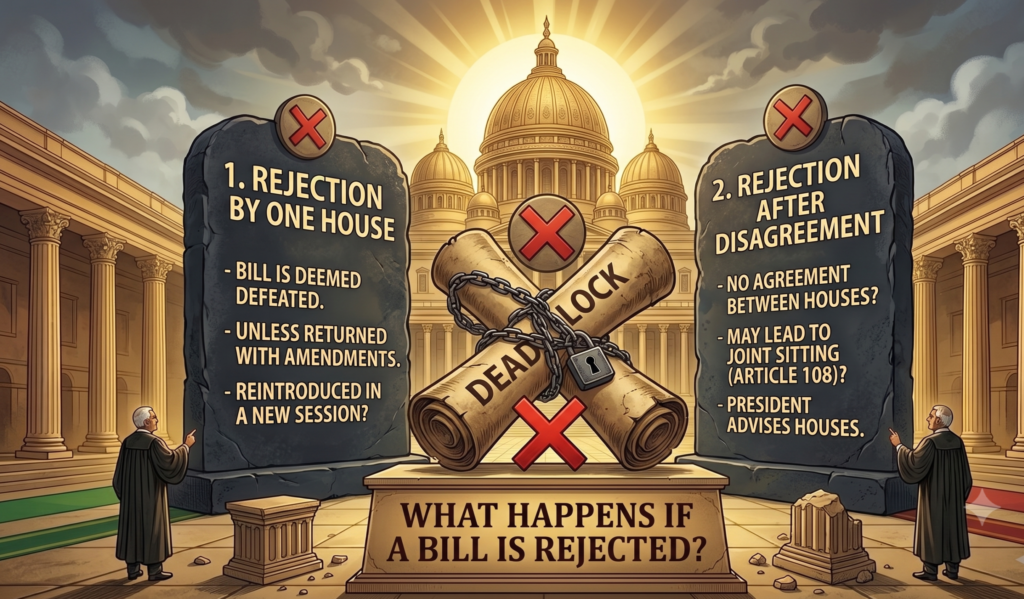
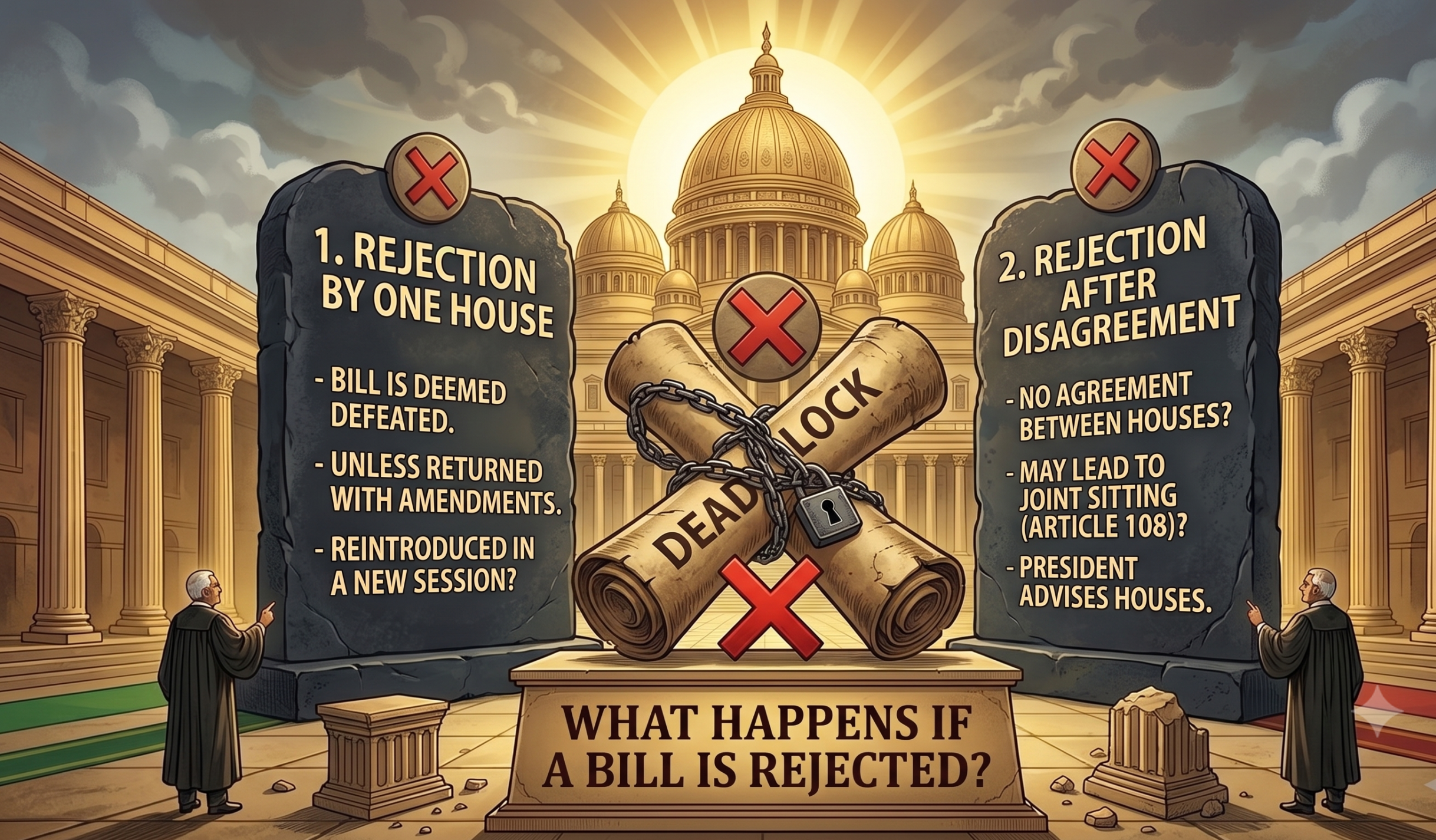
What Happens if a Bill is Rejected?
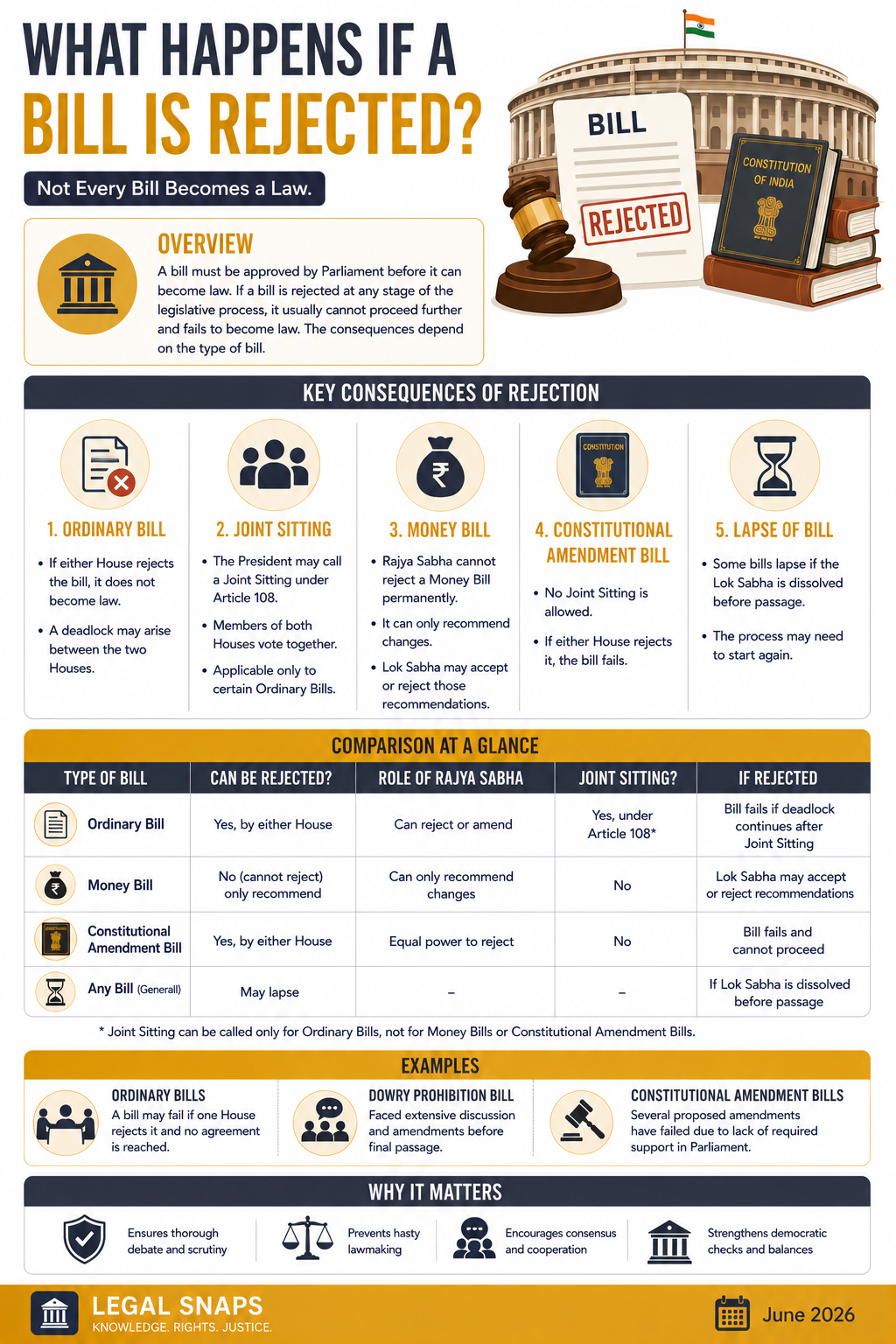
Not every bill introduced in Parliament becomes law. If a bill is rejected during the legislative process, it may fail completely or trigger special constitutional procedures depending on the type of bill involved.
Overview
For a bill to become law, it must successfully pass through the required stages of the parliamentary process. If it is rejected by Parliament, it generally cannot become law unless a constitutional mechanism exists to resolve the disagreement.The consequences of rejection differ for Ordinary Bills, Money Bills, and Constitutional Amendment Bills. These differences reflect the constitutional importance of each category of legislation.
Key Points
- Ordinary Bill: May fail if either House rejects it
- Joint Sitting: Deadlock can be resolved under Article 108
- Money Bill: Rajya Sabha cannot permanently block it
- Constitutional Amendment Bill: Must pass both Houses separately
- No Joint Sitting: Not available for Constitutional Amendment Bills
- Bill Lapses: Some bills lapse upon Lok Sabha dissolution
Legal Analysis
The power to reject legislation is an important democratic safeguard. It ensures that proposed laws undergo proper scrutiny and receive adequate support before becoming legally binding.For Ordinary Bills, disagreements between Lok Sabha and Rajya Sabha may create a legislative deadlock. In such situations, the Constitution allows a Joint Sitting of both Houses to resolve the dispute.
Money Bills follow a different procedure because the Constitution gives Lok Sabha greater authority over financial matters. Rajya Sabha may suggest changes but cannot permanently block a Money Bill.Constitutional Amendment Bills face the strictest requirements. Since they affect the Constitution itself, approval by both Houses is mandatory and no Joint Sitting mechanism exists if either House rejects the proposal.
Examples
Ordinary Bills: May fail if both Houses cannot reach agreement.
Constitutional Amendment Bills: Several proposed amendments have failed due to insufficient parliamentary support.
Joint Sitting Cases: Used in rare situations to resolve legislative deadlocks between the two Houses.
Conclusion
The rejection of a bill is an essential part of the democratic law-making process. It prevents legislation from being enacted without sufficient debate, scrutiny, and support.While rejection may slow legislative action, it strengthens accountability and ensures that important laws receive proper consideration before affecting citizens and institutions. The constitutional safeguards surrounding rejected bills help maintain balance within India’s parliamentary democracy.
“`