Under 17
Role of MLAs in governance
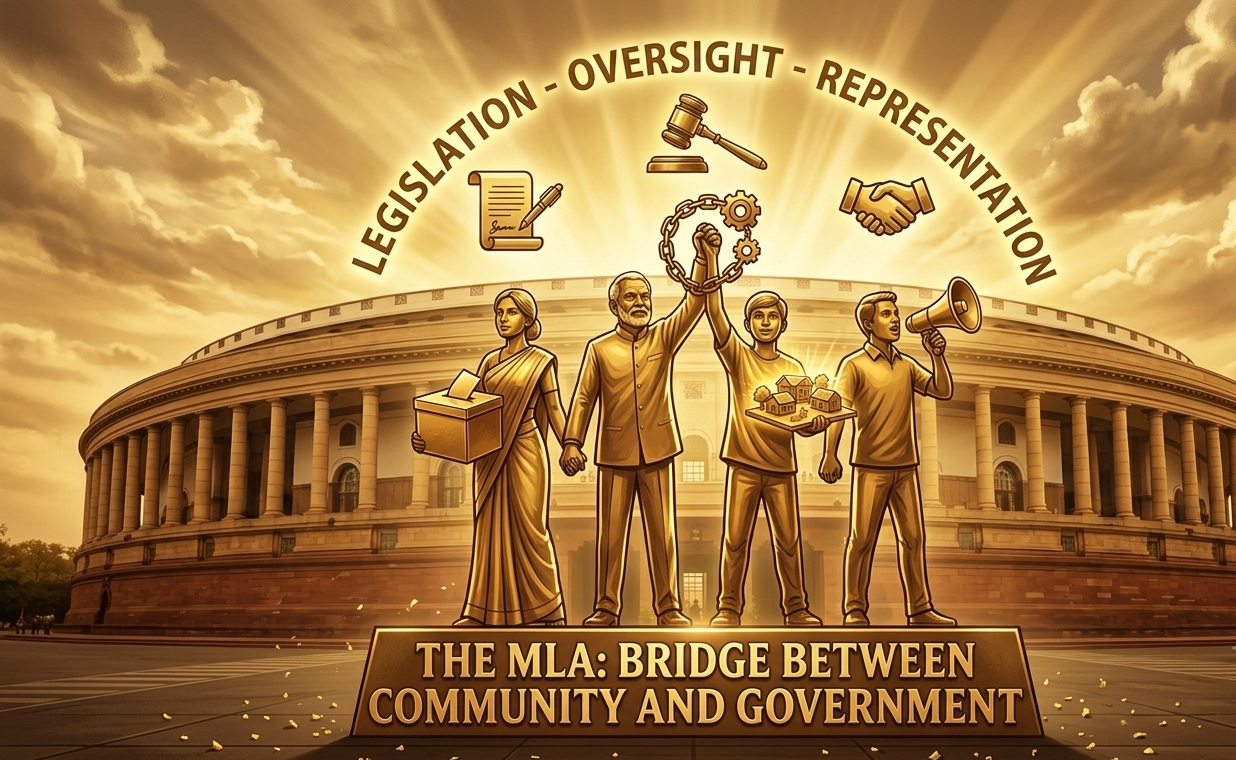
Members of the Legislative Assembly (MLAs) are elected representatives who connect citizens with the state government. They make laws, raise public issues, oversee government actions, and help ensure effective governance.
Overview
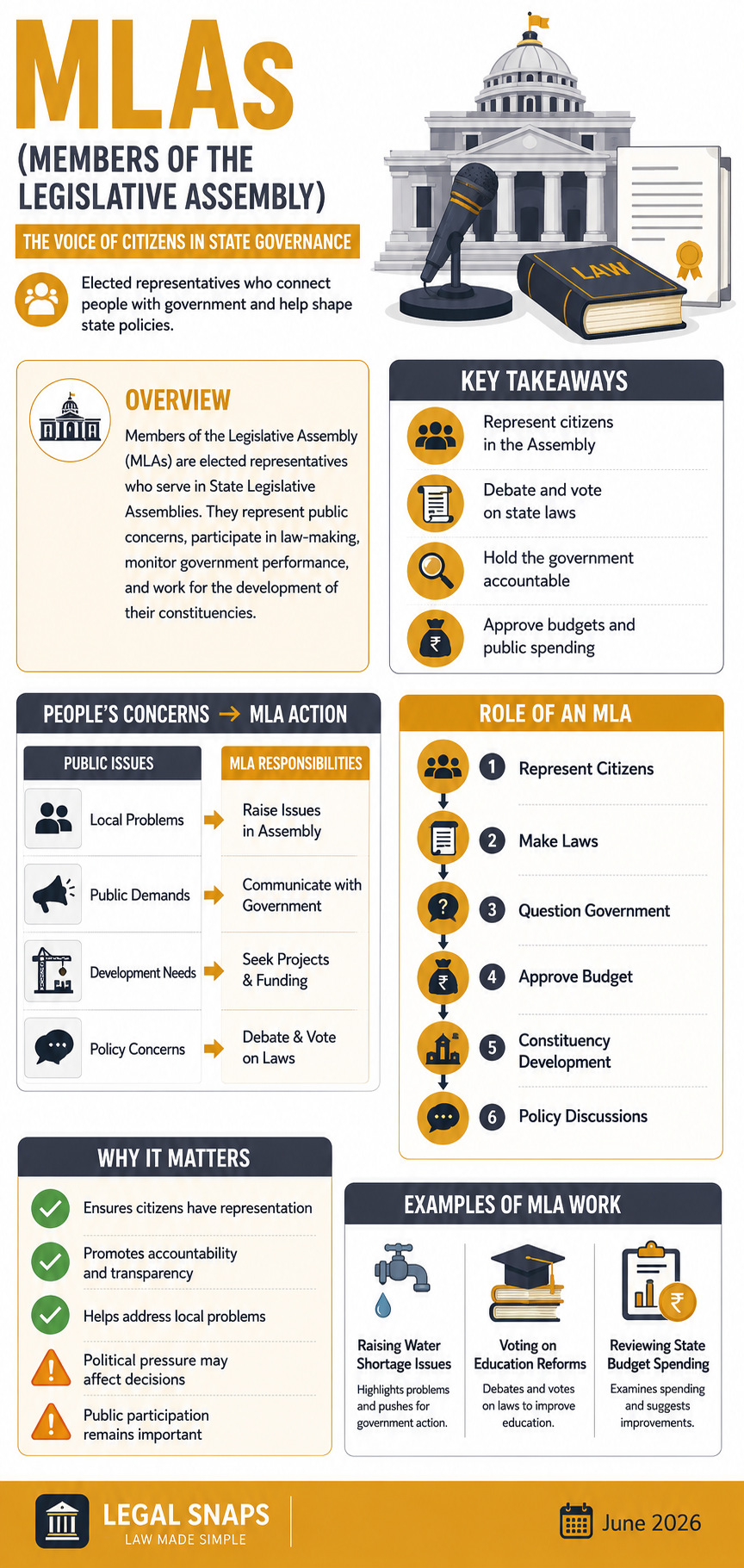
Members of the Legislative Assembly (MLAs) are elected representatives who serve in a State Legislative Assembly. They act as a link between the people and the government by representing public concerns and interests.MLAs play an important role in making state laws, discussing public issues, and monitoring government activities. Through debates, voting, and constituency work, they contribute to democratic governance and accountability.
Key Points
- Represent Citizens: Raise public concerns and local issues in the Assembly
- Make Laws: Introduce, discuss, and vote on bills
- Monitor Government: Question decisions and review policy implementation
- Approve Budget: Discuss state finances and government spending
- Constituency Development: Address local needs and welfare initiatives
- Policy Discussion: Participate in debates on important state matters
Legal Analysis
MLAs are essential for ensuring that citizens’ voices are represented in government decision-making. Their role helps maintain accountability, transparency, and responsiveness within the state administration.Effective MLAs can highlight local challenges, influence policy decisions, and ensure that government programs address the needs of their constituencies.
However, political pressure, party loyalty, limited resources, and low public engagement can sometimes reduce their effectiveness. In certain situations, political interests may overshadow public welfare.The effectiveness of the legislative system ultimately depends on responsible representatives, informed citizens, and strong democratic institutions.
Examples
Raising Public Issues: An MLA highlights water shortages and seeks government intervention.
Passing State Laws: MLAs debate and vote on education, healthcare, and welfare reforms.
Budget Discussions: MLAs review government spending and suggest financial improvements.
Conclusion
MLAs play a vital role in state governance by representing citizens, making laws, and holding the government accountable.When MLAs perform their responsibilities effectively, governance becomes more transparent, responsive, and citizen-focused. Active public participation and accountability are essential for strengthening democratic institutions and ensuring better governance outcomes.
“`