Under 17
How Courts Are Established in India
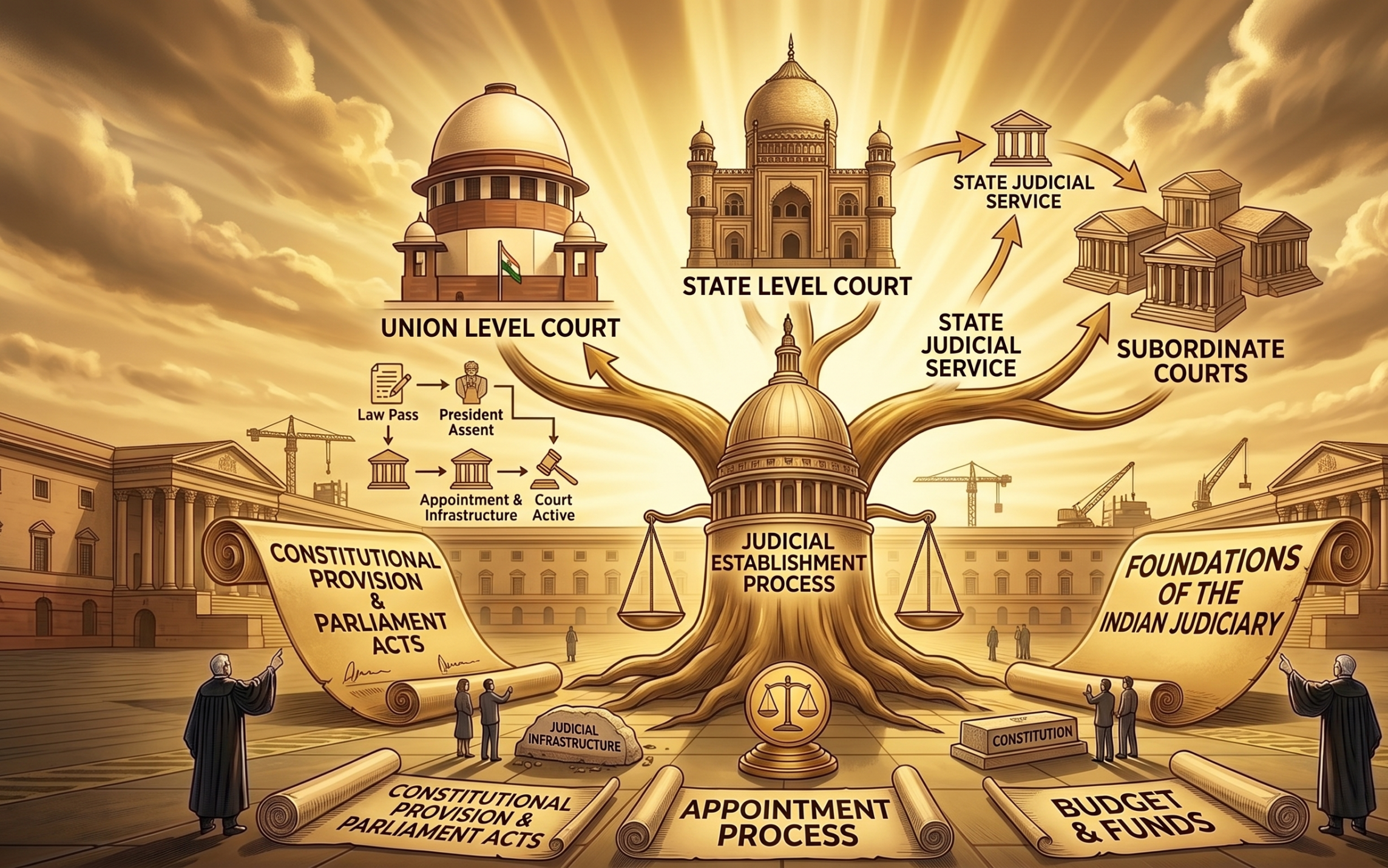
Courts in India are established through constitutional provisions and legislation to ensure justice at national, state, and local levels. Their structured hierarchy helps protect rights, resolve disputes, and uphold the rule of law.
Overview
India’s judicial system is organized through a hierarchical structure created under the Constitution and various laws enacted by Parliament and State Legislatures. The system ensures access to justice throughout the country.At the top is the Supreme Court, followed by High Courts and subordinate courts. Together, these institutions protect rights, interpret laws, and maintain constitutional governance.
Key Points
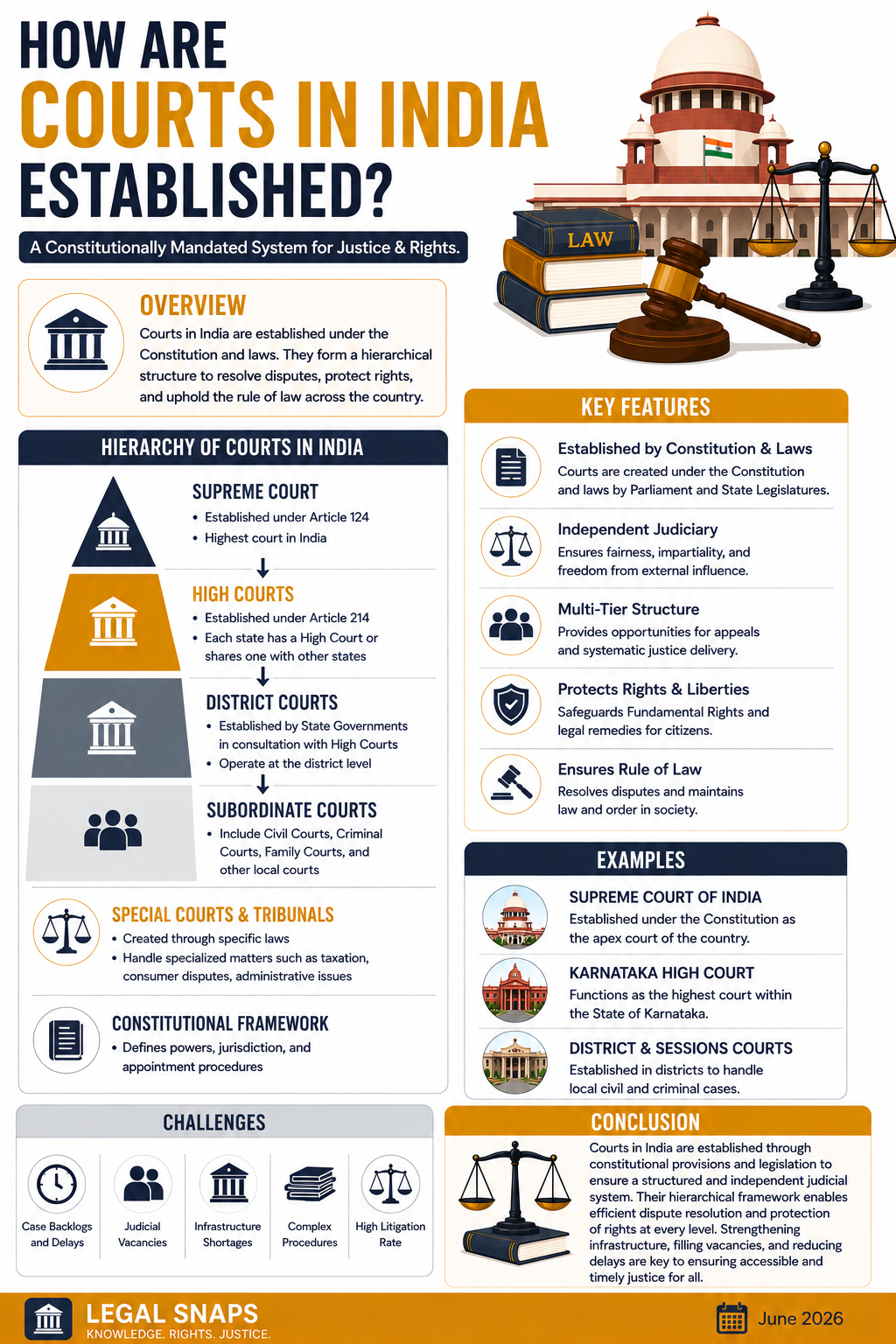
- Supreme Court: Established under Article 124 of the Constitution
- High Courts: Established under Article 214 for states and union territories
- District Courts: Operate at the district level under High Court supervision
- Subordinate Courts: Civil, Criminal, Family, and local courts
- Special Courts & Tribunals: Handle specialized legal matters
- Constitutional Framework: Defines powers, jurisdiction, and appointments
Legal Analysis
The Indian judicial system is designed to provide justice at multiple levels, ensuring that citizens can access courts close to their location while retaining the right to appeal higher judicial authorities.The Constitution safeguards judicial independence by clearly defining the structure, powers, and functions of courts. This helps maintain impartiality and public confidence in the justice system.
The multi-tier system also allows legal disputes to be reviewed through appellate mechanisms, reducing the risk of judicial errors and promoting consistency in legal interpretation.Despite its strengths, the judiciary faces challenges such as case backlogs, judicial vacancies, and infrastructure limitations. Judicial reforms and modernization efforts remain essential for improving efficiency and access to justice.
Examples
Supreme Court of India: Apex judicial institution established under the Constitution.
Karnataka High Court: Highest court within the State of Karnataka.
District & Sessions Courts: Handle local civil and criminal matters at the district level.
Conclusion
Courts in India are established through constitutional provisions and legislation to ensure a structured and accessible system of justice.Their hierarchical organization supports effective dispute resolution, protection of rights, and constitutional governance. Strengthening judicial infrastructure and reducing delays remain important for improving the overall effectiveness of the justice system.
“`