Under 17
Can a High Court Decision Be Challenged?
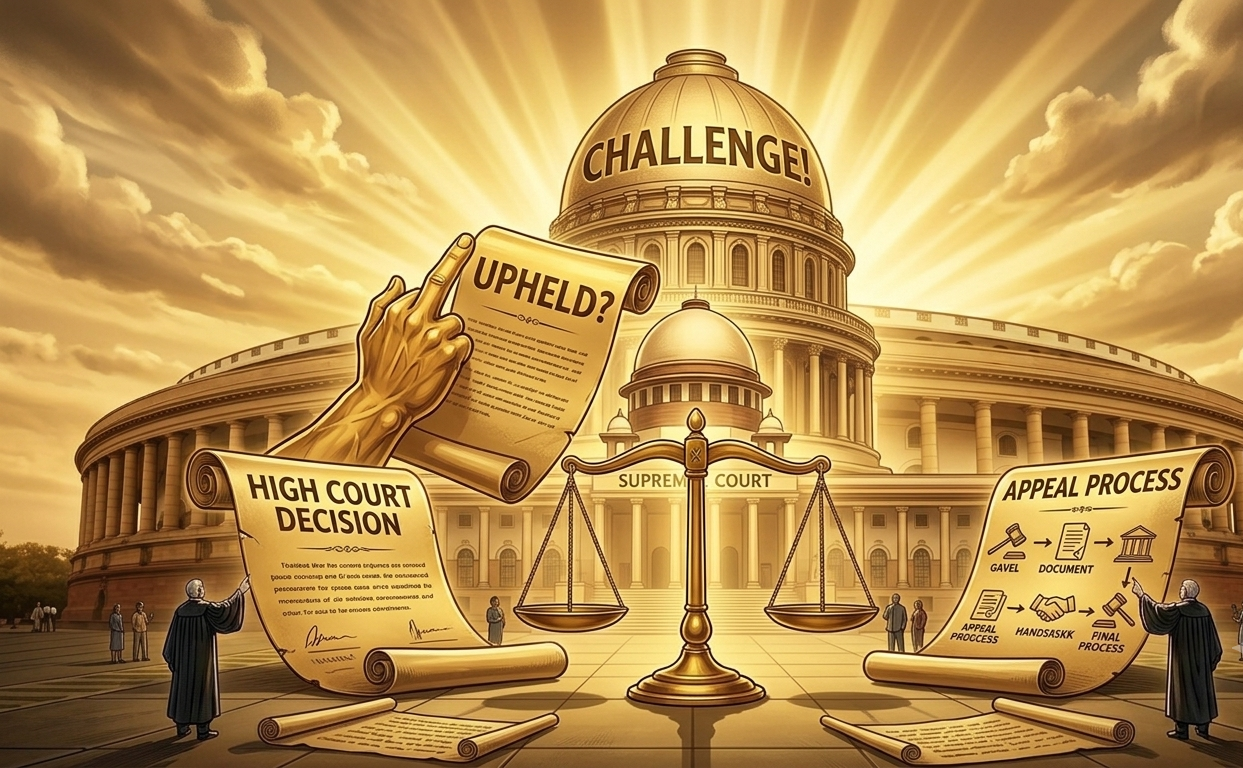
A High Court decision can be challenged before the Supreme Court of India through various appellate mechanisms. This ensures judicial review, correction of legal errors, and uniform interpretation of laws across the country.
Overview
Yes, a High Court decision can be challenged before the Supreme Court of India. The judicial system provides an appellate framework that allows parties dissatisfied with a High Court judgment to seek further review.This process helps correct legal errors, resolve important constitutional questions, and maintain consistency in the application of law. However, not every appeal is automatically admitted by the Supreme Court.
Key Points
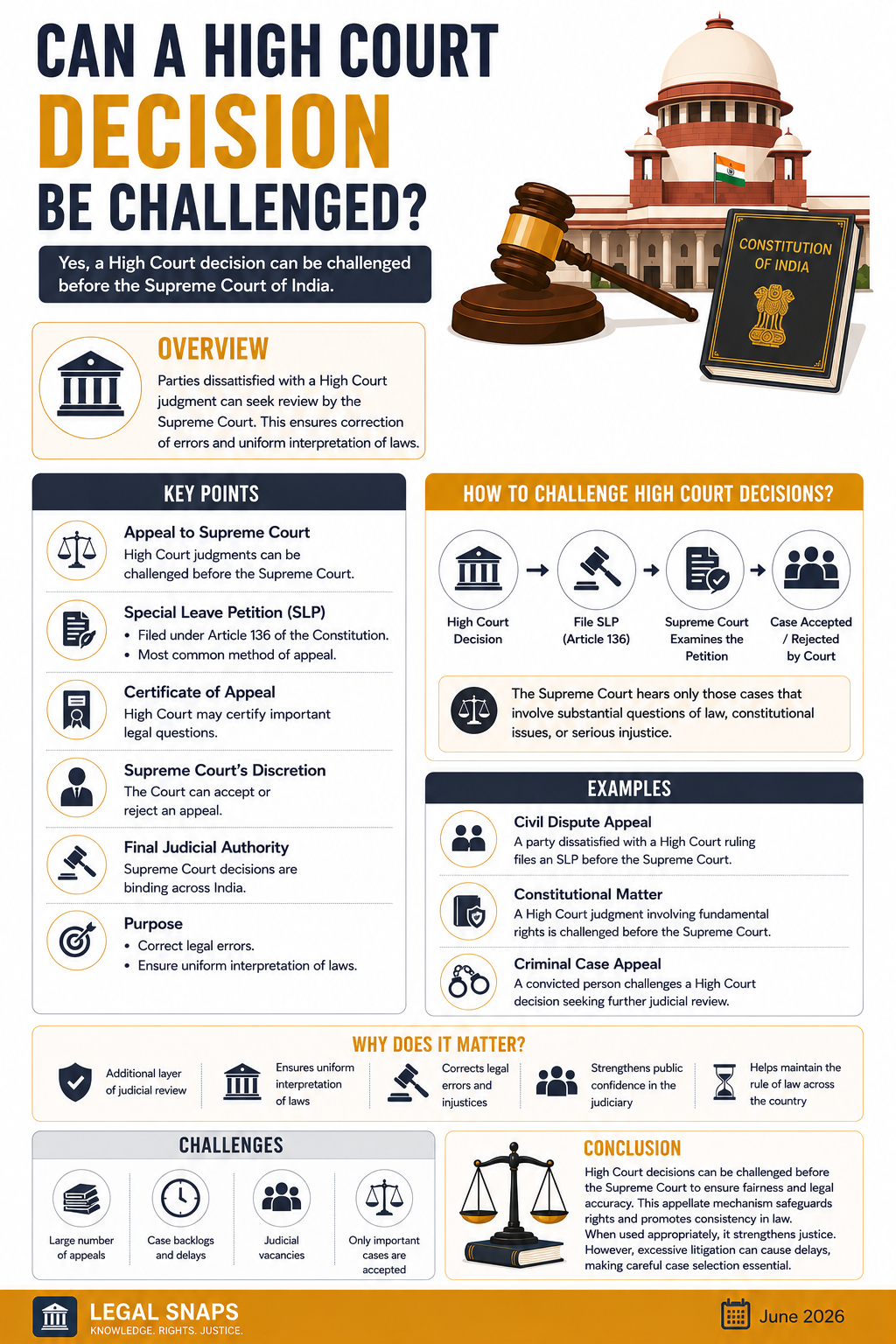
- Appeal to Supreme Court: High Court judgments may be challenged before the apex court
- Special Leave Petition (SLP): Filed under Article 136 of the Constitution
- Certificate of Appeal: High Court may certify important legal questions
- Supreme Court’s Discretion: Court may accept or reject an appeal
- Final Judicial Authority: Supreme Court decisions are binding nationwide
- Purpose: Correct legal errors and ensure uniform interpretation of law
Legal Analysis
The right to challenge High Court decisions strengthens the judicial system by providing an additional layer of scrutiny. It reduces the risk of injustice and helps maintain consistency in legal interpretation across India.The Special Leave Petition (SLP) mechanism is particularly important because it allows the Supreme Court to hear exceptional cases even when a regular statutory appeal is unavailable.
However, the large volume of appeals contributes significantly to the Supreme Court’s workload and case backlog. As a result, the Court generally admits only matters involving substantial questions of law, constitutional importance, or serious miscarriage of justice.This selective approach allows the Supreme Court to focus on cases that have broader legal significance while preserving its role as the country’s final constitutional court.
Examples
Civil Dispute Appeal: A party challenges a High Court judgment through a Special Leave Petition.
Constitutional Matter: A High Court ruling involving Fundamental Rights is appealed before the Supreme Court.
Criminal Appeal: A convicted individual seeks review of a High Court decision before the apex court.
Conclusion
The ability to challenge High Court decisions before the Supreme Court is an important safeguard within India’s judicial system. It helps ensure fairness, legal accuracy, and consistency in the interpretation of laws.When used appropriately, the appellate process strengthens public confidence in the judiciary and promotes justice. At the same time, careful case selection remains essential to prevent excessive litigation and reduce judicial delays.
“`