Under 17
Can a Prime Minister be removed?
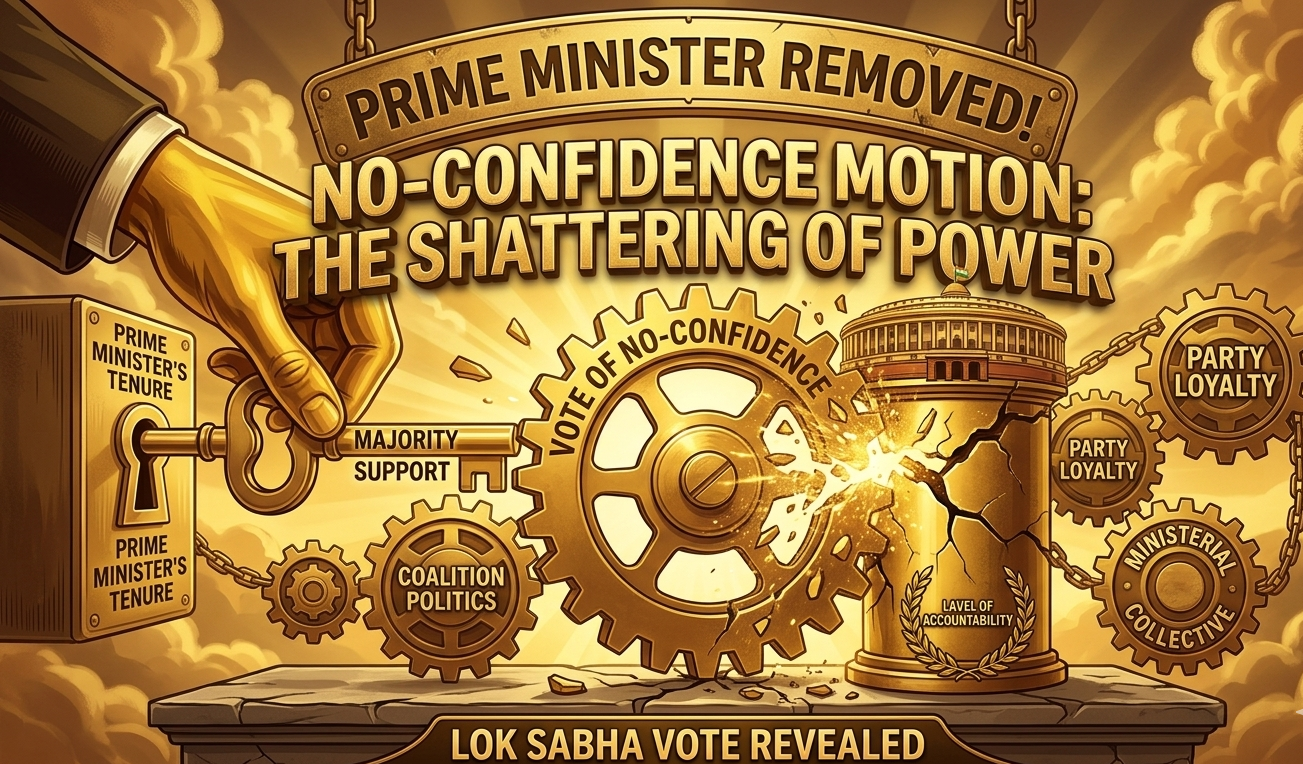
A Prime Minister in India can be removed from office if they lose the support of the Lok Sabha. Unlike a fixed-term system, their position depends on maintaining a majority. This ensures accountability but can also create instability in certain political situations.
Overview
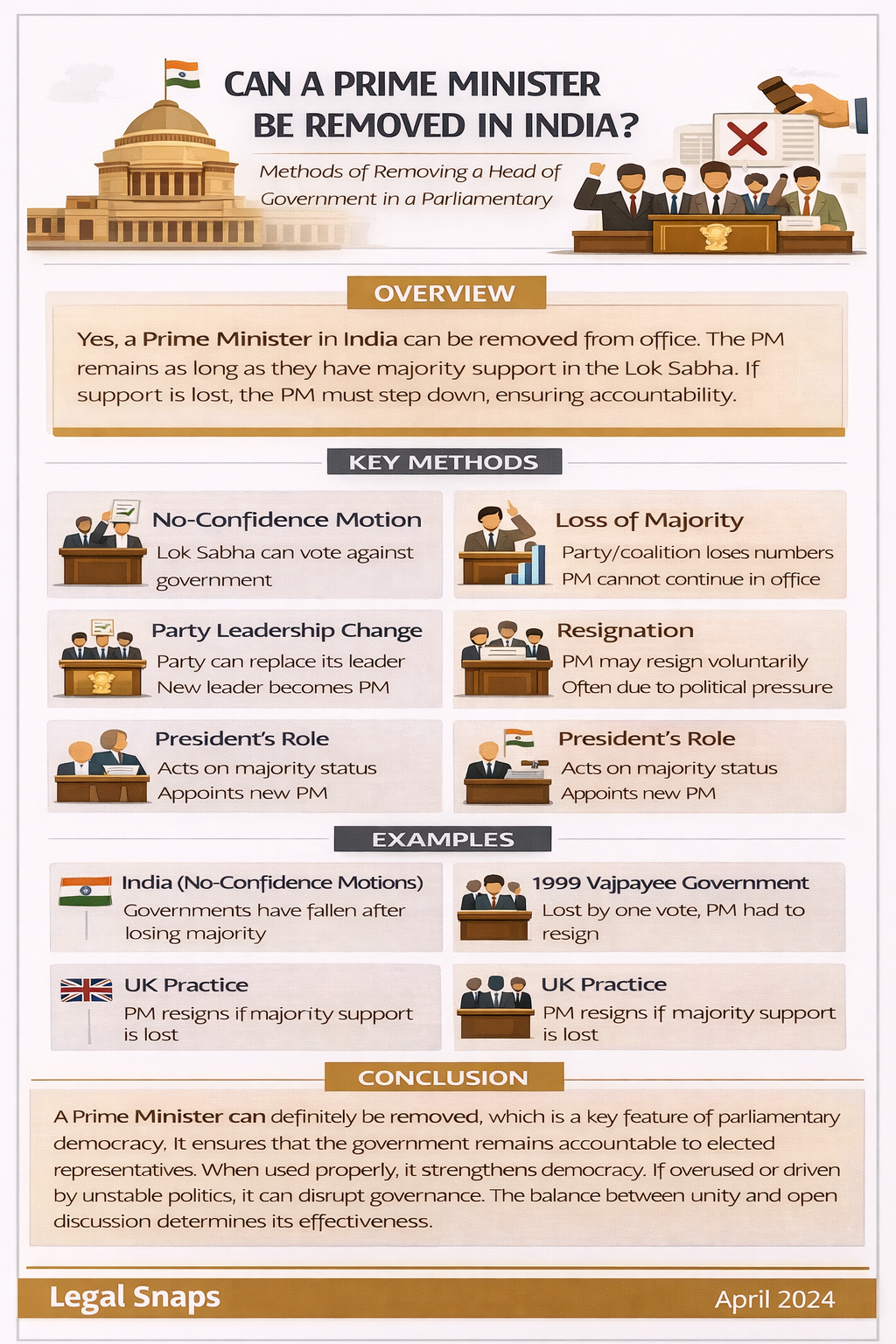
Yes, a Prime Minister in India can be removed from office. The PM remains in power only as long as they have the support of the majority in the Lok Sabha. If that support is lost, they are required to step down.Removal can occur through formal parliamentary processes or political developments within parties or coalitions. This system ensures accountability and reflects the principles of parliamentary democracy, where leadership is not fixed for a full term.
Key Points
- No-Confidence Motion: Lok Sabha can vote against the government; if passed, the PM must resign
- Loss of Majority: If the ruling party or coalition loses numbers, the PM cannot continue
- Party Leadership Change: The ruling party can replace its leader, leading to a new Prime Minister
Legal Analysis
This system ensures that the Prime Minister remains accountable to elected representatives, as their authority depends on continued parliamentary support. It allows removal without waiting for general elections, making governance more responsive.However, this flexibility can also create instability, especially in coalition governments where support may shift frequently. Political bargaining and internal party dynamics often influence leadership changes.
The process is not limited to formal votes like no-confidence motions; informal political shifts can also force a Prime Minister to resign.Thus, while the removal mechanism strengthens accountability, it can also introduce uncertainty if political conditions are unstable.
Examples
India (No-Confidence Motions): Governments have fallen after losing majority support in the Lok Sabha.
1999 Vajpayee Government: Lost a confidence vote by one vote, leading to the Prime Minister’s resignation.
United Kingdom: The Prime Minister resigns when majority support in Parliament is lost.
Conclusion
The ability to remove a Prime Minister is a key feature of parliamentary democracy. It ensures that the government remains accountable to the legislature and responsive to political changes.When used effectively, it strengthens democratic governance. However, frequent or unstable use can disrupt continuity and create uncertainty. The balance between accountability and stability determines its effectiveness.