Under 17
How is the President elected?
The President of India is elected indirectly through an Electoral College consisting of elected MPs and MLAs. This system balances representation between the Union and the states using proportional representation. While it ensures broader consensus, it also reduces direct public involvement in the selection process.
Overview
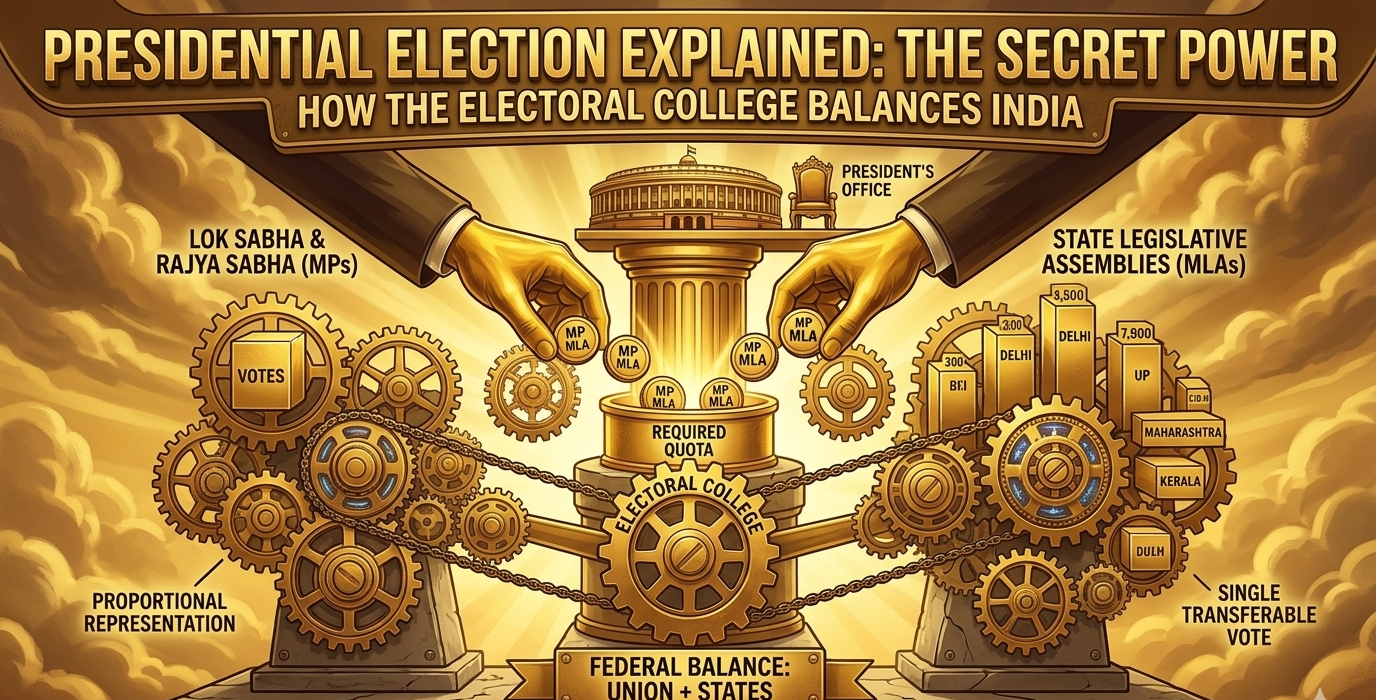
The President of India is not directly elected by the public. Instead, they are chosen through an indirect election conducted by an Electoral College. This college includes elected Members of Parliament (MPs) and elected Members of Legislative Assemblies (MLAs) of states.The system is designed to balance representation between the Union and the states. Voting is conducted using proportional representation through the single transferable vote method, ensuring fairness and wider consensus in selecting the President.
Key Points
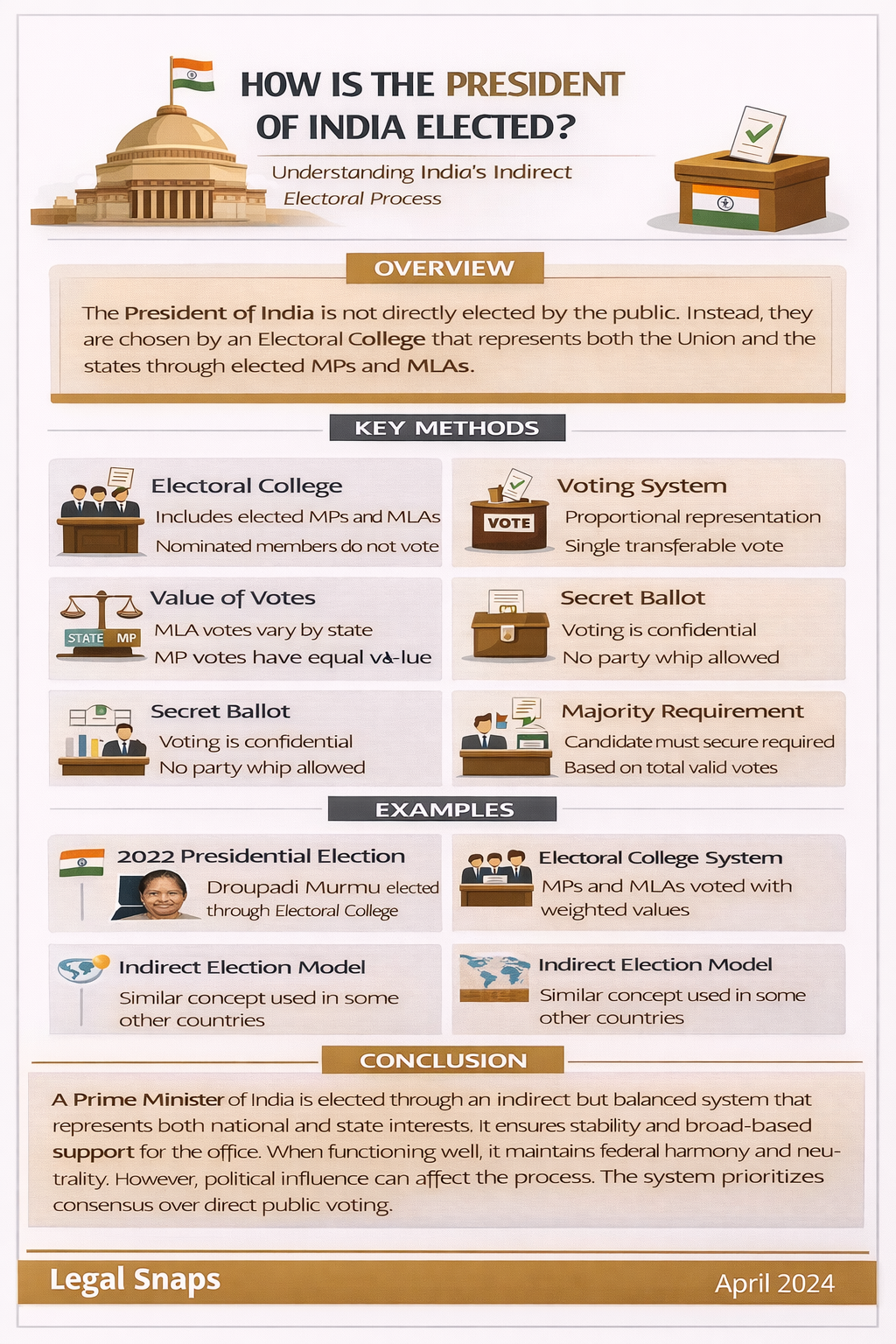
- Electoral College: Includes elected MPs and MLAs; nominated members do not vote
- Voting System: Proportional representation using single transferable vote
- Value of Votes: MLA votes vary by state population; MP votes carry equal value
- Secret Ballot: Voting is confidential; no party whip is allowed
- Majority Requirement: Candidate must secure the required quota based on valid votes
Legal Analysis
This election method ensures that the President represents both the central government and the states, maintaining the federal balance. The weighted voting system prevents larger states from dominating entirely while still reflecting population differences.The use of proportional representation and the single transferable vote promotes fairness and encourages broader consensus among electors rather than simple majority control.
However, the process is complex and removes direct public participation, which can weaken the perceived democratic connection with the office.In practice, political parties play a major role in influencing outcomes, meaning that consensus is often shaped by political alignment rather than independent choice.
Examples
2022 Presidential Election (India): Droupadi Murmu was elected through the Electoral College using weighted voting.
Electoral College System: MPs and MLAs cast votes with values based on representation and population.
Indirect Election Model: Similar principles are used in other countries to balance representation.
Conclusion
The President of India is elected through an indirect system designed to balance national and state representation. This approach ensures stability and broad-based support for the office.While the system promotes consensus and federal balance, it reduces direct public participation and can be influenced by political factors. Its effectiveness depends on maintaining neutrality and institutional integrity.