Under 17
Who is the Prime Minister of India and what do they do?
The Prime Minister of India is the central executive authority responsible for running the government and shaping national policy. Appointed by the President but dependent on Lok Sabha majority support, the PM combines political leadership with administrative control. The role is powerful, but its impact depends on how responsibly that power is exercised.
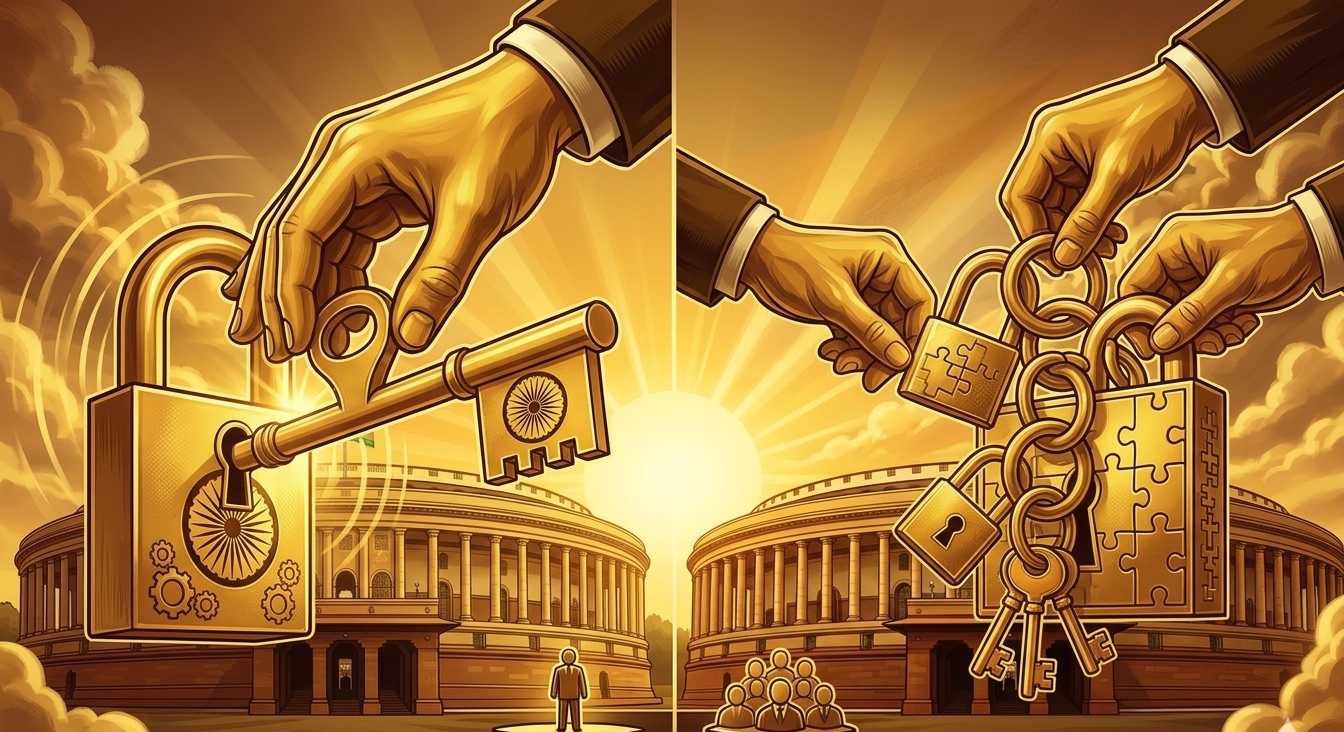
Overview
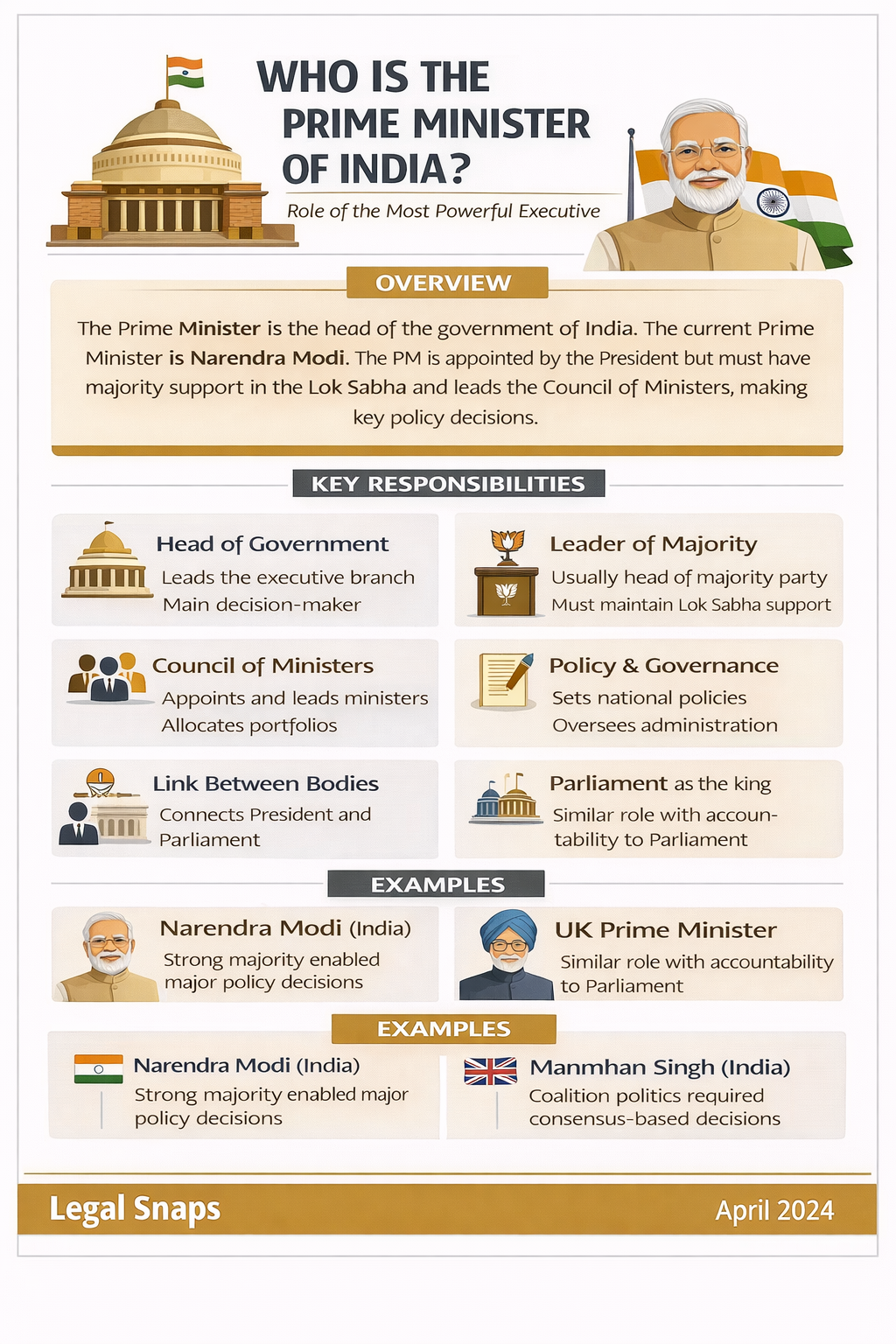
The Prime Minister of India is the head of the government and the most powerful executive authority. As of now, the Prime Minister is Narendra Modi. The PM is appointed by the President but must have the support of the majority in the Lok Sabha.The Prime Minister leads the Council of Ministers and is responsible for major policy decisions and governance. The role is central to how the country is administered. In practical terms, the PM directs the functioning of the government.
Key Points
- Head of Government: Leads the executive branch and is the primary decision-maker
- Leader of Majority: Usually head of the majority party; must maintain Lok Sabha support
- Council of Ministers: Appoints ministers and allocates portfolios
- Policy & Governance: Sets national policies and oversees administration
- Link Between Bodies: Connects the President and Parliament; represents government in Parliament
Legal Analysis
The Prime Minister holds significant power due to control over policy direction, administrative machinery, and political strategy. This concentration allows efficient decision-making, particularly when backed by a strong parliamentary majority.However, this concentration of power also carries risks. Weak internal party checks or limited opposition can reduce accountability and lead to dominance by a single leadership figure.
The effectiveness of the Prime Minister depends on factors such as leadership style, the strength of the cabinet, and the role of parliamentary opposition. A balanced system requires both strong leadership and effective oversight.In practice, a strong Prime Minister can drive reforms and policy changes, but insufficient checks may affect democratic balance and decision-making quality.
Examples
Narendra Modi (India): A strong parliamentary majority enabled decisive policy-making and centralized leadership.
Manmohan Singh (India): Coalition politics required consensus-building and shared decision-making.
UK Prime Minister: Performs a similar role, leading the government while remaining accountable to Parliament.
Conclusion
The Prime Minister is the central figure in India’s governance system, responsible for leadership, coordination, and policy direction. The role enables efficient and decisive governance when supported by strong political backing.However, excessive concentration of power can weaken checks and balances. The real impact of the role depends on how responsibly authority is exercised within the democratic framework.