Under 17
How is the Prime Minister elected?
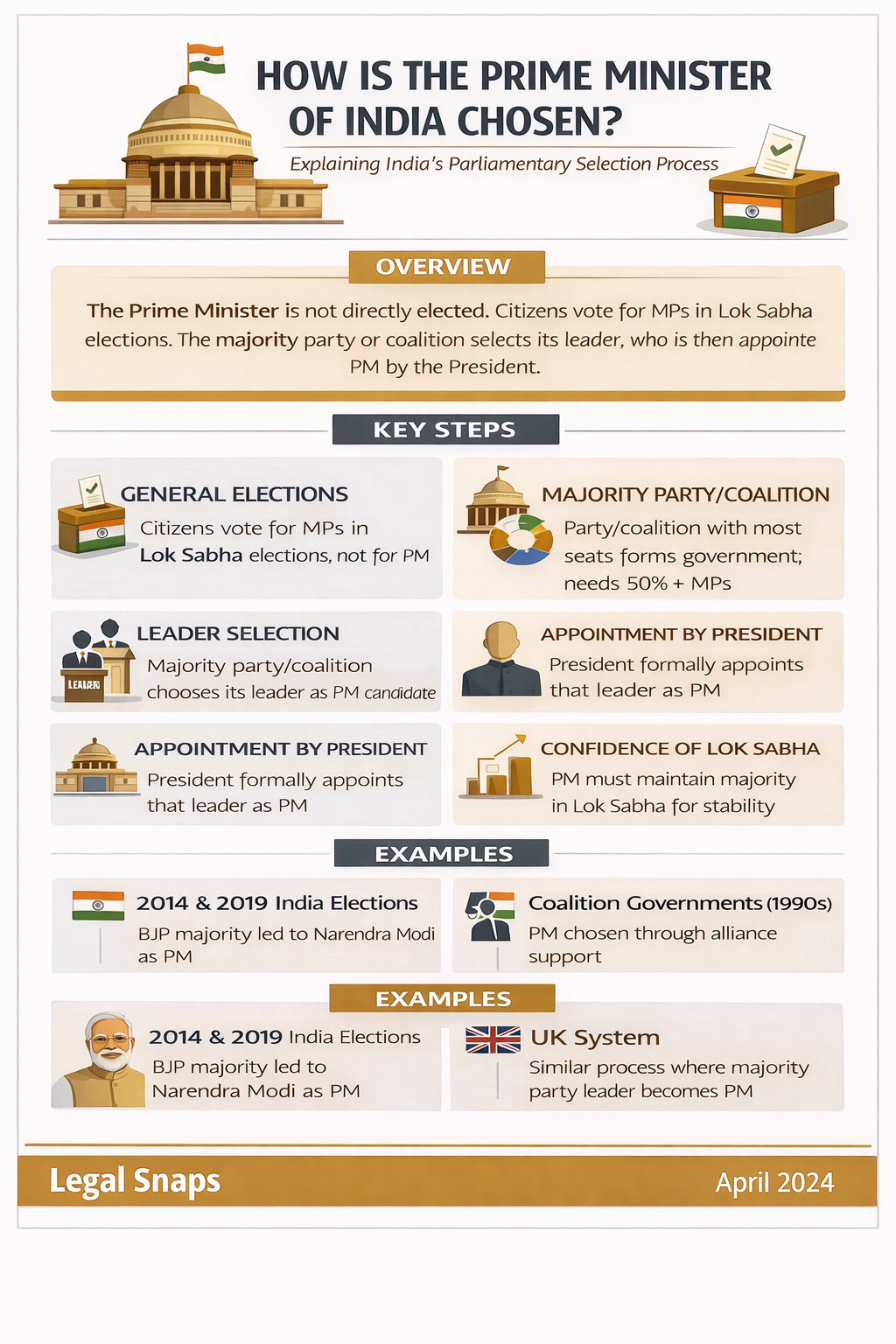
The Prime Minister of India is not directly elected by citizens but chosen through the parliamentary process. Voters elect Members of Parliament, and the majority party or coalition selects its leader as Prime Minister. This system ensures accountability to Parliament while allowing flexibility in leadership.
Overview
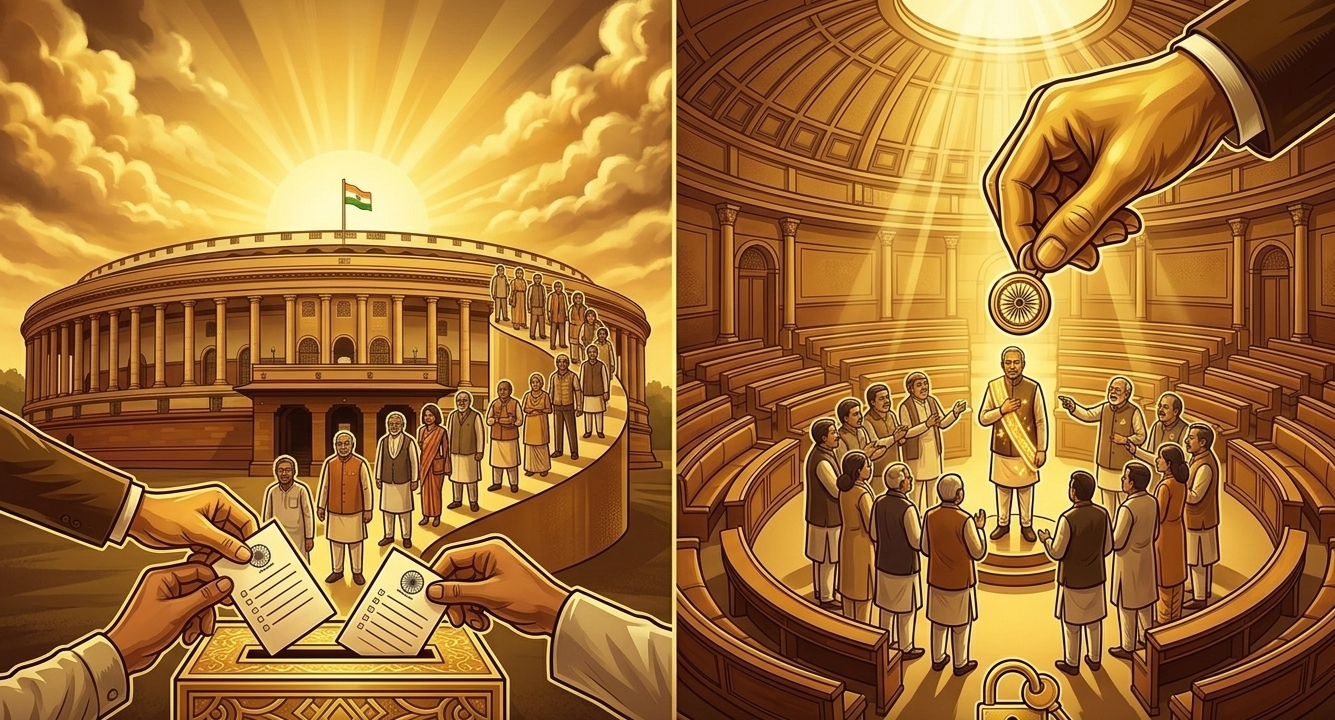
The Prime Minister of India is not directly elected by the people. Instead, citizens vote for Members of Parliament (MPs) in Lok Sabha elections. The party or coalition that secures a majority then forms the government.The leader of that majority party or coalition is chosen internally and appointed as the Prime Minister by the President. Therefore, the Prime Minister is indirectly elected through the parliamentary system, with majority support in the Lok Sabha being the key requirement.
Key Points
- General Elections: Citizens vote for MPs, not directly for the Prime Minister
- Majority Party/Coalition: Party with majority (50%+) forms the government
- Leader Selection: Majority party or coalition selects its leader as PM candidate
Legal Analysis
This indirect system ensures that the Prime Minister has the support of elected representatives, strengthening parliamentary accountability. The executive remains answerable to the legislature, which is a core feature of the parliamentary model.It also provides flexibility. If the Prime Minister loses majority support, they can be removed through a no-confidence motion without waiting for a fixed term to end. This allows quicker political correction.
However, the system reduces direct voter influence over the choice of Prime Minister, as citizens do not vote for the leader directly. In coalition governments, leadership selection may involve negotiations and compromises.Overall, the system balances democratic representation with parliamentary control, but can become complex when no clear majority emerges.
Examples
2014 & 2019 India Elections: A clear majority for the BJP led to Narendra Modi being chosen as Prime Minister.
Coalition Governments (1990s India): Prime Ministers were selected through alliance negotiations and support.
United Kingdom: Similar parliamentary system where the leader of the majority party becomes Prime Minister.
Conclusion
The Prime Minister of India is indirectly elected through the parliamentary process rather than by direct public vote. This ensures accountability to Parliament while maintaining flexibility in leadership changes.The system works efficiently when there is a clear majority but becomes more complex during coalition politics. Ultimately, it reflects a balance between democratic representation and institutional control.