Under 17
Which states have two houses and why?
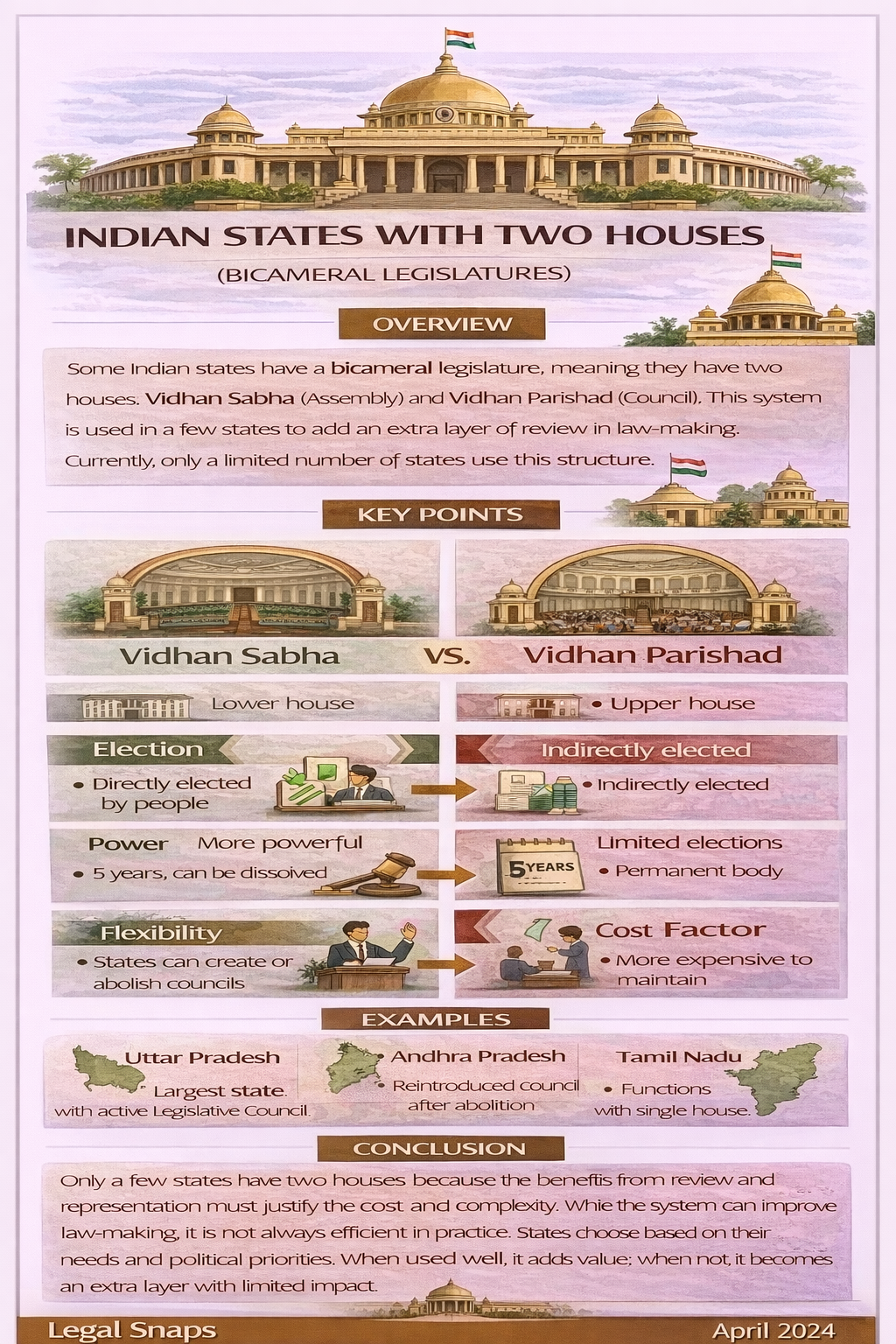
Some Indian states follow a bicameral legislature with two houses—Vidhan Sabha and Vidhan Parishad. This system adds a layer of review and broader representation but also increases cost and complexity. That’s why only a few states choose to adopt it.

Overview
Some Indian states have a bicameral legislature, meaning they have two houses: Vidhan Sabha (Assembly) and Vidhan Parishad (Council). This system is designed to add an extra layer of review in the law-making process.The aim is to improve the quality of legislation and provide representation to specific groups such as teachers and graduates. However, not all states adopt this system due to cost and questions about its effectiveness.
Key Points
- States with Two Houses: Uttar Pradesh, Maharashtra, Karnataka, Bihar, Andhra Pradesh, Telangana
- Purpose: Provides additional review and prevents hasty law-making
- Special Representation: Includes teachers, graduates, and indirectly elected members
- Flexibility: States can create or abolish Legislative Councils with Parliament’s approval
- Cost Factor: More expensive to maintain, leading to debate over usefulness
Legal Analysis
The bicameral system at the state level is intended to improve legislative quality by introducing a second chamber for review. It can help refine laws and bring in experienced or specialized perspectives.However, in practice, Legislative Councils often have limited powers and may delay legislation without significantly improving it. Their indirect election also raises questions about democratic representation.
Critics argue that councils are sometimes maintained for political reasons rather than functional necessity, adding cost without proportional benefit.Supporters, on the other hand, view them as a stabilizing force that prevents rushed decisions and enhances representation. Their effectiveness ultimately varies by state and political context.
Examples
Uttar Pradesh: Largest state with an active bicameral legislature including a Legislative Council.
Andhra Pradesh: Reintroduced its Legislative Council after previously abolishing it.
Tamil Nadu: Functions with a unicameral system without a Legislative Council.
Conclusion
Only a few states adopt a bicameral legislature because the benefits of additional review and representation must justify the cost and complexity involved.While the system can improve law-making, it is not always efficient in practice. Its value depends on how effectively the second chamber contributes to governance.