Under 17
Powers of State Legislature
The State Legislature is responsible for making laws, controlling finances, and holding the state government accountable. It operates within powers defined by the Constitution. Its effectiveness depends on active debate and oversight.
Overview
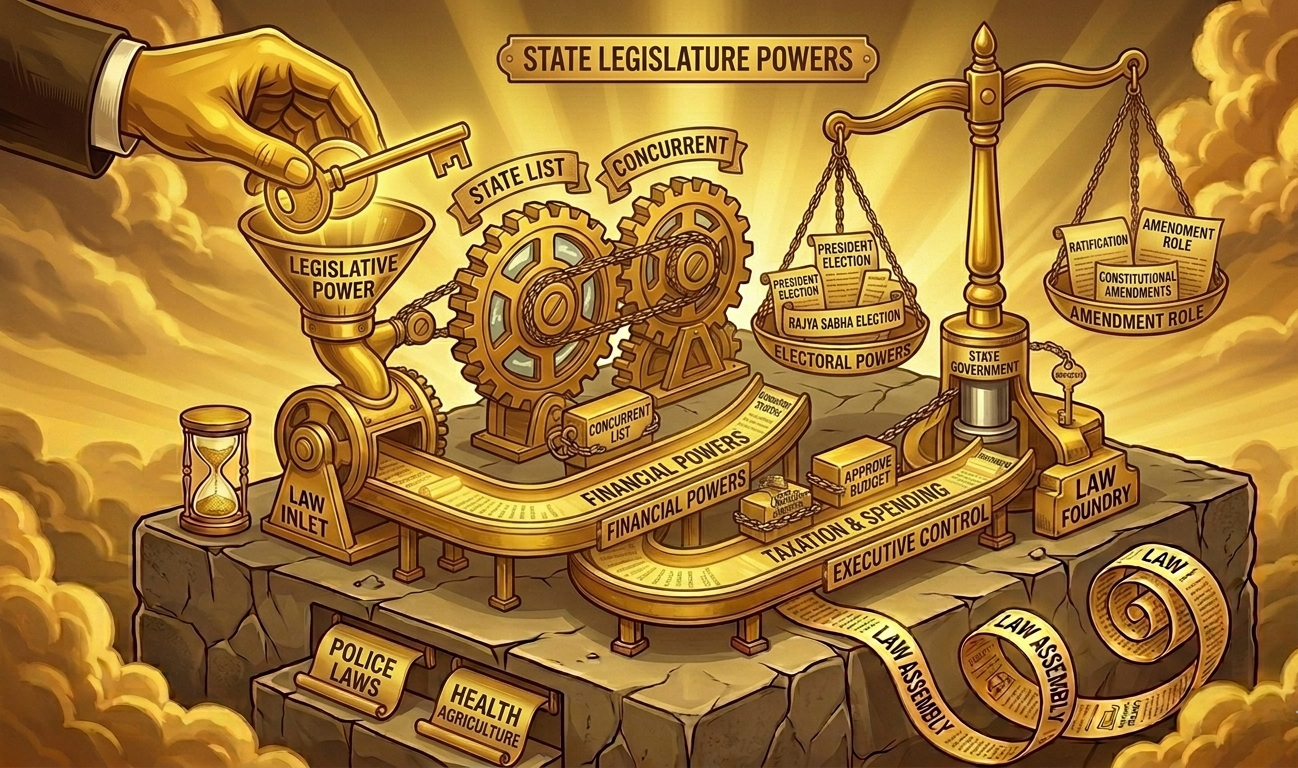
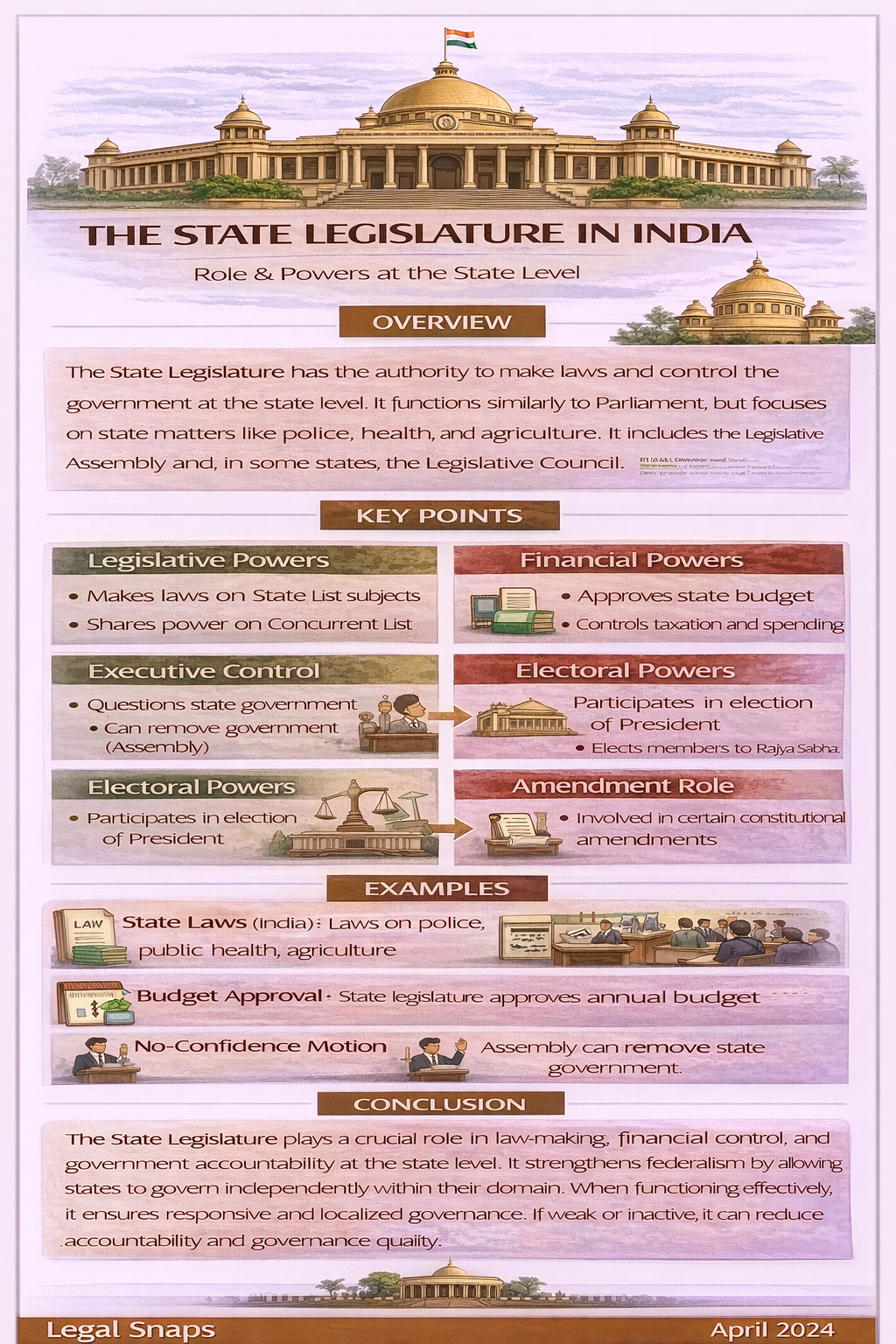
The State Legislature has the authority to make laws and control the government at the state level. It functions similarly to Parliament but focuses on state subjects such as police, health, and agriculture.It includes the Legislative Assembly and, in some states, the Legislative Council. The legislature ensures accountability of the state government and provides a platform for policy debate and decision-making.
Key Points
- Legislative Powers: Makes laws on State List subjects and shares power on the Concurrent List
- Financial Powers: Approves the state budget and controls taxation and expenditure
- Executive Control: Questions the government and can remove it through the Assembly
- Electoral Powers: Participates in the election of the President and elects members to the Rajya Sabha
- Amendment Role: Required to ratify certain constitutional amendments
Legal Analysis
State Legislatures are central to decentralized governance, enabling states to manage local matters effectively. They ensure that regional issues are addressed through law-making and policy decisions.Their power to control the executive through questioning, debates, and no-confidence motions strengthens accountability at the state level.
However, their effectiveness can be limited by political dominance, weak opposition, or lack of meaningful debate. In some cases, central influence may also affect state autonomy.Thus, while the constitutional structure is strong, actual performance depends on active participation, institutional strength, and political balance.
Examples
State Laws (India): Legislatures make laws on subjects like police, public health, and agriculture.
Budget Approval: State Legislature approves the annual financial budget.
No-Confidence Motion: Legislative Assembly can remove the state government.
Conclusion
The State Legislature plays a crucial role in governance by making laws, controlling finances, and ensuring accountability at the state level.When functioning effectively, it strengthens federalism and responsive governance. If weak or inactive, it reduces accountability and impacts governance quality.