Under 17
What happens during a Parliament session?
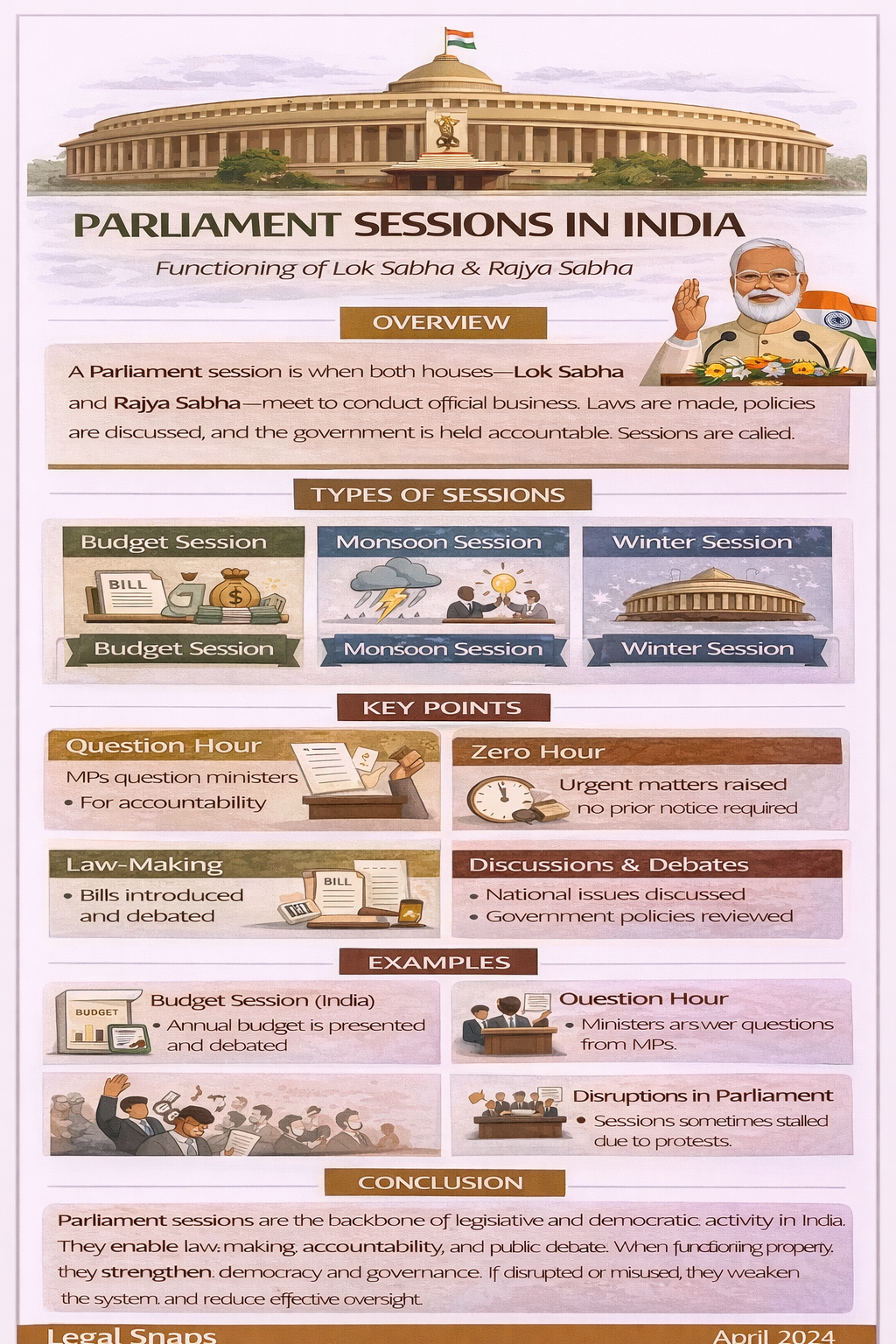
A Parliament session is the period when Lok Sabha and Rajya Sabha meet to conduct official business like law-making and holding the government accountable. These sessions are central to democratic functioning. Their effectiveness depends on meaningful debate and participation.
Overview
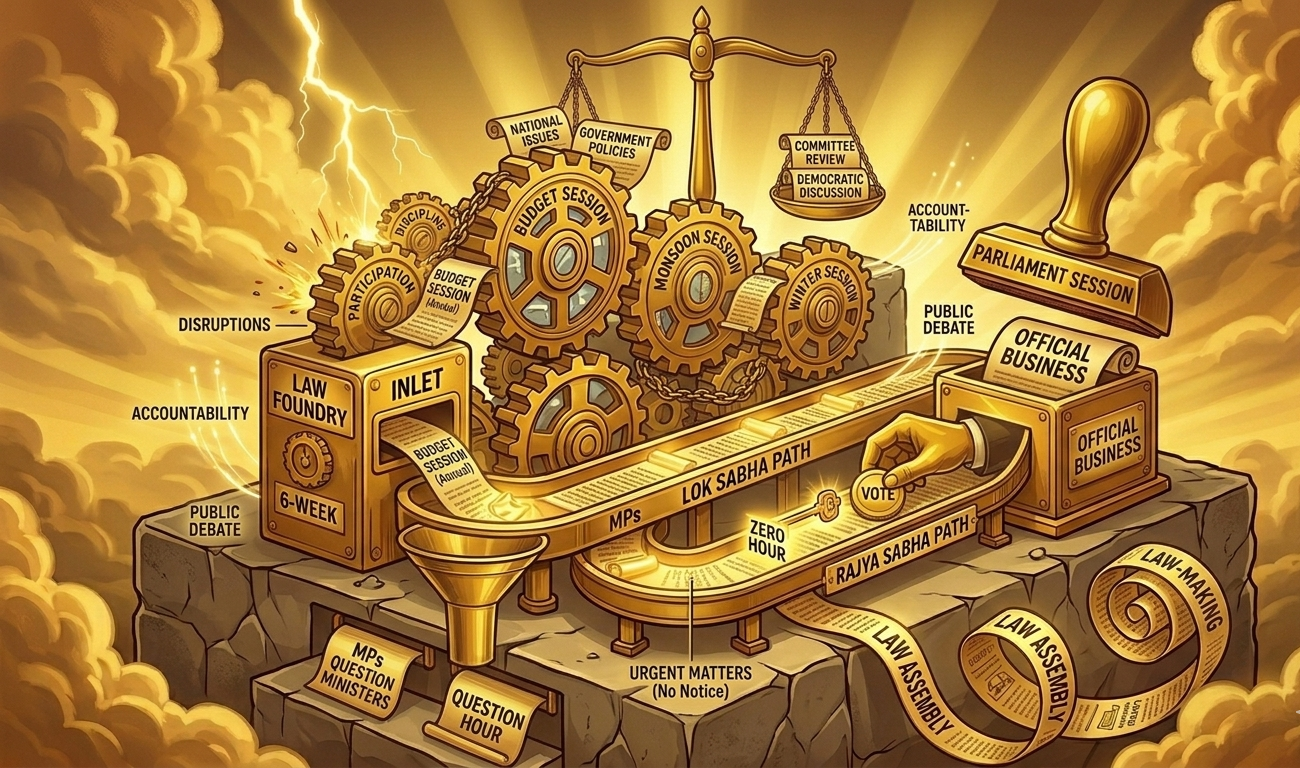
A Parliament session is the period when both houses Lok Sabha and Rajya Sabha meet to conduct official business. During this time, laws are made, policies are discussed, and the government is held accountable.Sessions are summoned by the President and typically include the Budget, Monsoon, and Winter sessions. These meetings serve as the primary platform for democratic discussion and governance.
Key Points
- Types of Sessions: Budget Session, Monsoon Session, and Winter Session
- Question Hour: MPs question ministers to ensure accountability
- Zero Hour: Urgent issues raised without prior notice
- Law-Making: Bills are introduced, debated, and voted upon
- Discussions & Debates: National issues and government policies are reviewed
Legal Analysis
Parliament sessions are essential for accountability and legislative functioning. They provide a formal platform for questioning the government, debating policies, and passing laws.Mechanisms like Question Hour play a critical role in ensuring transparency and oversight. They allow elected representatives to directly question ministers on public issues.
However, disruptions, protests, and lack of structured debate often reduce the effectiveness of sessions. Important legislation may sometimes be passed without adequate discussion.Thus, while the framework is designed for democratic functioning, its success depends on the discipline and participation of members.
Examples
Budget Session (India): The annual budget is presented and debated in Parliament.
Question Hour: Ministers respond to queries raised by Members of Parliament.
Disruptions in Parliament: Sessions are sometimes stalled due to protests, affecting productivity.
Conclusion
Parliament sessions form the backbone of legislative and democratic activity in India. They enable law-making, accountability, and public debate.When conducted effectively, they strengthen governance and democracy. However, disruptions and lack of debate can weaken their impact. The outcome depends on responsible participation by members.