Under 17
Role of opposition in Parliament
The opposition in Parliament is essential for holding the government accountable and preventing misuse of power. By questioning decisions and offering alternatives, it ensures debate and transparency. A democracy is only as strong as its opposition
Overview
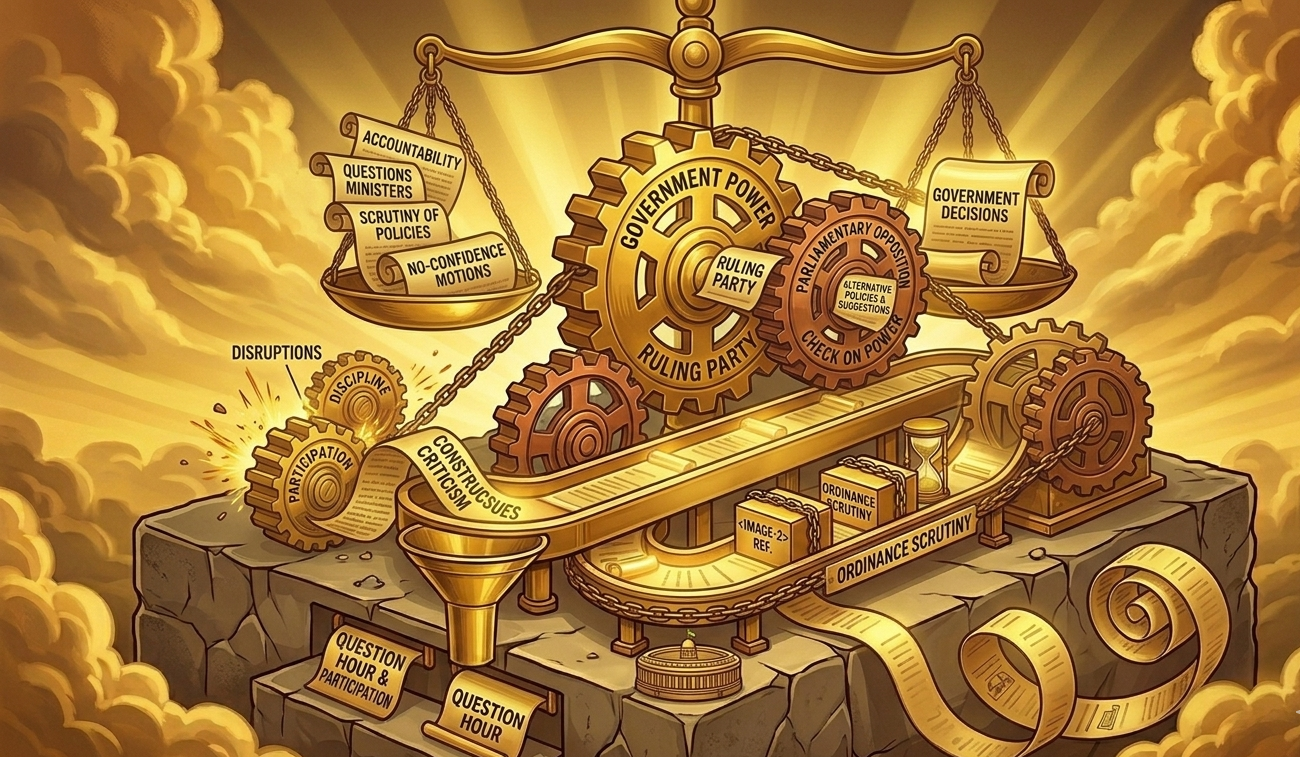
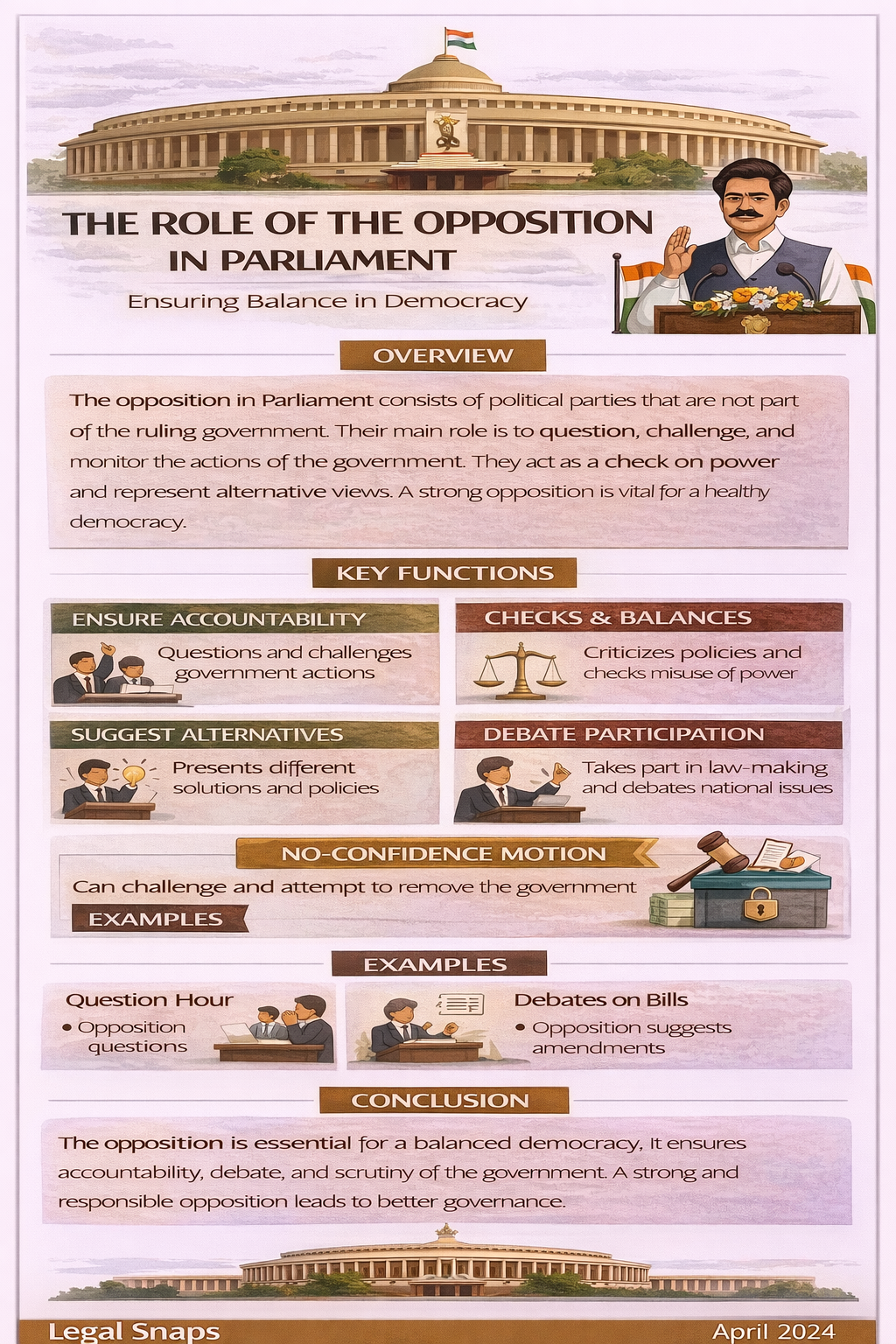
The opposition in Parliament consists of political parties that are not part of the ruling government. Their primary role is to question, challenge, and monitor government actions.They act as a check on power and represent alternative viewpoints. This ensures that decisions are debated rather than imposed unilaterally, making opposition a key pillar of democratic governance.
Key Points
- Accountability: Questions government decisions through debates and Question Hour
- Checks and Balances: Prevents misuse of power by criticizing policies
- Alternative Policies: Presents different solutions and policy approaches
- Debate Participation: Engages in law-making discussions and raises public issues
- No-Confidence Motion: Can challenge the government’s majority in Parliament
Legal Analysis
The opposition plays a critical role in maintaining democratic balance by ensuring that the government is subject to continuous scrutiny. It strengthens legislative quality by forcing debate and justification of policies.However, when the opposition is weak or fragmented, its ability to hold the government accountable is reduced, allowing unchecked authority.
At the same time, excessive disruption without constructive engagement can undermine parliamentary functioning and reduce the effectiveness of debates.Therefore, the effectiveness of opposition depends on its ability to combine criticism with responsibility and active participation.
Examples
Question Hour (India): Opposition members question ministers on government actions and policies.
No-Confidence Motions: Used to challenge the government’s majority in the Lok Sabha.
Debates on Bills: Opposition proposes amendments and highlights concerns.
Conclusion
The opposition is essential for a functioning democracy, ensuring accountability, debate, and transparency in governance.When effective, it strengthens decision-making and prevents misuse of power. When weak or irresponsible, it can either allow unchecked authority or disrupt parliamentary functioning. Its true value lies in constructive and active participation.