Under 17
What are High Courts?
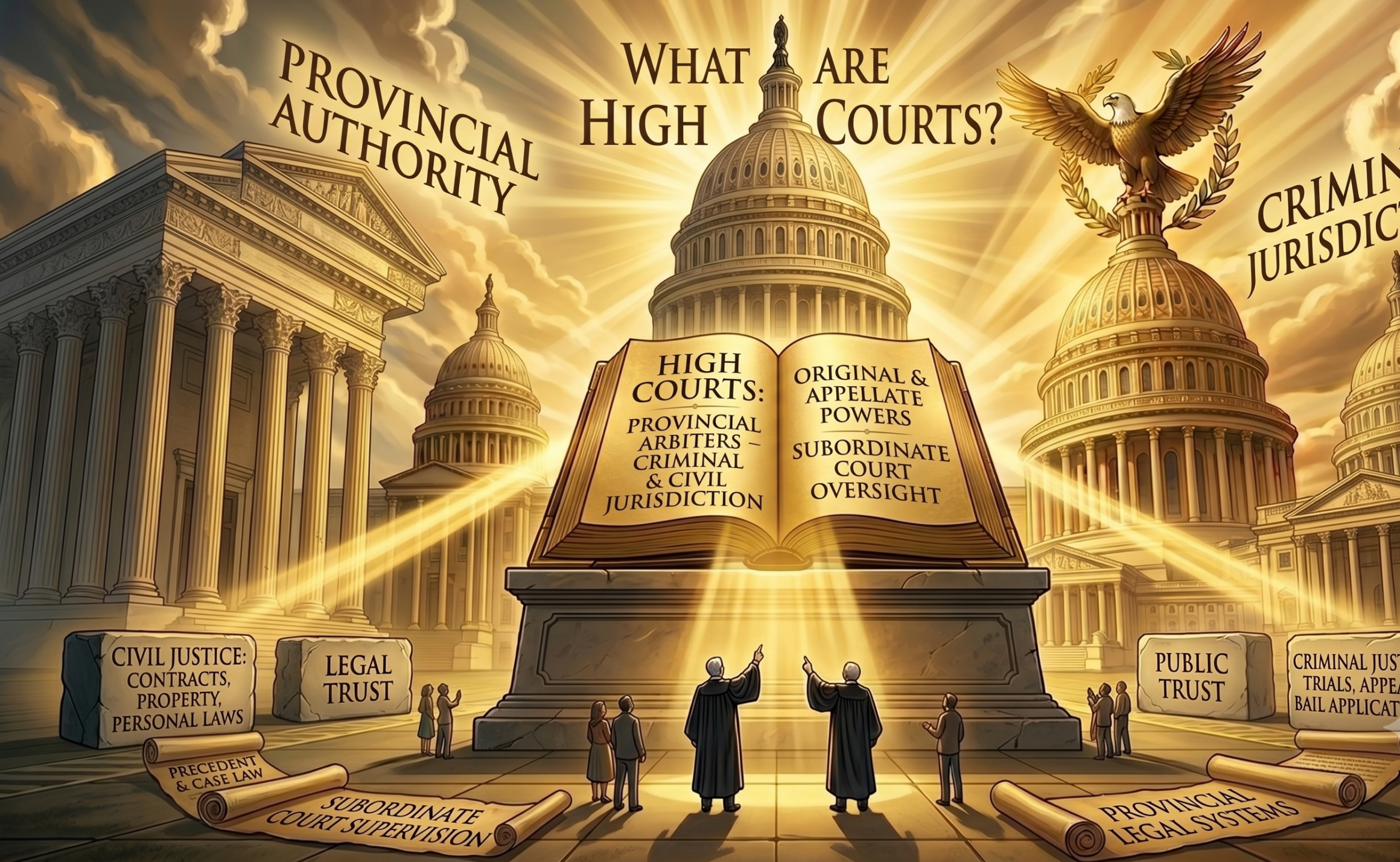
High Courts are the highest judicial authorities at the state level in India. They protect rights, supervise lower courts, and ensure that laws are applied fairly and constitutionally within their jurisdiction.
Overview
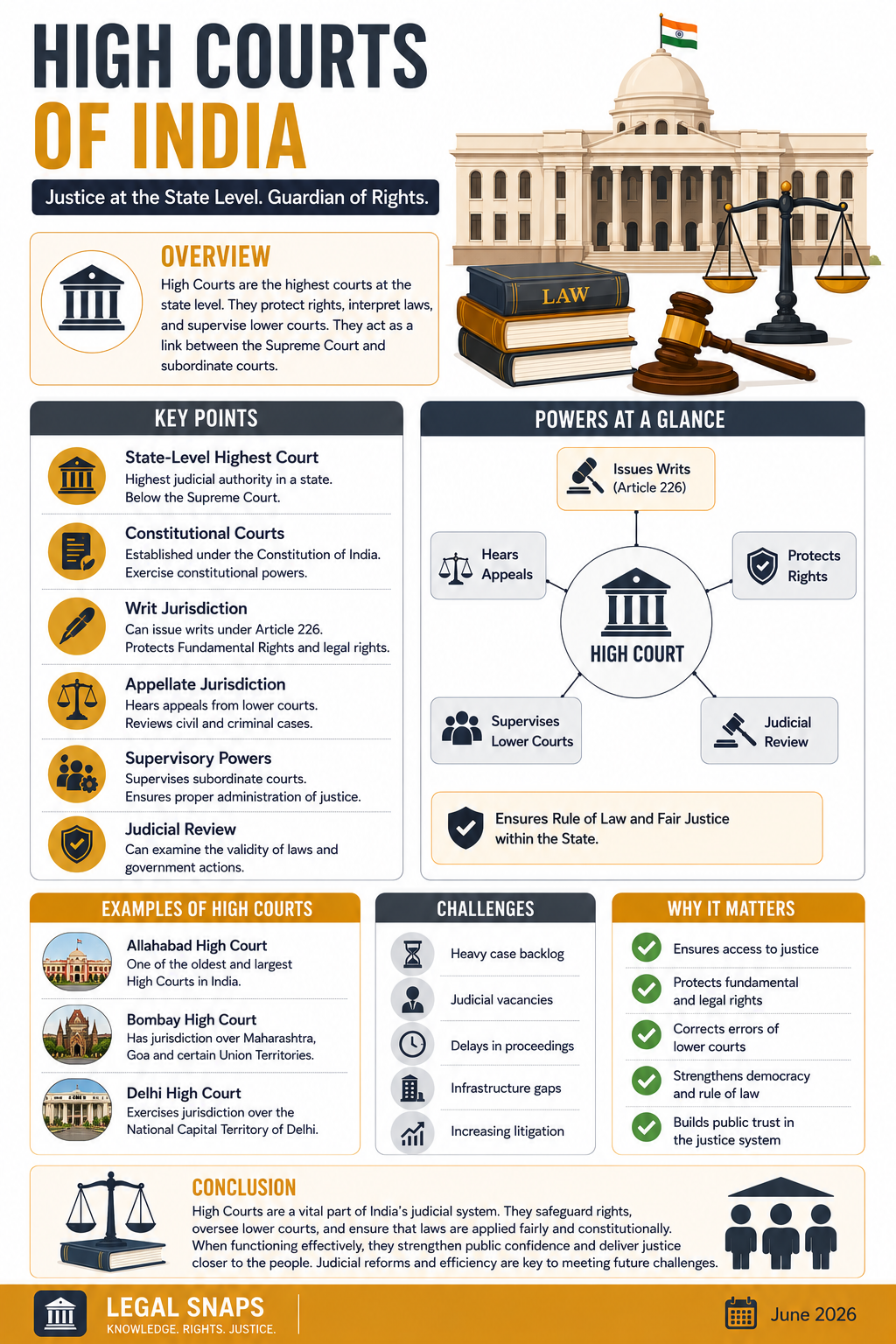
High Courts are the highest courts at the state level in India’s judicial system. Each High Court exercises jurisdiction over a state or a group of states and union territories.They serve as the principal judicial authority within their jurisdiction, protecting constitutional rights, interpreting laws, and supervising subordinate courts. High Courts form an important link between the Supreme Court and lower courts.
Key Points
- State-Level Highest Court: Highest judicial authority within a state
- Constitutional Courts: Established under the Constitution of India
- Writ Jurisdiction: Can issue writs under Article 226
- Appellate Jurisdiction: Hears appeals from lower courts
- Supervisory Powers: Oversees subordinate courts and tribunals
- Judicial Review: Reviews laws and government actions for legality
Legal Analysis
High Courts play a critical role in ensuring access to justice at the state level. Their constitutional powers allow them to protect individual rights, supervise judicial administration, and review executive actions.One of their most significant powers is the authority to issue writs under Article 226. Unlike the Supreme Court’s Article 32 jurisdiction, High Courts can issue writs not only for Fundamental Rights but also for other legal rights.
High Courts also act as appellate courts, correcting errors made by subordinate courts and ensuring consistency in the application of law.Despite their importance, many High Courts face challenges such as case backlogs, judicial vacancies, and delays in proceedings. Strengthening judicial infrastructure remains essential for improving efficiency and access to justice.
Examples
Allahabad High Court: One of the oldest and largest High Courts in India.
Bombay High Court: Exercises jurisdiction over Maharashtra, Goa, and certain Union Territories.
Delhi High Court: Functions as the highest court for the National Capital Territory of Delhi.
Conclusion
High Courts are a vital part of India’s judicial framework and serve as the highest courts within states. They protect rights, oversee lower courts, and ensure constitutional governance.When functioning efficiently, High Courts strengthen public confidence in the justice system and improve access to justice. Continuous reforms and effective case management are necessary to address delays and enhance judicial effectiveness.
“`