Under 17
Powers and functions of the Prime Minister
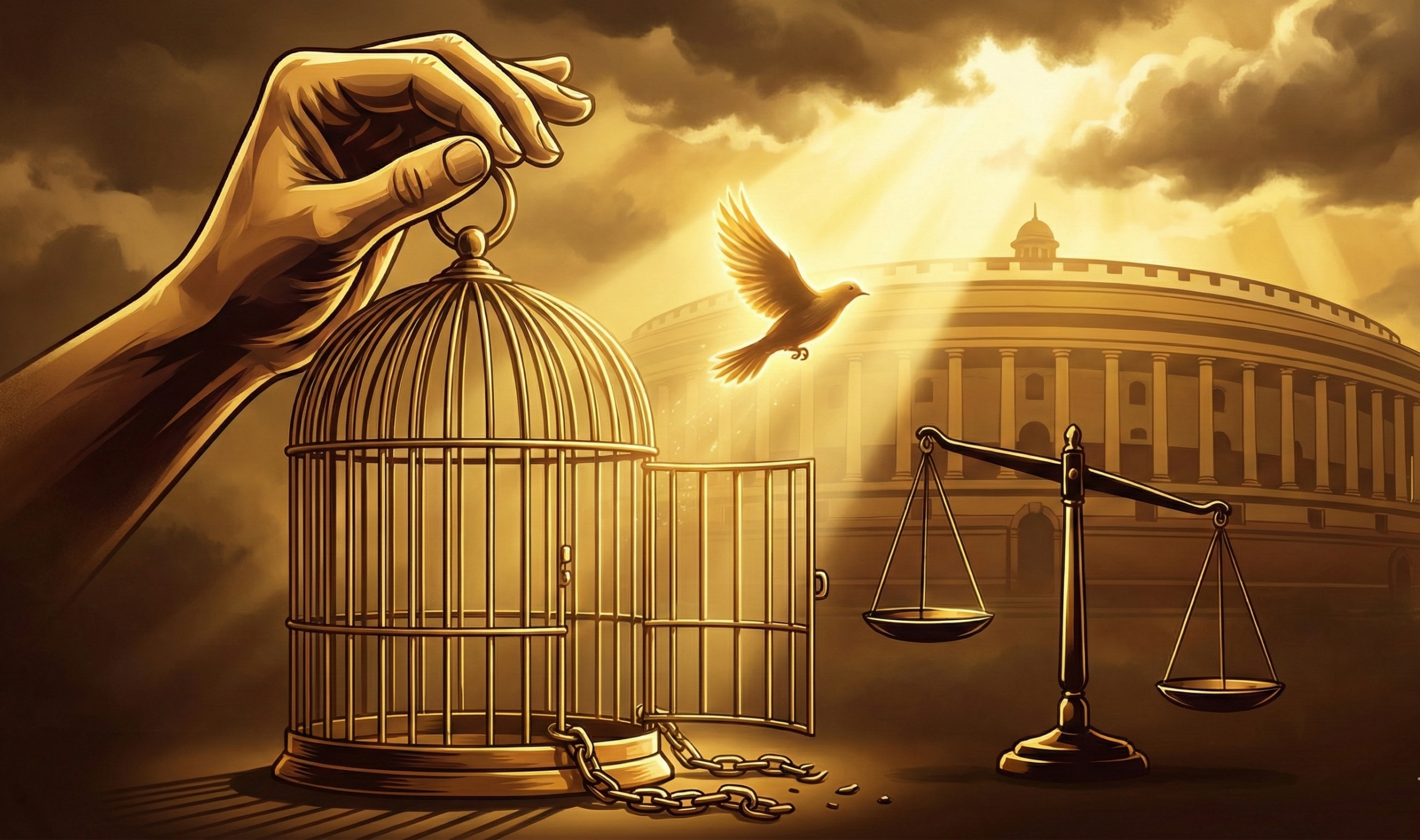
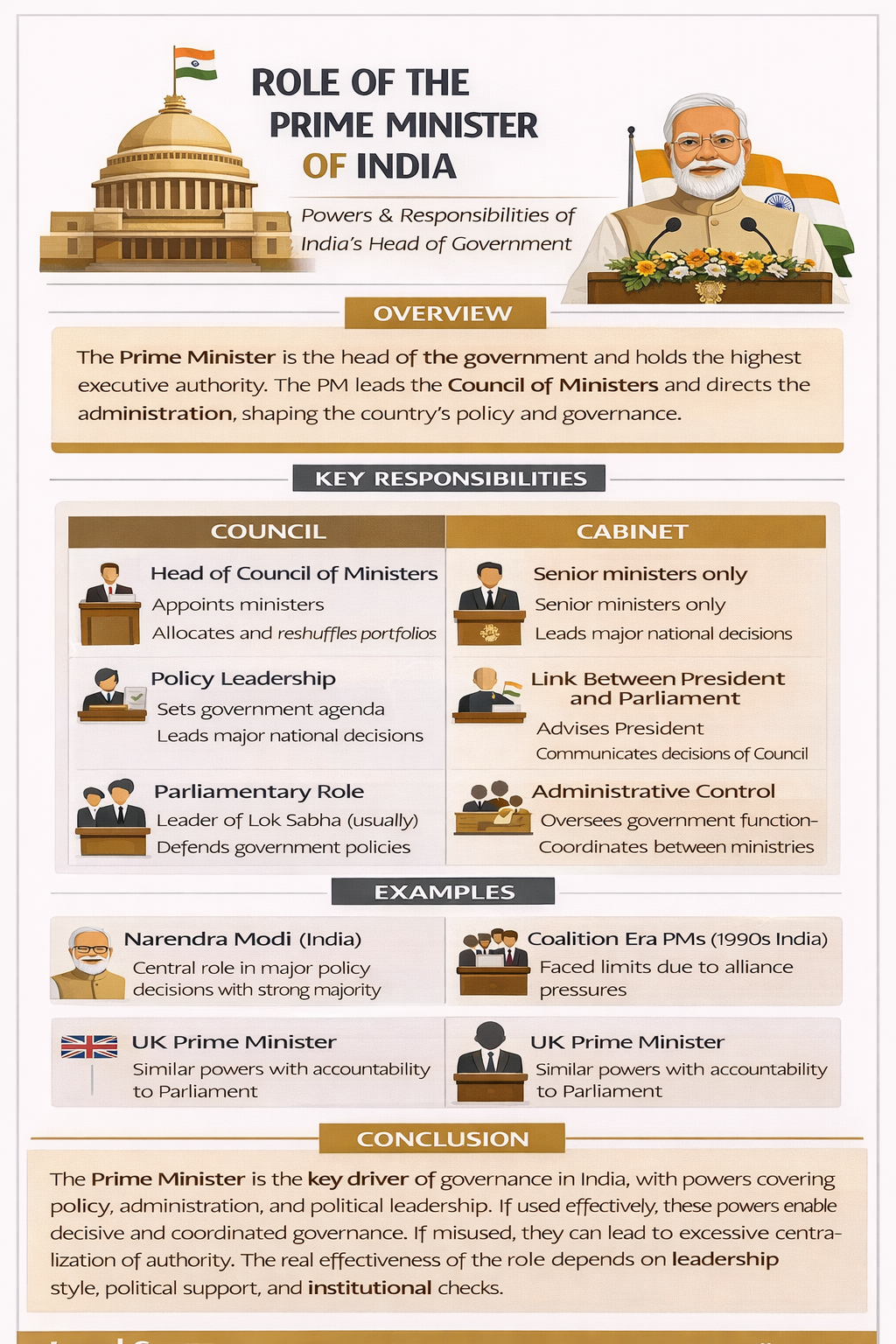
The Prime Minister of India holds the highest executive authority and directs the functioning of the government. As head of the Council of Ministers, the PM controls policy, administration, and political strategy. While this enables strong leadership, it also raises concerns about concentration of power if checks are weak.
Overview
The Prime Minister of India is the head of the government and holds the highest executive authority. The PM leads the Council of Ministers and directs the functioning of the entire administration.They play a central role in policy-making, governance, and decision-making. The Prime Minister also acts as the link between the President and Parliament, ensuring coordination across the system. In practice, the PM shapes the direction of the country.
Key Points
- Head of Council of Ministers: Appoints ministers and allocates or reshuffles portfolios
- Policy Leadership: Sets the government agenda and leads major national decisions
- Link Between President and Parliament: Advises the President and communicates decisions of the Council
Legal Analysis
The powers of the Prime Minister enable strong and decisive leadership, particularly when supported by a clear parliamentary majority. This allows faster implementation of policies and better coordination across government departments.However, such concentration of authority can weaken internal checks if cabinet independence or party-level accountability is limited. Decision-making may become centralized around the Prime Minister.
In coalition governments, the Prime Minister’s authority is often constrained by the need for political negotiation and consensus among alliance partners.Thus, while the office is designed for effective governance, its real impact depends on political strength, institutional balance, and accountability mechanisms.
Examples
Narendra Modi (India): A strong parliamentary majority enabled centralized decision-making and major policy initiatives.
Coalition Era PMs (1990s India): Faced limitations due to alliance pressures and shared authority.
United Kingdom: The Prime Minister exercises similar powers while remaining accountable to Parliament.
Conclusion
The Prime Minister is the central authority in India’s executive system, responsible for policy direction, administration, and leadership. The role enables efficient and coordinated governance when exercised effectively.However, excessive concentration of power can weaken checks and balances. The effectiveness of the office ultimately depends on leadership style, political support, and institutional safeguards.