Blogs
Indian law as it changes — judgments, rules and what they actually mean for you.

Balancing Justice and Matrimonial Harmony Supreme Court’s Landmark Judgment in Dasari Srikanth v. State of Telangana
The Supreme Court has cautioned against misuse of criminal law in matrimonial disputes.Omnibus and vague allegations against relatives cannot justify prosecution.Courts must prevent abuse of criminal process in marital conflicts. The ruling balances protection for victims with safeguards against harassment.

The Right to Life and Personal Liberty: Supreme Court Upholds Fundamental Rights in the Prabir Purkayastha Case
The Supreme Court has reaffirmed that personal liberty under Article 21 cannot be curtailed without strict procedural compliance.Illegal arrest cannot be cured by subsequent judicial remand.Grounds of arrest must be meaningfully communicated to the accused.The ruling strengthens constitutional safeguards against arbitrary detention.
2 min read →
Supreme Court Quashes FIR Tool to Wreak Vengeance Against the Appellant
The Supreme Court has quashed an FIR filed with fide intent to harass the accused.Criminal law cannot be weaponized to settle personal scores or civil disputes.Courts must intervene when proceedings disclose no prima facie offence.The ruling strengthens safeguards against abuse of criminal process.
2 min read →
No Evidence of Forest Offence
The Supreme Court has set aside criminal proceedings in Kerala’s sandalwood case, ruling that suspicion cannot replace proof in forest offence prosecutions.The Court held that penal liability requires strict proof of statutory ingredients.Mere recovery or allegation is insufficient to sustain conviction.Criminal law punishes proven guilt not presumed wrongdoing.
2 min read →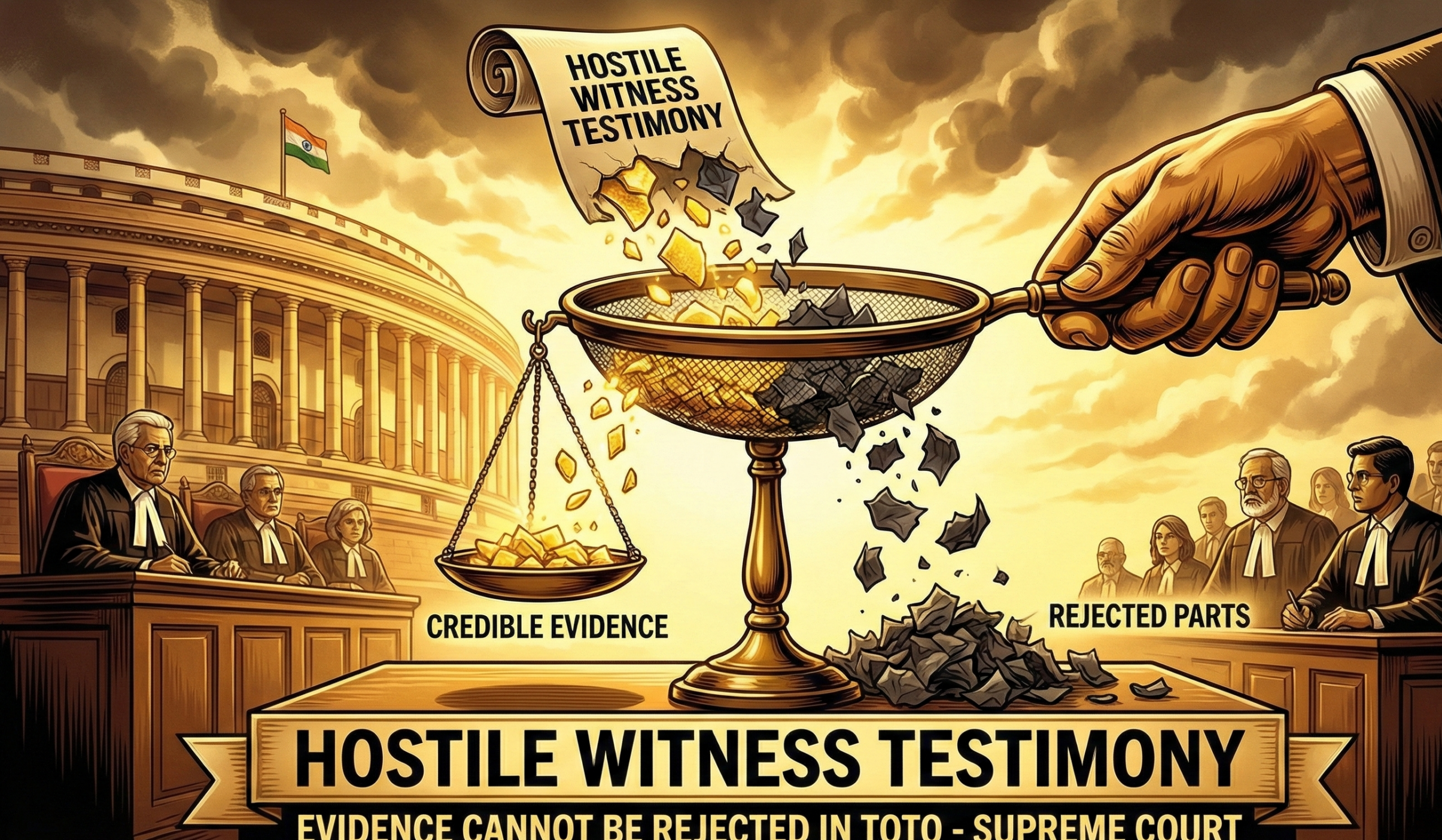
Hostile Witness Testimony: Evidence Cannot Be Rejected in Toto
Hostile testimony is not automatically worthless.Courts cannot reject such evidence in toto.Credible and corroborated portions remain admissible.Judges must separate truth from exaggeration
1 min read →
Immediate Action, Reasonable Speed: Supreme Court Clarifies ‘Forthwith’ in Seizure Reporting Requirement
The Supreme Court clarifies that “forthwith” does not mean instantaneous action. Reasonable promptness satisfies statutory seizure reporting requirements. Minor, explained delays will not automatically vitiate prosecution. Procedural law must advance justice, not defeat it.
1 min read →
Liberty Not Lightly Curtailed
The Supreme Court has reaffirmed that personal liberty cannot be curtailed casually. Bail remains the rule, and jail the exception under Article 21. Pre trial detention cannot become a substitute for punishment. Courts must record strong, specific reasons before denying bail.
1 min read →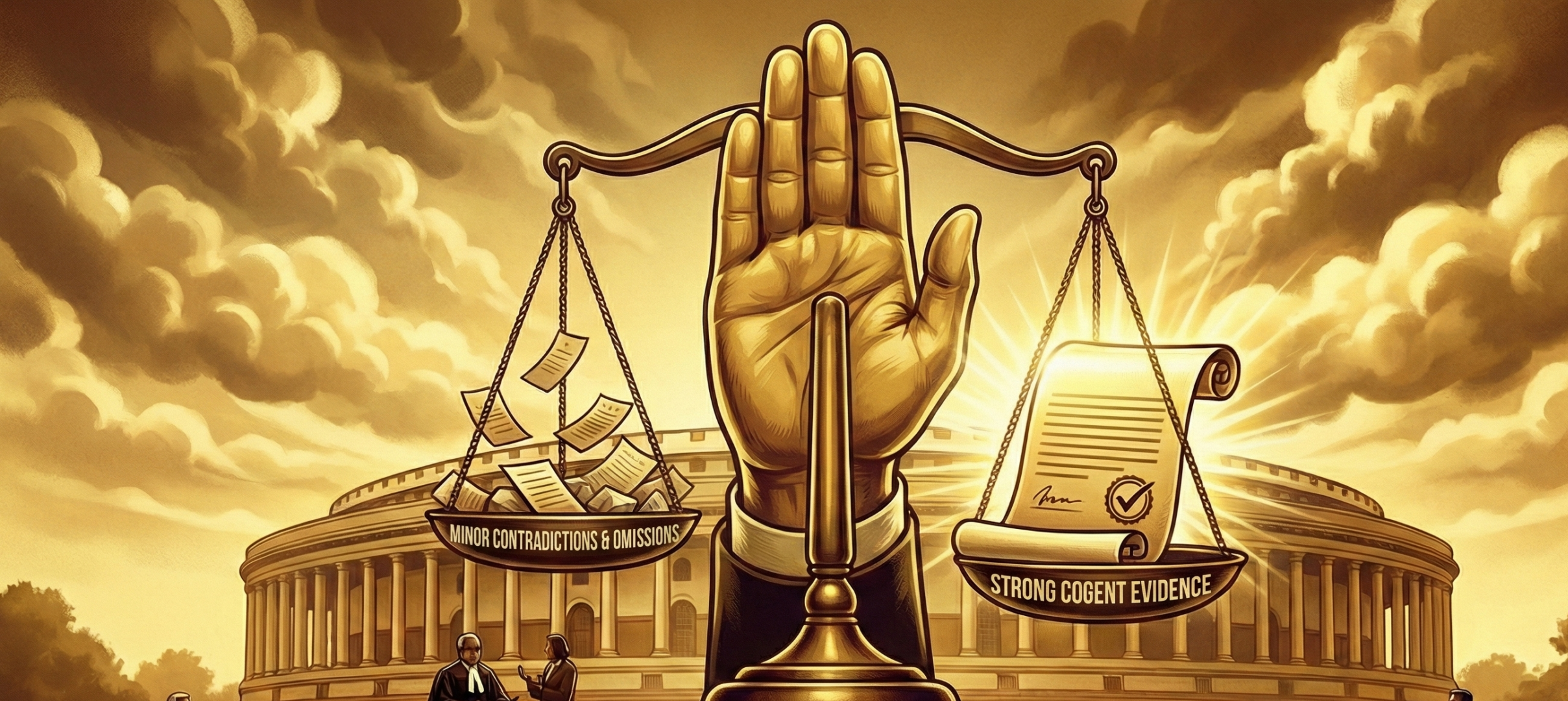
Every Contradiction or Omission Is Not — Court Ruling
The Supreme Court has ruled that minor contradictions or omissions in witness testimony are not enough to invoke Section 319 Cr.P.C. Courts can summon additional accused only when strong and cogent evidence emerges during trial. The judgment raises the evidentiary threshold and reinforces judicial restraint. It safeguards personal liberty while preventing mechanical use of extraordinary criminal powers.
2 min read →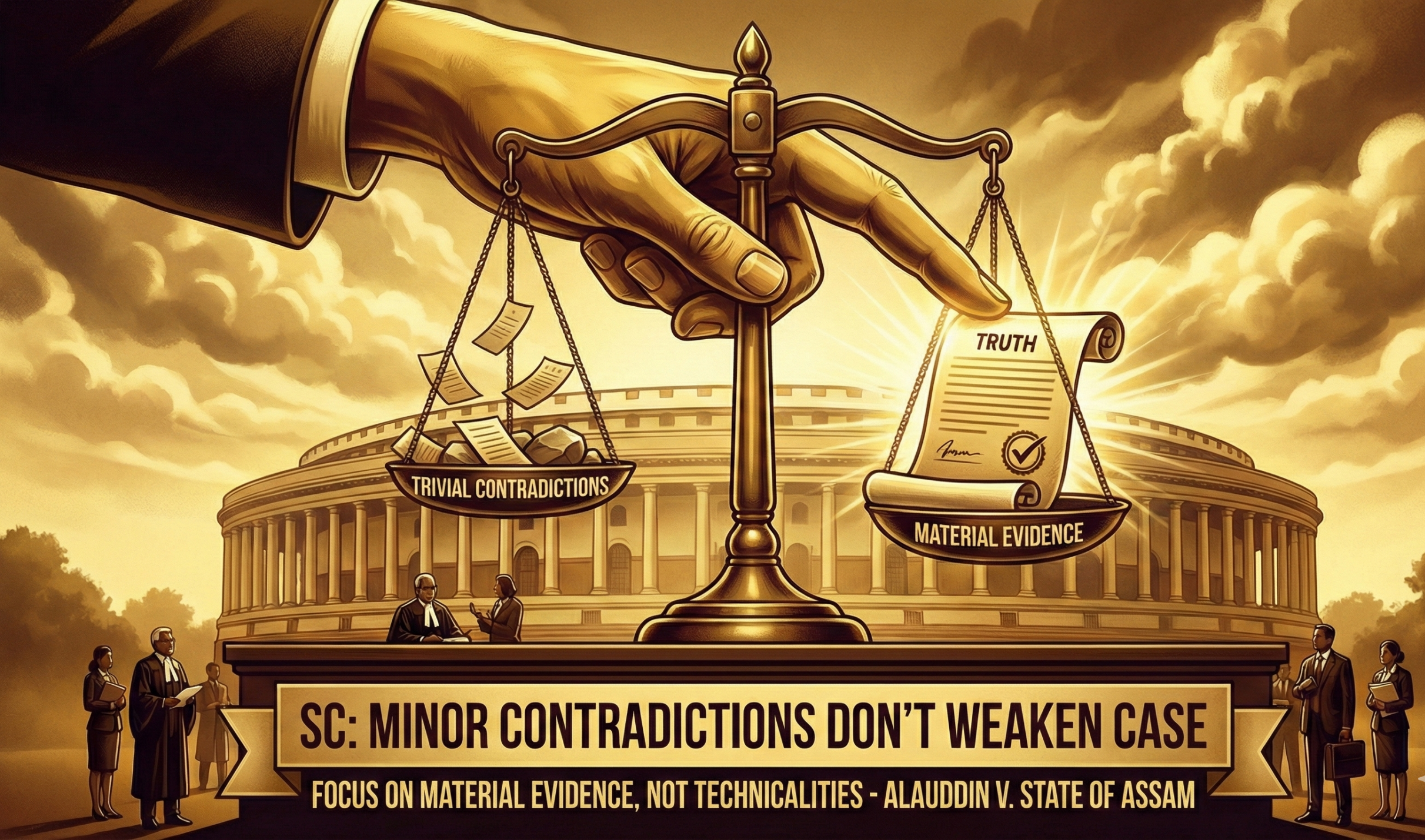
Analysing the Supreme Court’s Verdict in Alauddin & Ors. v. State of Assam & Anr
he Supreme Court in Alauddin & Ors. v. State of Assam & Anr. clarified that minor contradictions in witness testimony do not automatically weaken a criminal case. The Court distinguished between material inconsistencies and trivial discrepancies. It emphasized holistic evaluation of evidence rather than hyper-technical scrutiny. The ruling reinforces realistic evidentiary standards in criminal trials.
2 min read →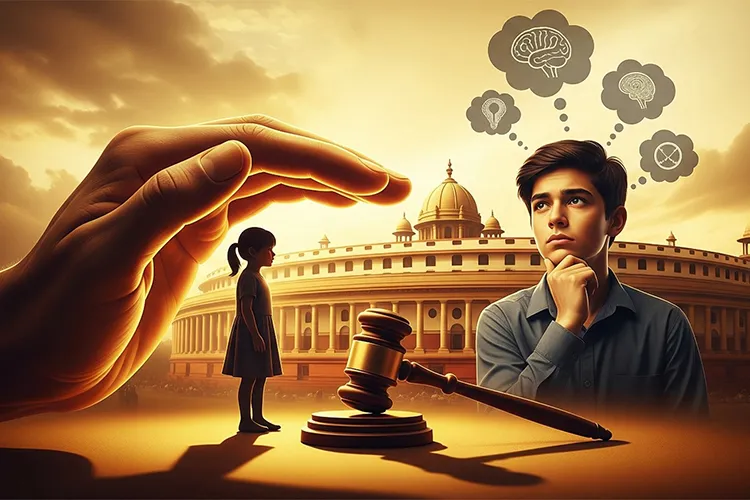
India’s Child Protection Law: A New Look at Teens and their Mental Health
Recent Supreme Court rulings and ongoing debates highlight the complexities of the Protection of Children from Sexual Offences (POCSO) Act, especially concerning adolescent consensual relationships and their mental health impact. While amendments have strengthened punishments, calls persist for a more nuanced approach that considers the evolving understanding of adolescent sexuality and the mental well-being of both victims and accused.
3 min read →
New Indian Criminal Laws: A Debate on Freedom and Government Control
India’s new criminal laws – Bharatiya Nyaya Sanhita (BNS), Bharatiya Nagarik Suraksha Sanhita (BNSS), and Bharatiya Sakshya Adhinayam (BSA) – replacing colonial-era statutes from July 1, 2024, aim to modernize justice. However, a closer look reveals significant concerns about increased police powers, broader definitions, and potential for confusion, raising questions about their true ‘decolonizing’ impact.
4 min read →