Under 17
How a Bill Becomes a Law in India (Step-by-Step)
A bill is a proposal for a new law or a change to an existing law. Before becoming a law, it must pass through several stages of scrutiny, debate, approval, and Presidential assent.
Overview
The law-making process in India follows a structured procedure designed to ensure that proposed legislation is carefully examined before becoming law. A bill must pass through Parliament and receive the President’s approval.This process promotes democratic participation, accountability, and transparency by involving elected representatives at multiple stages of review and decision-making.
Key Points
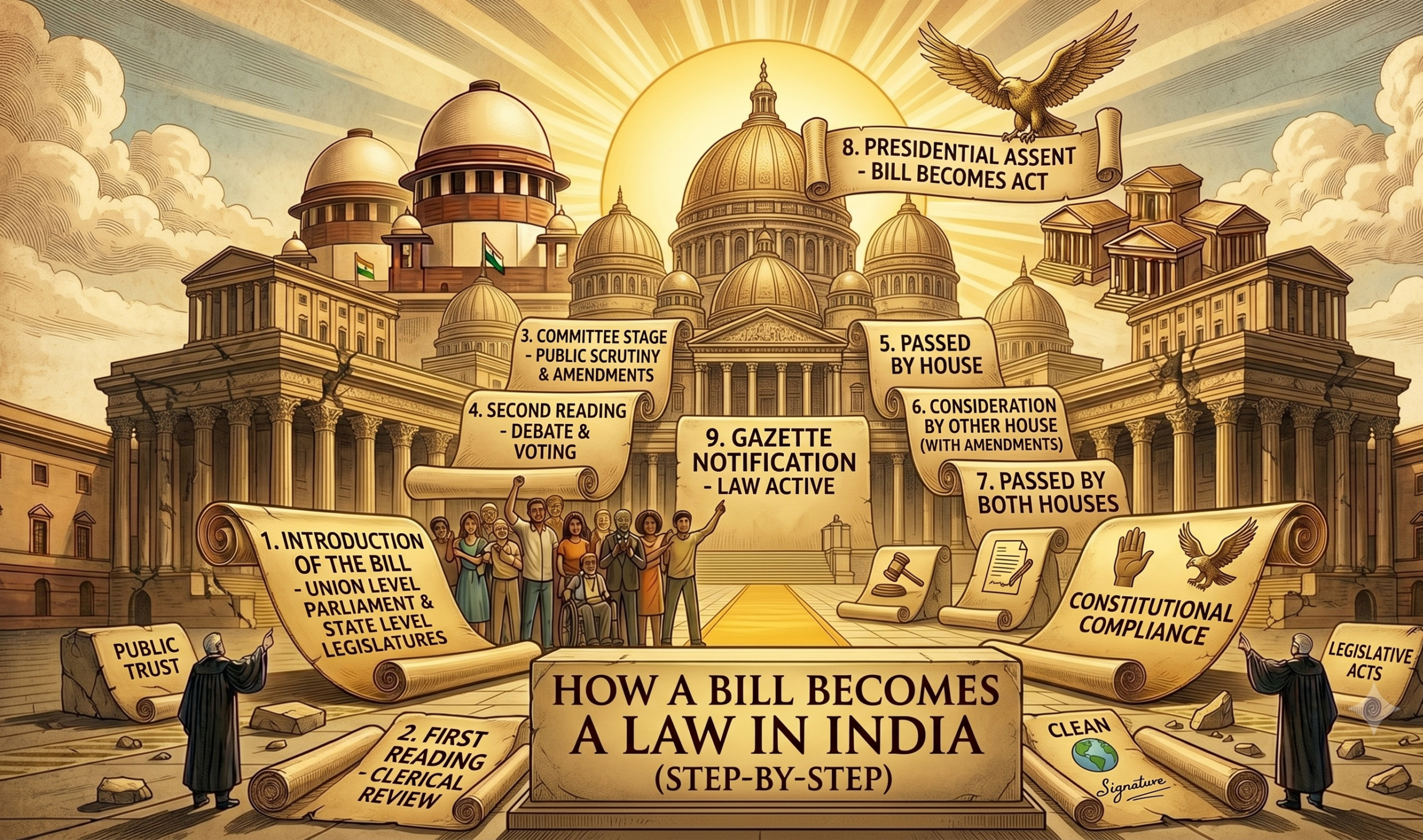
- Bill Introduced: Government Bill or Private Member’s Bill
- First Reading: Formal introduction of the bill
- Committee Review: Detailed examination and recommendations
- Second Reading: Debate and clause-by-clause discussion
- Parliamentary Voting: Approval by both Houses
- President’s Assent: Bill becomes law after approval
- Notification: Official publication and enforcement
Legal Analysis
India’s legislative process is designed to prevent hasty law-making and ensure that legislation receives detailed scrutiny before implementation. Parliamentary debates and committee reviews help identify legal, administrative, and policy concerns.The requirement of approval by both Houses of Parliament creates an important system of checks and balances. It ensures that different viewpoints are considered before a bill becomes law.
Presidential assent serves as the final constitutional step in the legislative process. Once approved and notified, the bill becomes enforceable law.Although the process promotes accountability, legislative delays can occur due to political disagreements, parliamentary disruptions, or extensive debate on controversial issues.
Examples
GST Act, 2017: Passed through parliamentary approval and Presidential assent before implementation.
Right to Information Act, 2005: Became law after debate and approval by Parliament.
Digital Personal Data Protection Act, 2023: Followed the full legislative process before enforcement.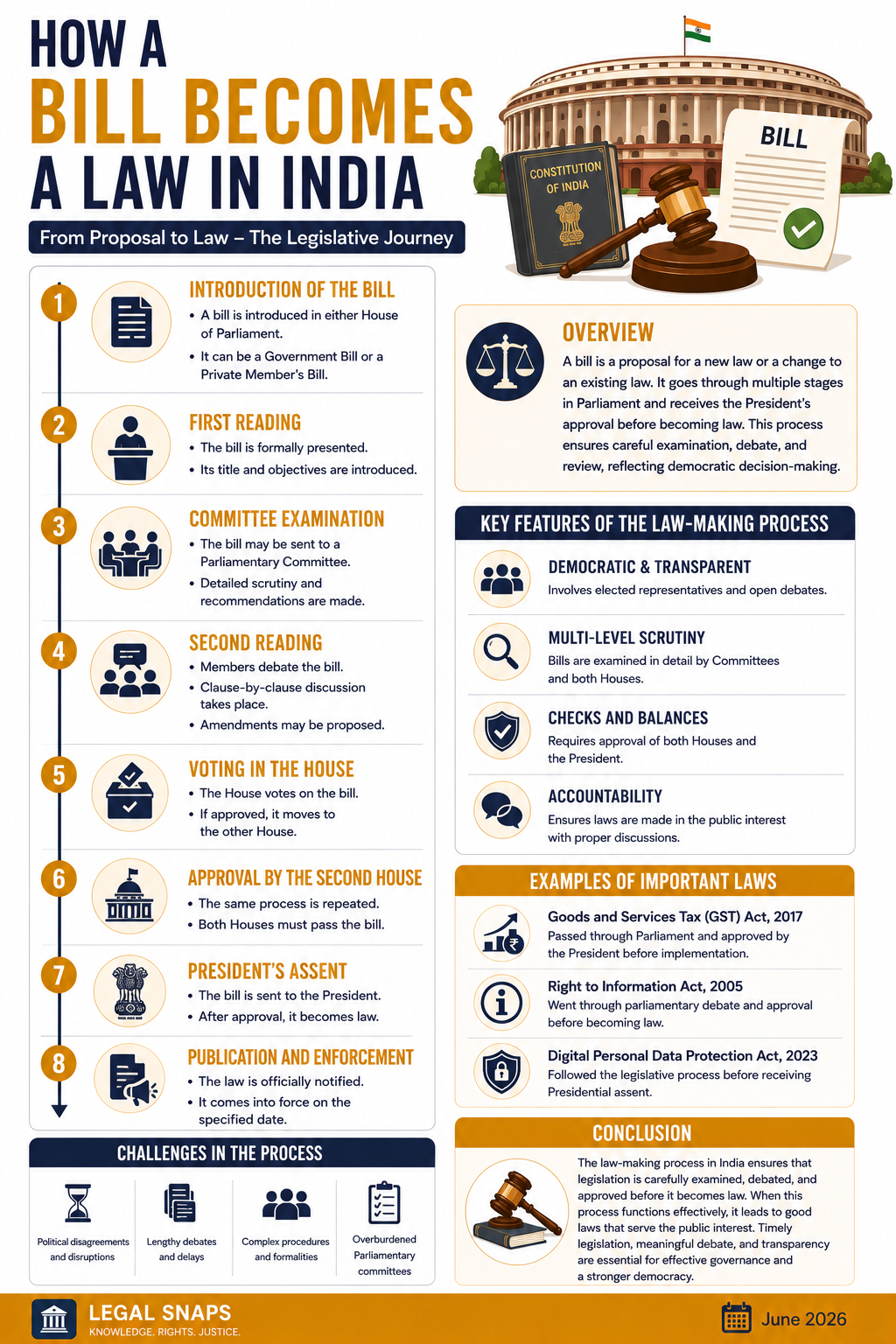
Conclusion
The process through which a bill becomes a law is a fundamental feature of India’s parliamentary democracy. It ensures that legislation is reviewed, debated, and approved before affecting citizens and institutions.When functioning effectively, this system produces balanced and well-considered laws. Transparency, meaningful debate, and proper scrutiny remain essential for maintaining public confidence in the legislative process.
“`