Under 17
Types of Bills in India (Money Bill, Ordinary Bill, and Others)
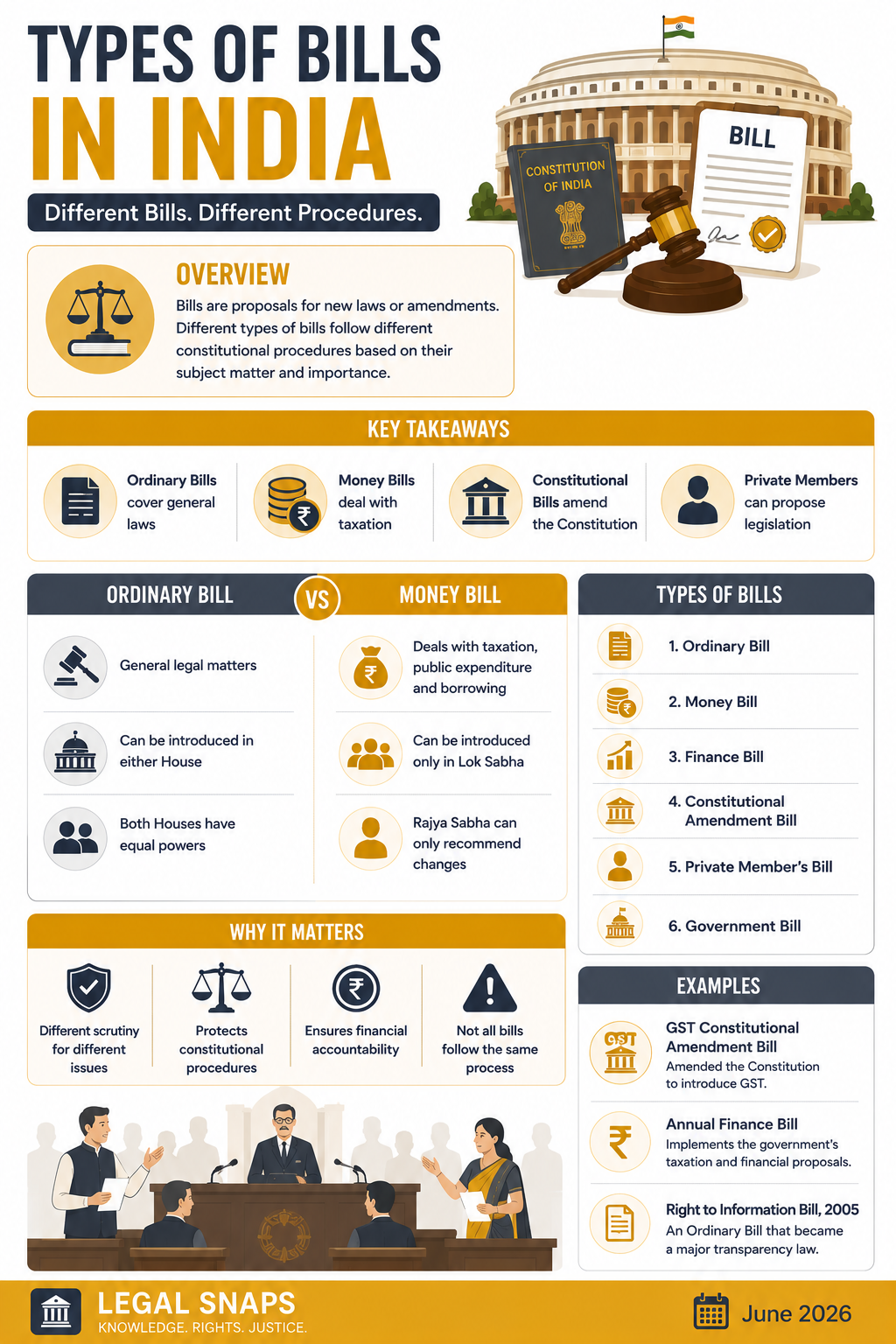
Bills are proposals for new laws or amendments to existing laws. The Indian Constitution recognizes different types of bills, each following a specific legislative procedure based on its subject matter and importance.

Overview
A bill is the first step in the law-making process. Before becoming law, it must pass through Parliament and receive the President’s assent.Different categories of bills exist for different purposes, such as financial matters, constitutional amendments, and general legislation. Each type follows its own constitutional procedure.
Key Points
- Ordinary Bill: General legislation, passed by both Houses
- Money Bill: Taxation and expenditure matters (Article 110)
- Finance Bill: Budget and government revenue proposals
- Constitutional Amendment Bill: Changes provisions of the Constitution
- Private Member’s Bill: Introduced by a non-minister MP
- Government Bill: Introduced by a minister on behalf of the government
Legal Analysis
The classification of bills ensures that important matters receive the appropriate level of scrutiny. Financial legislation follows special procedures to protect public funds and maintain parliamentary control over taxation and expenditure.Constitutional Amendment Bills require a special majority because they affect the fundamental legal framework of the country. Certain amendments also require ratification by state legislatures.
Government Bills account for the vast majority of legislation enacted in Parliament because they are backed by the ruling government and typically enjoy greater political support.Although Private Member’s Bills rarely become law, they play an important role in raising policy issues and encouraging legislative debate.
Examples
GST Constitutional Amendment Bill: Amended the Constitution to introduce the Goods and Services Tax.
Finance Bill: Implements annual taxation and budget proposals of the Union Government.
Right to Information Bill, 2005: An Ordinary Bill that became a landmark transparency law.
Conclusion
Different types of bills form the foundation of India’s legislative process and ensure that laws are examined according to their significance and subject matter.By providing separate procedures for ordinary, financial, and constitutional legislation, the Constitution promotes accountability, transparency, and effective democratic governance. Understanding these categories helps citizens better appreciate how laws are made and amended in India.
“`