Under 17
Issues in the Indian Judiciary (Delay and Backlog)
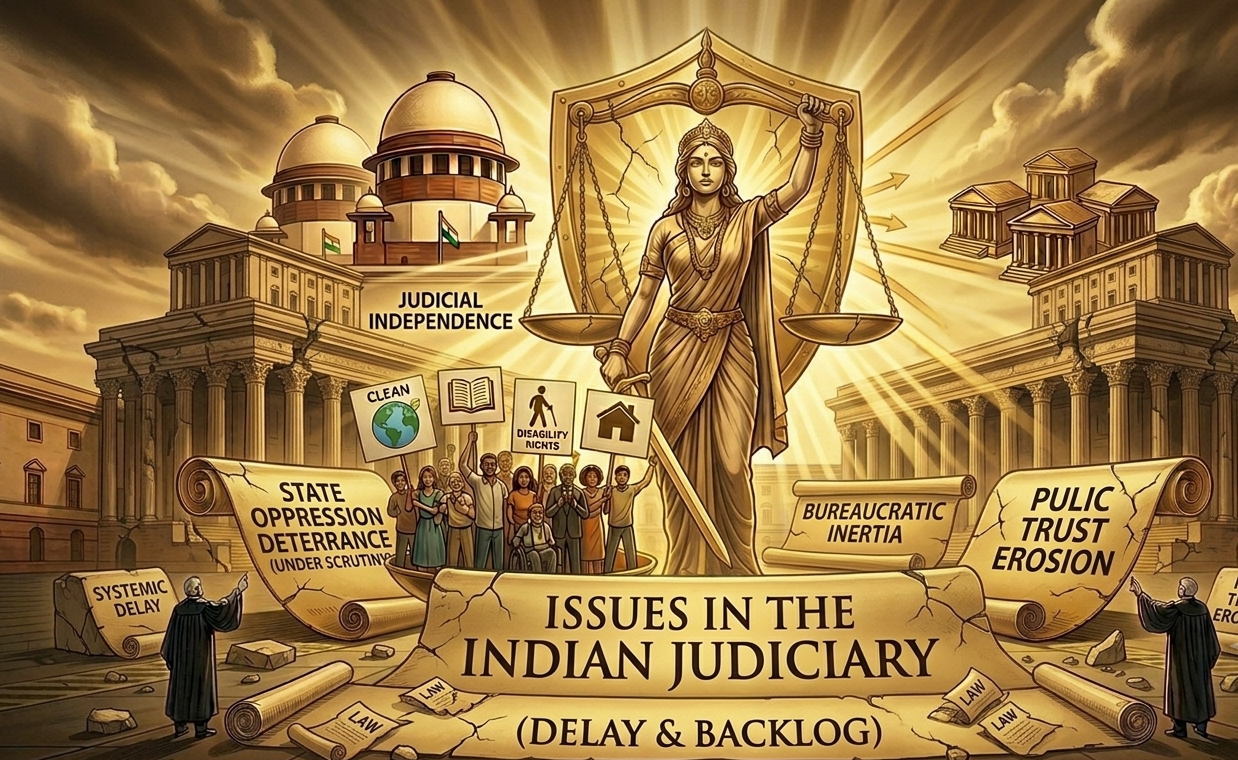
Judicial delays and case backlogs are among the most serious challenges facing India’s justice system. They affect access to justice, increase litigation costs, and reduce public confidence in the courts.
Overview
The Indian judiciary plays a crucial role in protecting rights and upholding the rule of law. However, delays in court proceedings and the growing number of pending cases continue to affect its efficiency.These challenges impact citizens, businesses, and government institutions alike, often resulting in prolonged litigation and delayed justice.
Key Points
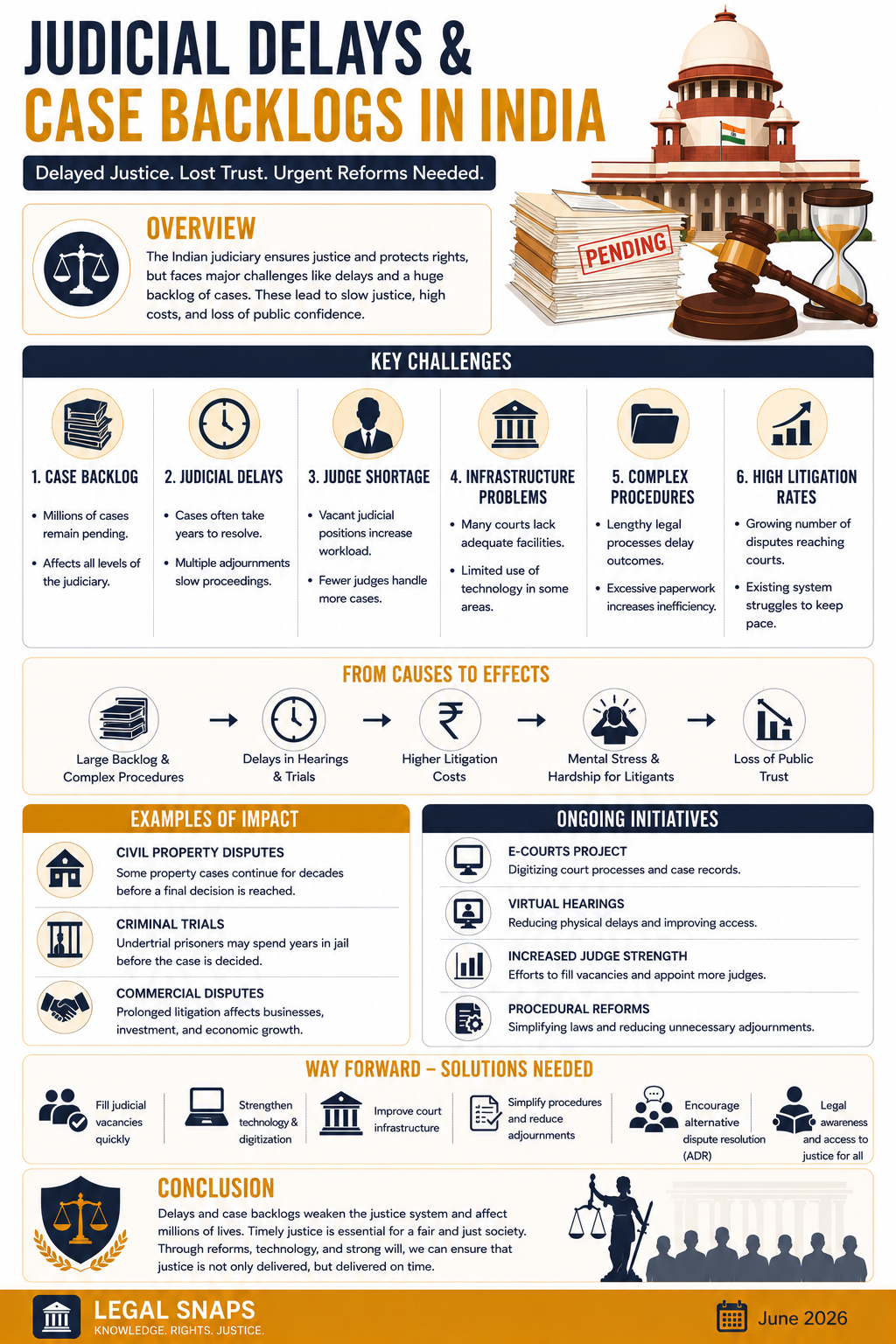
- Case Backlog: Millions of cases remain pending across courts
- Judicial Delays: Cases may take years to reach final resolution
- Judge Shortage: Vacancies increase workload on existing judges
- Infrastructure Issues: Many courts face resource limitations
- Complex Procedures: Lengthy processes slow case disposal
- High Litigation Rates: New cases continue to increase annually
Legal Analysis
Judicial delays are often described through the principle that “justice delayed is justice denied.” When cases remain unresolved for long periods, citizens may struggle to obtain timely relief and legal certainty.Several factors contribute to pendency, including judicial vacancies, frequent adjournments, procedural complexity, and inadequate infrastructure. These issues affect courts at every level of the judicial hierarchy.
Recent initiatives such as e-Courts, virtual hearings, digitization of records, and online case management systems have improved efficiency. However, technology alone cannot solve the problem without structural reforms.Faster judicial appointments, modern infrastructure, procedural simplification, and greater use of technology are widely viewed as essential steps for reducing backlog and improving access to justice.
Examples
Civil Property Disputes: Some land and property cases remain pending for decades.
Criminal Trials: Undertrial prisoners may spend years awaiting final judgment.
Commercial Litigation: Delayed dispute resolution can affect business growth and investment.
Conclusion
The Indian judiciary remains a cornerstone of constitutional democracy, but delays and case backlogs continue to affect its effectiveness and accessibility.Reducing pendency through judicial reforms, improved infrastructure, technological modernization, and timely appointments is essential for delivering faster and more effective justice. Strengthening these areas will help ensure that justice remains accessible to all citizens.
“`