Under 17
Independence of Judiciary: Why It Matters
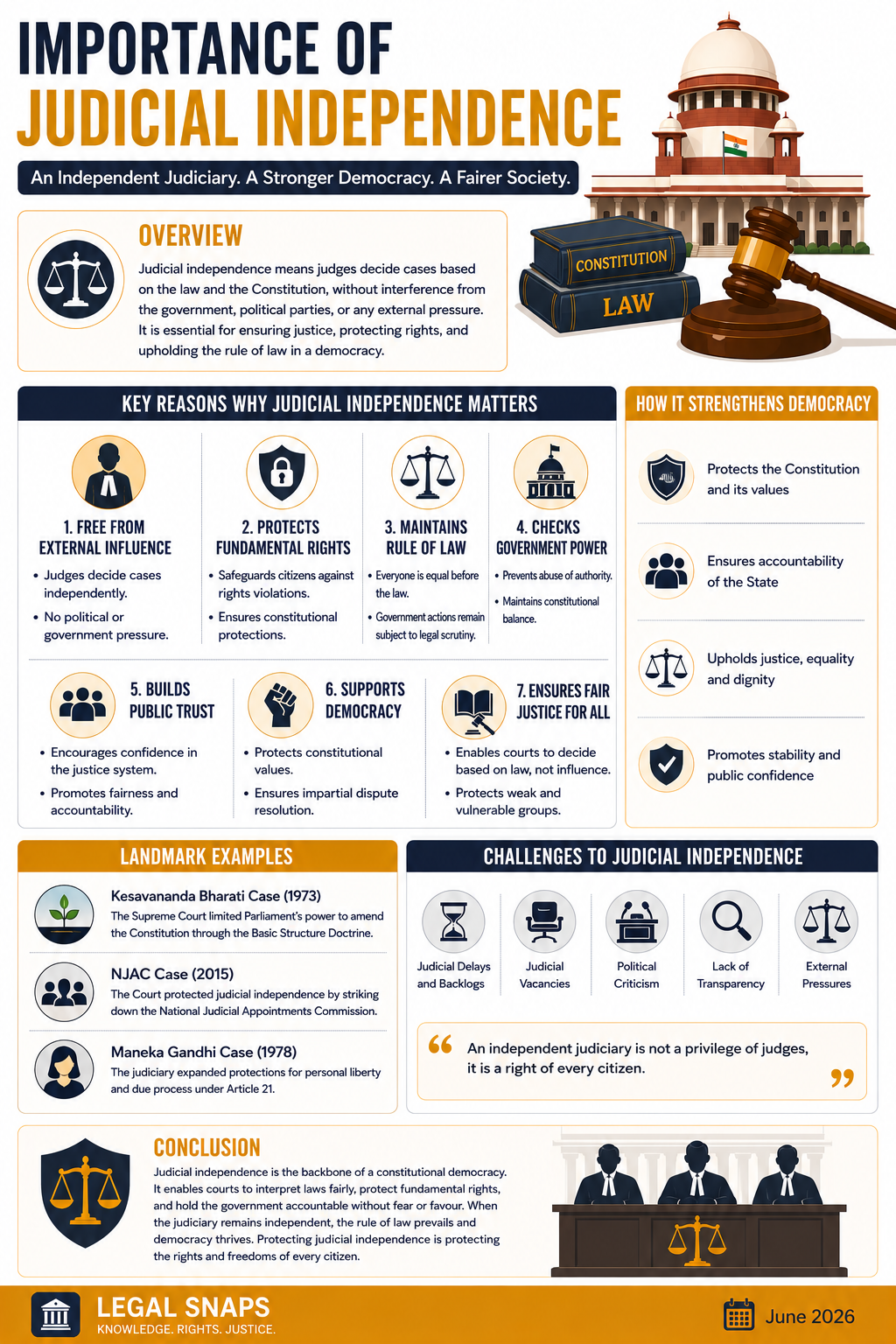
Judicial independence ensures that judges can decide cases based solely on the Constitution and the law, free from political influence or external pressure. It is a fundamental pillar of democracy and the rule of law.

Overview
Judicial independence means that courts and judges are free to perform their duties without interference from the government, political parties, powerful individuals, or other external forces.An independent judiciary protects citizens’ rights, maintains constitutional governance, and ensures that justice is delivered fairly and impartially. It is one of the most important safeguards in a democratic system.
Key Points
- Free from Influence: Judges decide cases independently
- Protects Rights: Safeguards constitutional freedoms
- Maintains Rule of Law: Everyone remains equal before law
- Checks Government Power: Prevents abuse of authority
- Builds Public Trust: Promotes confidence in courts
- Supports Democracy: Preserves constitutional values
Legal Analysis
Judicial independence is essential for ensuring that courts can protect constitutional rights and review government actions without fear or pressure. It allows judges to make decisions based solely on legal principles and evidence.An independent judiciary serves as a check on the Legislature and Executive, preventing arbitrary exercise of power and maintaining constitutional balance.
Several landmark judgments have demonstrated the judiciary’s ability to safeguard constitutional principles even when cases involve powerful political institutions or controversial issues.At the same time, judicial independence must be balanced with accountability, transparency, and public confidence to maintain the legitimacy of the justice system.
Examples
Kesavananda Bharati (1973): Established the Basic Structure Doctrine and limited Parliament’s amending power.
NJAC Case (2015): Supreme Court struck down the National Judicial Appointments Commission to preserve judicial independence.
Maneka Gandhi (1978): Expanded constitutional protections for personal liberty and due process.
Conclusion
Judicial independence is one of the most important features of India’s constitutional framework. It ensures that courts can protect rights, uphold the Constitution, and hold governments accountable without external influence.When the judiciary remains independent and impartial, it strengthens democracy, protects individual freedoms, and reinforces public trust in the rule of law. Preserving this independence remains essential for a healthy constitutional democracy.
“`