Under 17
How laws are made in Parliament
Laws in India are made through a structured parliamentary process involving multiple stages of discussion, approval, and review. A Bill must pass both houses and receive the President’s assent to become law. This system ensures accountability but depends on meaningful debate to be effective.
Overview
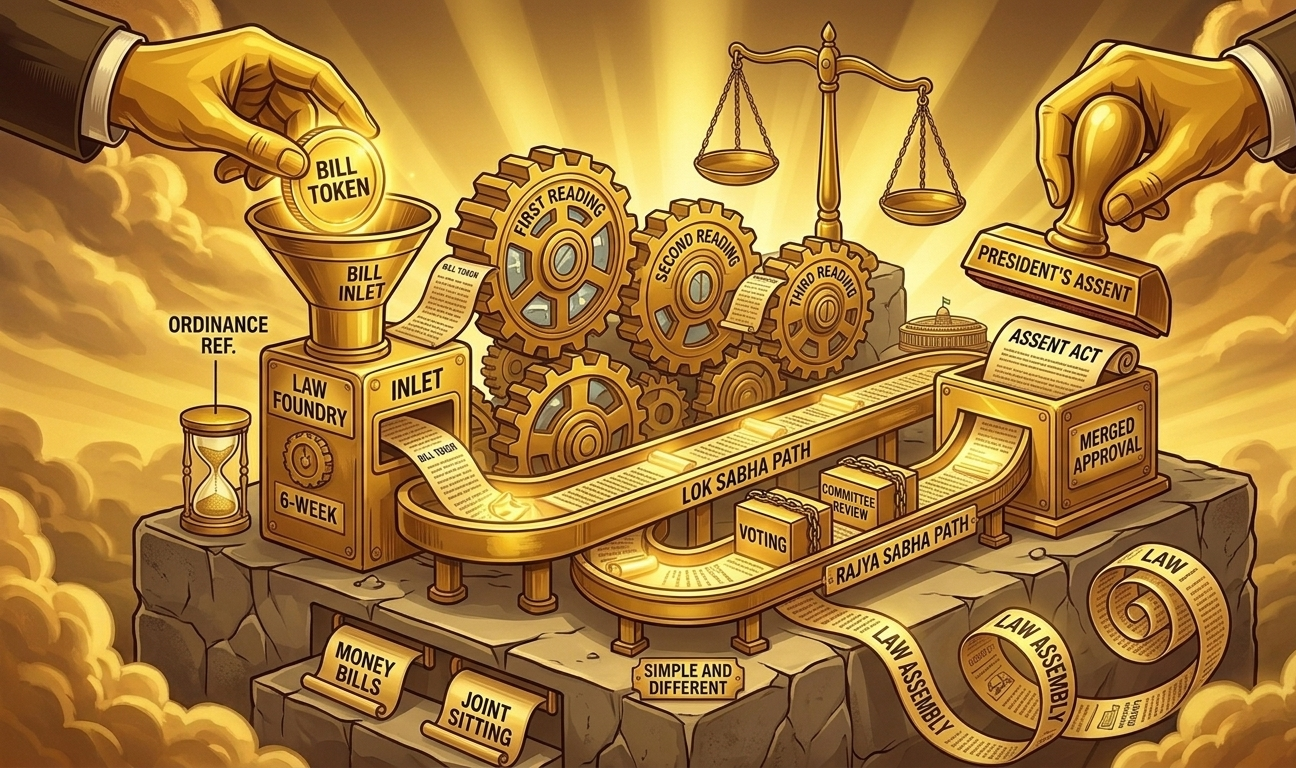
Laws in India are made through a structured process in Parliament involving both houses Lok Sabha and Rajya Sabha and the President. A proposed law is called a Bill.The Bill must be discussed, approved by both houses, and then receive the President’s assent to become an Act. This process ensures debate, review, and accountability, preventing rushed law-making.
Key Points
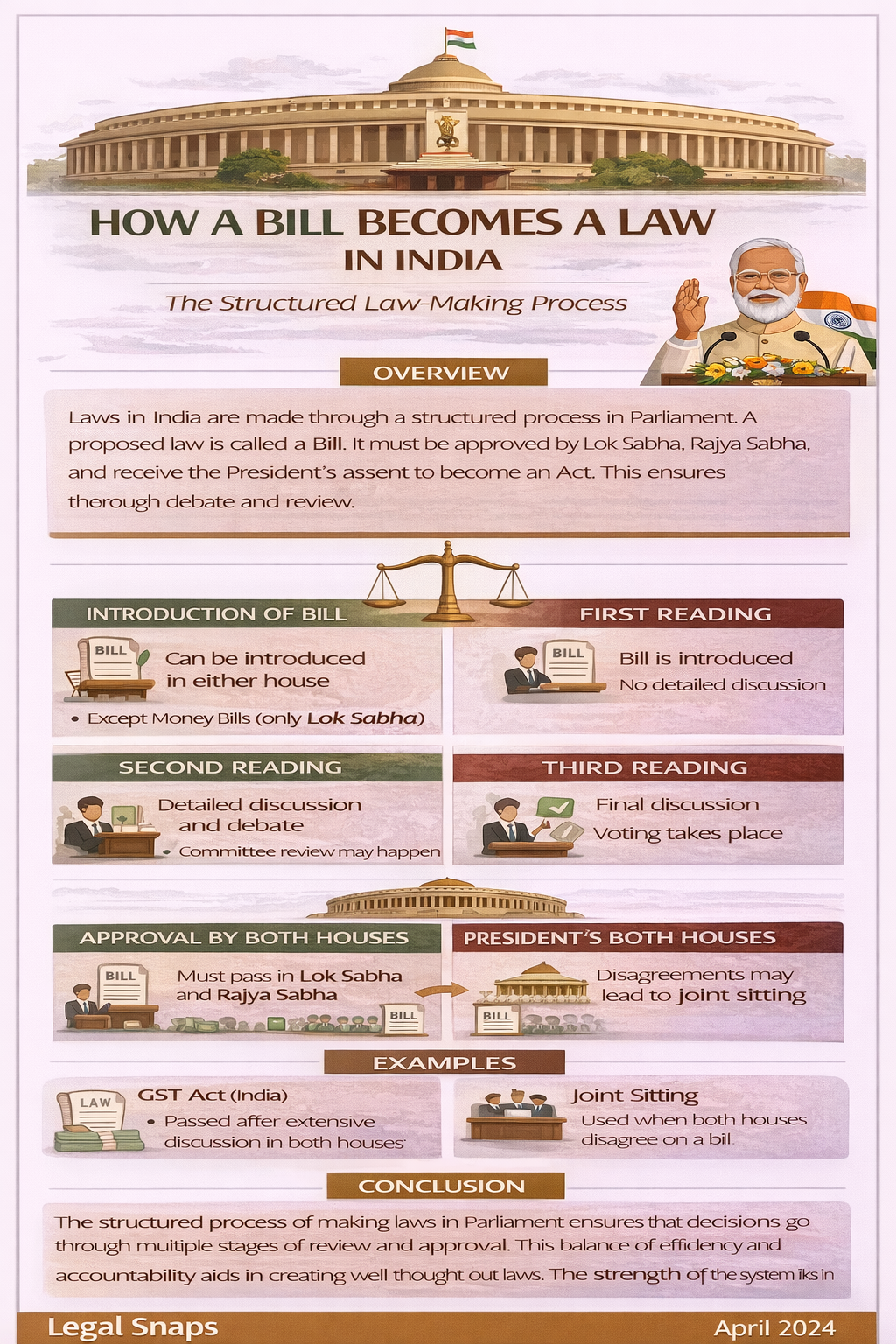
- Introduction of Bill: Can be introduced in either house, except Money Bills (only Lok Sabha)
- First Reading: Bill is introduced without detailed discussion
- Second Reading: Detailed discussion, debate, and possible committee review
- Third Reading: Final discussion followed by voting
- Approval by Both Houses: Must pass in Lok Sabha and Rajya Sabha; disagreements may lead to joint sitting
- President’s Assent: Final approval by the President; Bill becomes law (Act)
Legal Analysis
The law-making process is designed to ensure careful scrutiny through multiple stages of debate and review. Committee examinations and repeated readings help improve the quality of legislation.However, in practice, debates are sometimes limited, and bills may be passed quickly, reducing effective scrutiny. The dominance of a majority party can also influence how much discussion takes place.
This creates a gap between the designed process and actual practice. While the framework promotes accountability, its success depends on active participation and meaningful debate in Parliament.Thus, the strength of the system lies not only in its structure but in how seriously legislators engage with the process.
Examples
GST Act (India): Passed after extensive discussion and coordination between both houses.
Money Bills: Passed only in Lok Sabha, with limited role for Rajya Sabha.
Joint Sitting: Used to resolve disagreements between both houses on ordinary bills.
Conclusion
The process of making laws in Parliament ensures that legislation goes through multiple stages of review and approval, balancing efficiency with accountability.When followed properly, it leads to well-considered laws. However, if rushed or misused, it can weaken legislative quality. The effectiveness of the system depends on meaningful debate and active participation.