Under 17
Difference between Lok Sabha and Rajya Sabha
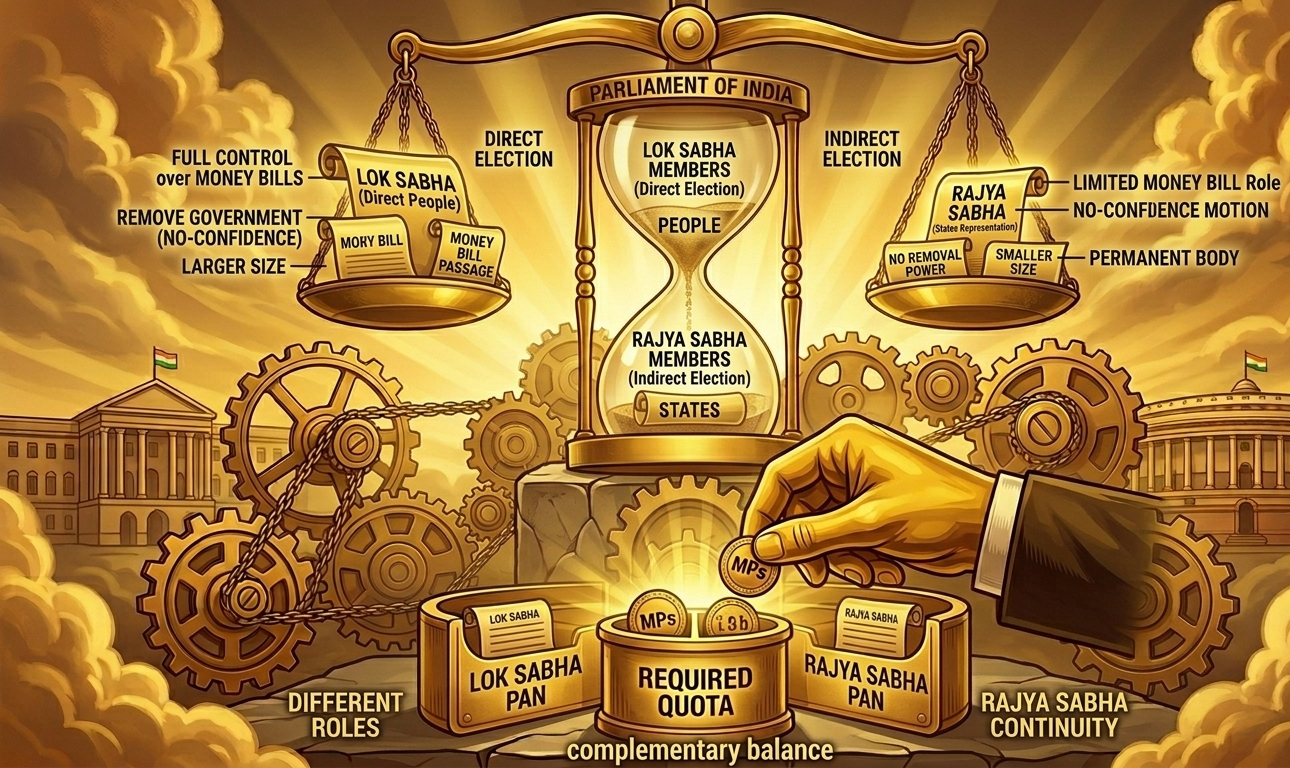
The Parliament of India is a bicameral legislature consisting of Lok Sabha and Rajya Sabha. While Lok Sabha represents the people, Rajya Sabha represents the states, creating a balance in law-making. Together, they ensure accountability, stability, and effective governance.
Overview
The Parliament of India is the highest law-making body and consists of two houses: Lok Sabha and Rajya Sabha. This structure is known as a bicameral legislature.Lok Sabha represents the people through direct elections, while Rajya Sabha represents the states. Both houses work together along with the President to make laws and oversee governance, ensuring balanced representation in the system.
Key Points
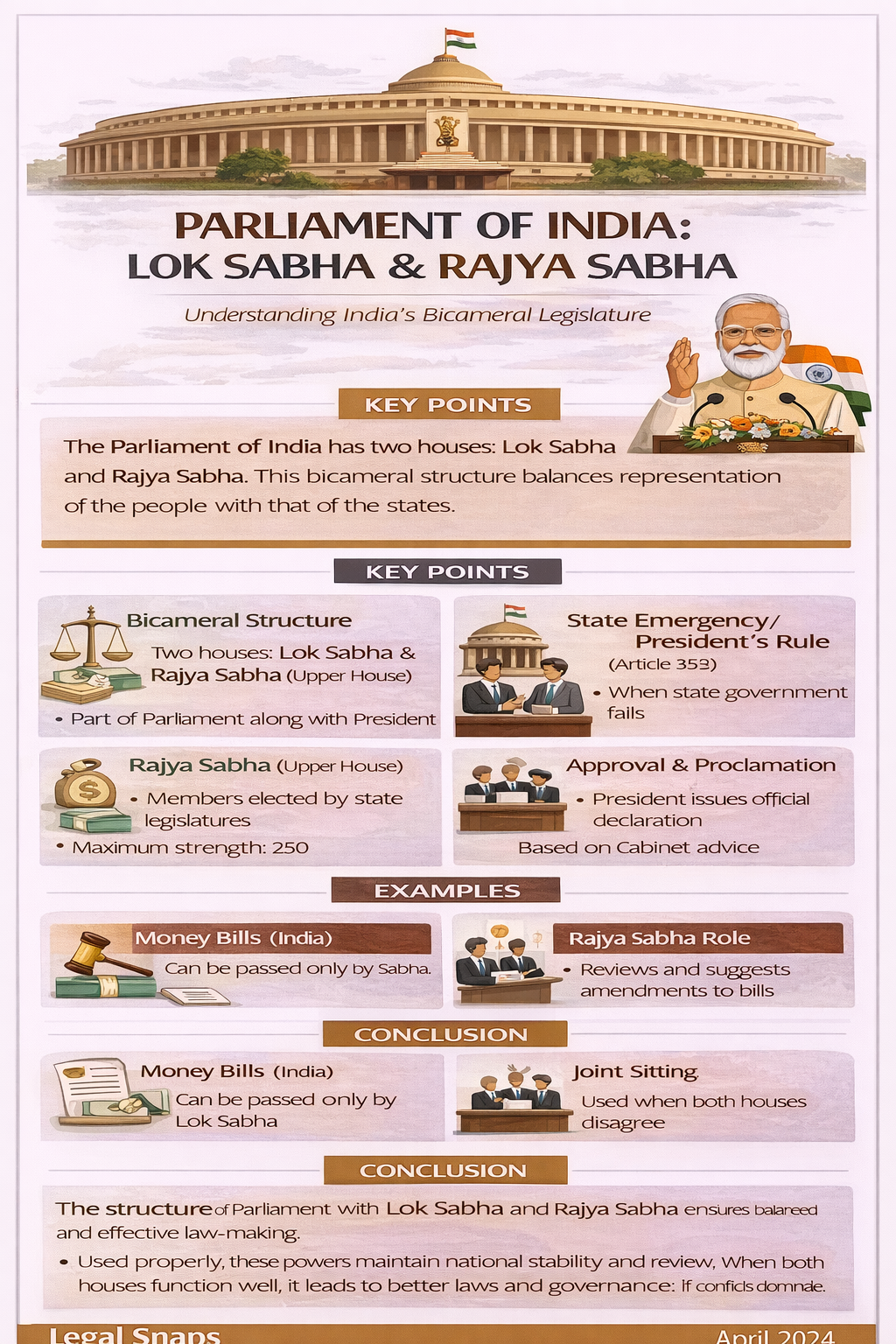
- Bicameral Structure: Two houses—Lok Sabha and Rajya Sabha—along with the President form Parliament
- Lok Sabha (Lower House): Directly elected; maximum strength 552; tenure of 5 years (can be dissolved)
- Rajya Sabha (Upper House): Indirectly elected by state legislatures; maximum strength 250; permanent body
- Representation: Lok Sabha based on population; Rajya Sabha represents states
- Powers: Lok Sabha controls government and money bills; Rajya Sabha reviews and suggests changes
Legal Analysis
The bicameral system ensures a balance in law-making by combining direct public representation with institutional stability. Lok Sabha reflects the will of the people, while Rajya Sabha provides continuity and safeguards state interests.This structure prevents rushed legislation by requiring review and discussion across both houses. It also ensures that diverse perspectives are considered before laws are passed.
However, disagreements between the two houses can delay legislation. Additionally, Lok Sabha holds greater power in financial matters, which can limit the influence of Rajya Sabha in certain areas.Despite these limitations, the system improves the quality of legislation and strengthens democratic governance through checks and balances.
Examples
Money Bills (India): Can be introduced and passed only in Lok Sabha, with limited role for Rajya Sabha.
Rajya Sabha Role: Reviews bills and suggests amendments before final approval.
Joint Sitting: Used to resolve deadlocks between both houses on ordinary bills.
Conclusion
The bicameral structure of Parliament ensures balanced and effective law-making by combining representation, stability, and review. Lok Sabha and Rajya Sabha together form the backbone of legislative governance in India.When both houses function cooperatively, it leads to better laws and stronger democracy. However, persistent conflicts can slow decision-making. The system works best when balance and coordination are maintained.