Under 17
When can the President use real power?
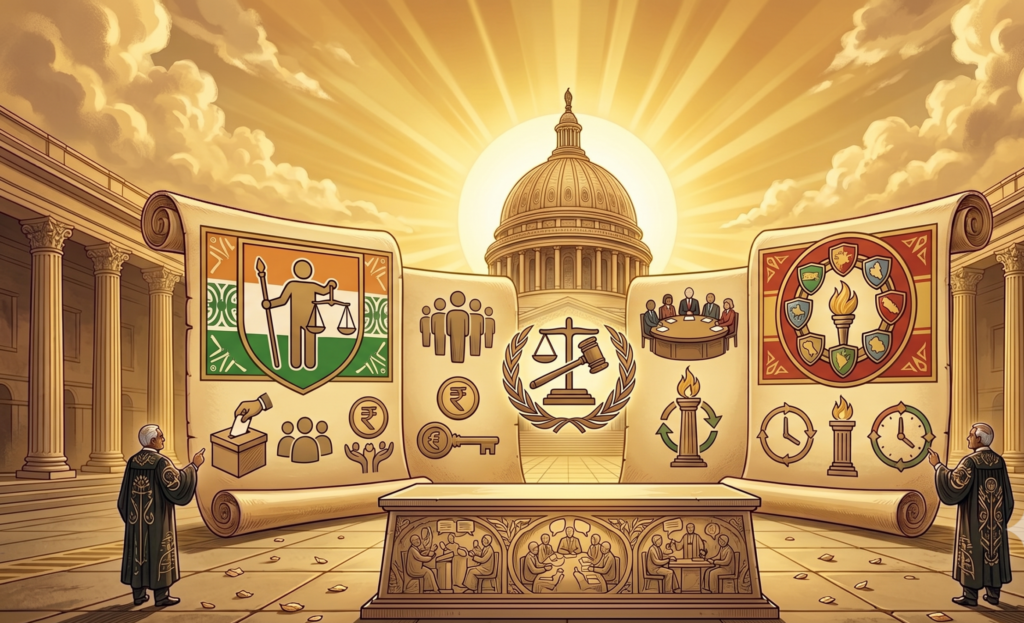
The President of India usually acts on ministerial advice, but real power appears during exceptional situations. In moments like a hung Parliament or constitutional uncertainty, the President must exercise judgment. These powers are limited but crucial for maintaining stability and constitutional balance.
Overview
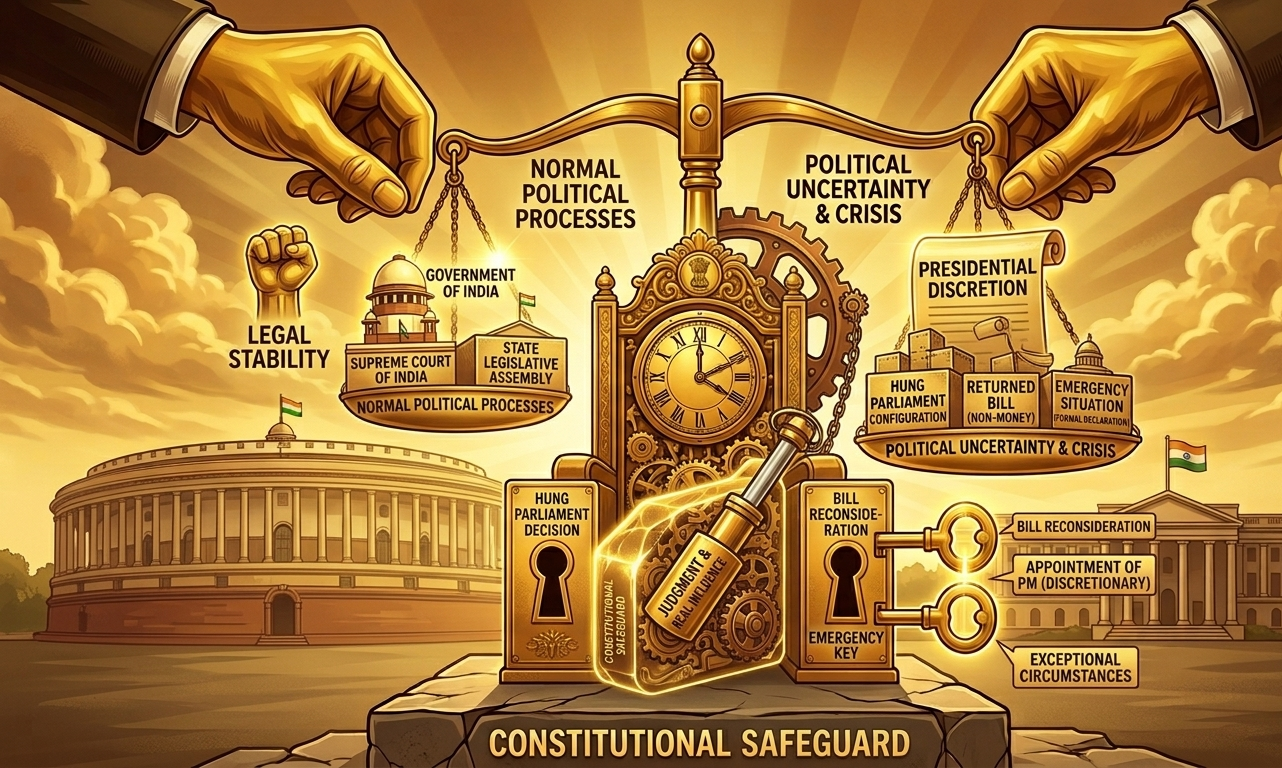
The President of India generally acts on the advice of the Council of Ministers, but there are specific situations where the President can exercise real influence. These situations arise mainly during political uncertainty or constitutional issues.In such cases, the President is not merely a formal authority but must use independent judgment. These powers are limited but important, acting as safeguards when normal political processes are unclear.
Key Points
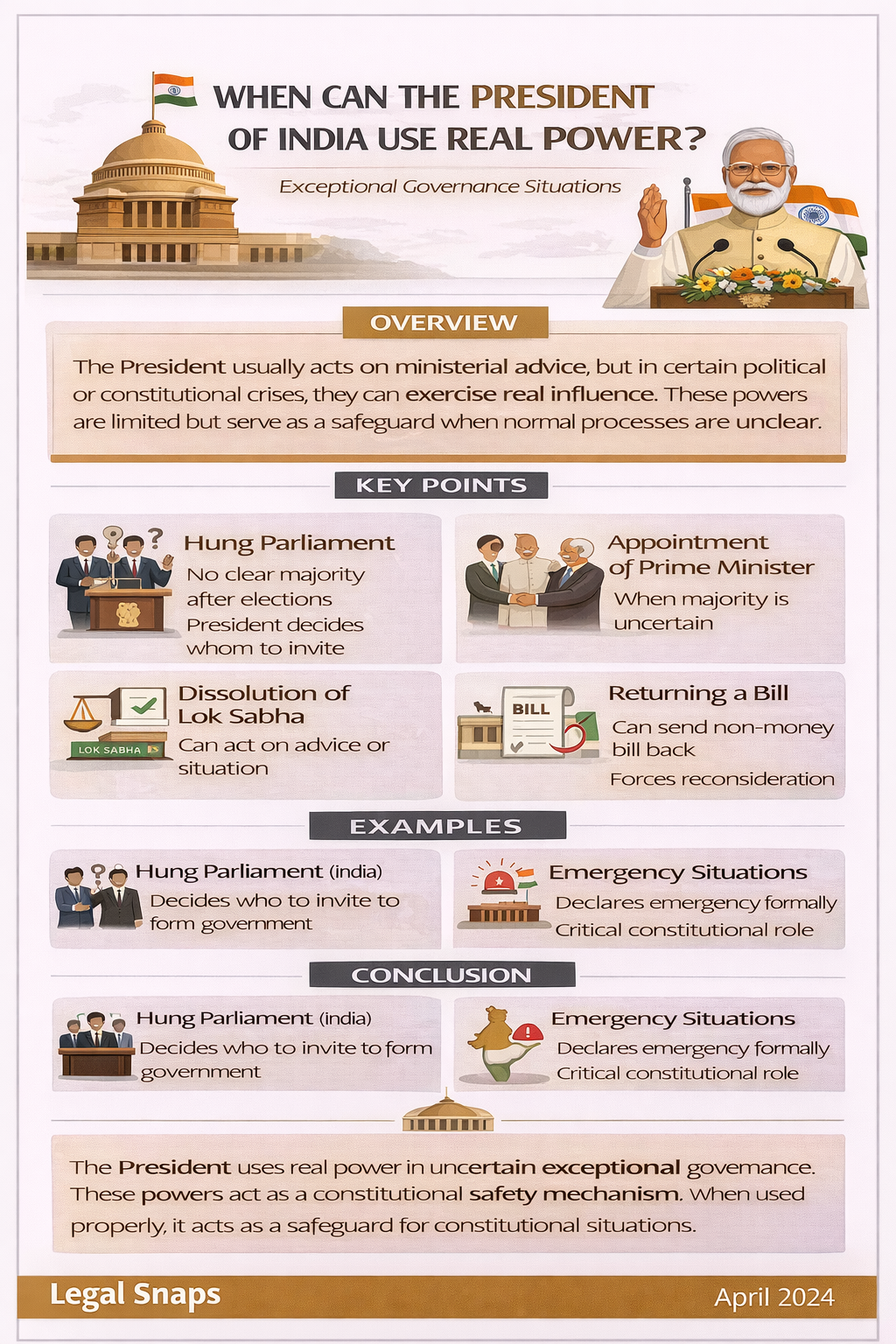
- Hung Parliament: No clear majority; President decides whom to invite to form the government
- Appointment of Prime Minister: Uses discretion when majority support is uncertain
- Dissolution of Lok Sabha: May act on advice or refuse in specific circumstances
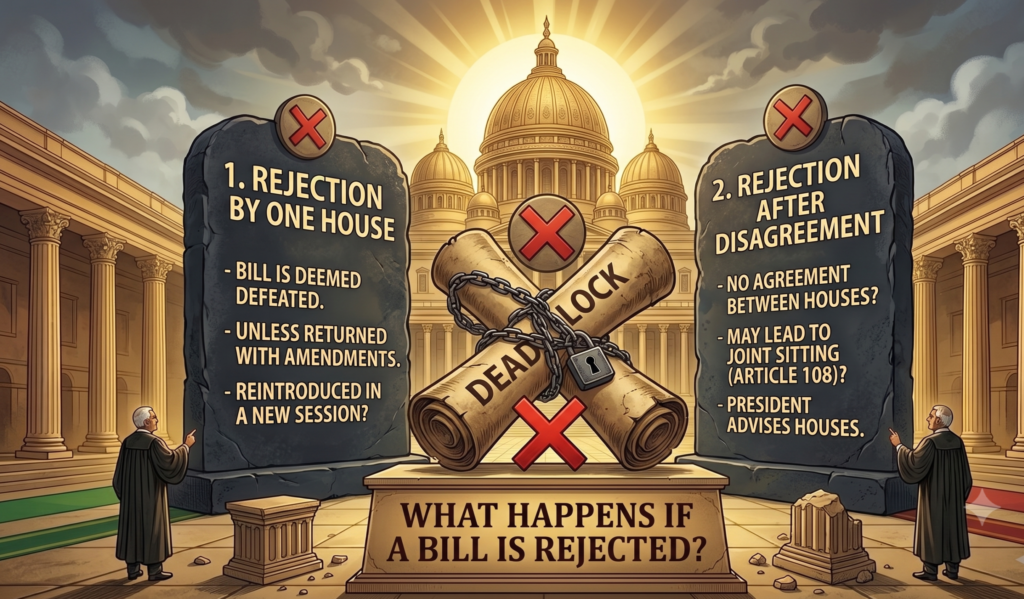
- Returning a Bill: Can send non-money bills back for reconsideration
- Emergency Situations: Formally declares emergencies with critical constitutional impact
Legal Analysis
The President’s real authority emerges in constitutional grey areas where clear rules do not exist. In situations like a hung Parliament, the decision on who forms the government can directly influence political outcomes.Similarly, powers such as returning a bill or handling requests for dissolution of the Lok Sabha can act as checks on executive authority.
However, these powers are not absolute. They are guided by constitutional conventions and legal limitations, ensuring that the President does not override democratic processes.Proper use of these powers maintains constitutional balance, while misuse can lead to political controversy or institutional conflict. The role is mostly passive but becomes decisive when required.
Examples
Hung Parliament (India): The President invited the leader most likely to secure majority support.
Bill Reconsideration: The President returned bills for review, requiring Parliament to reconsider.
Emergency (1975 India): The President formally declared emergency based on government advice.
Conclusion
The President exercises real power mainly during exceptional and uncertain situations. These powers act as a constitutional safeguard when normal political processes are unclear.When used responsibly, they maintain stability and protect democratic balance. However, misuse can lead to controversy and institutional conflict. The strength of the role lies in careful and limited intervention.