Under 17
Is the President just a symbolic head?
The President of India is often seen as a ceremonial head, but that view is incomplete. While most powers are exercised on the advice of the government, the President holds important constitutional authority and limited discretion in key situations. The role is largely ceremonial in routine governance, but becomes significant during political uncertainty.
Overview
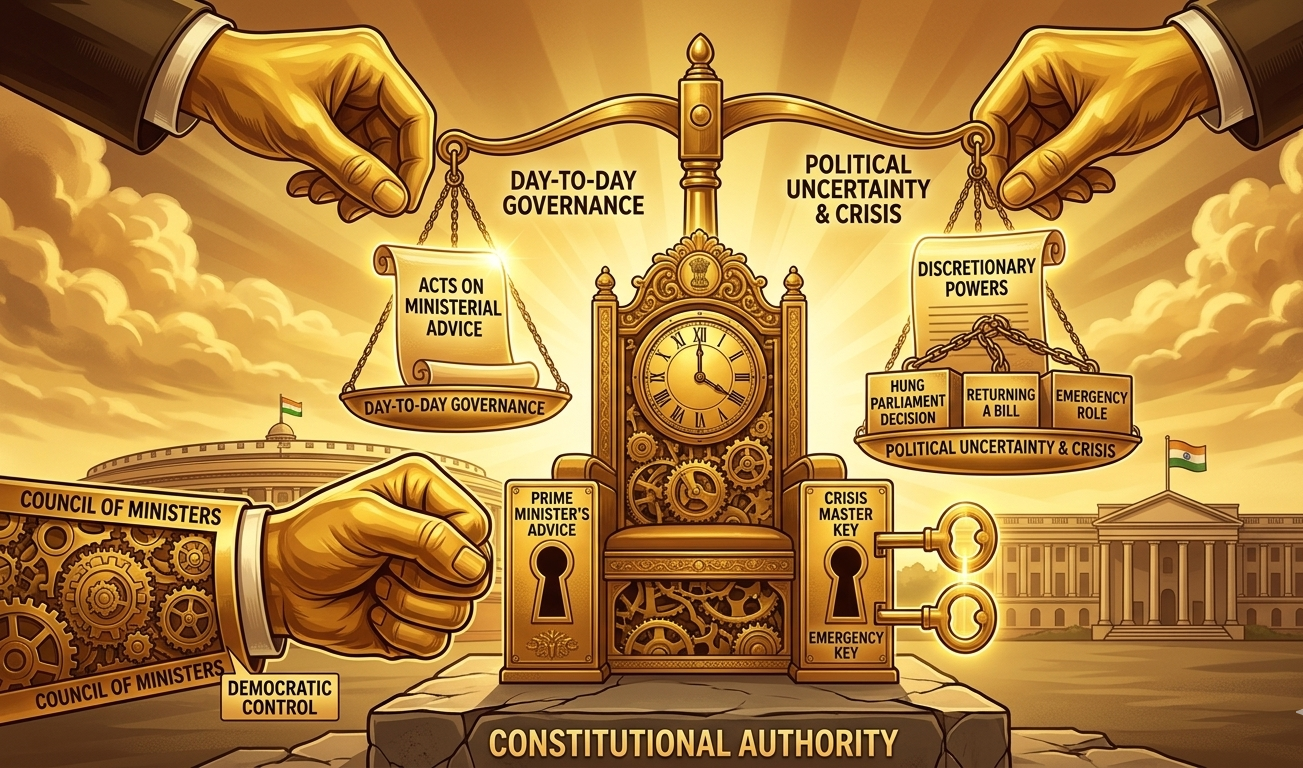
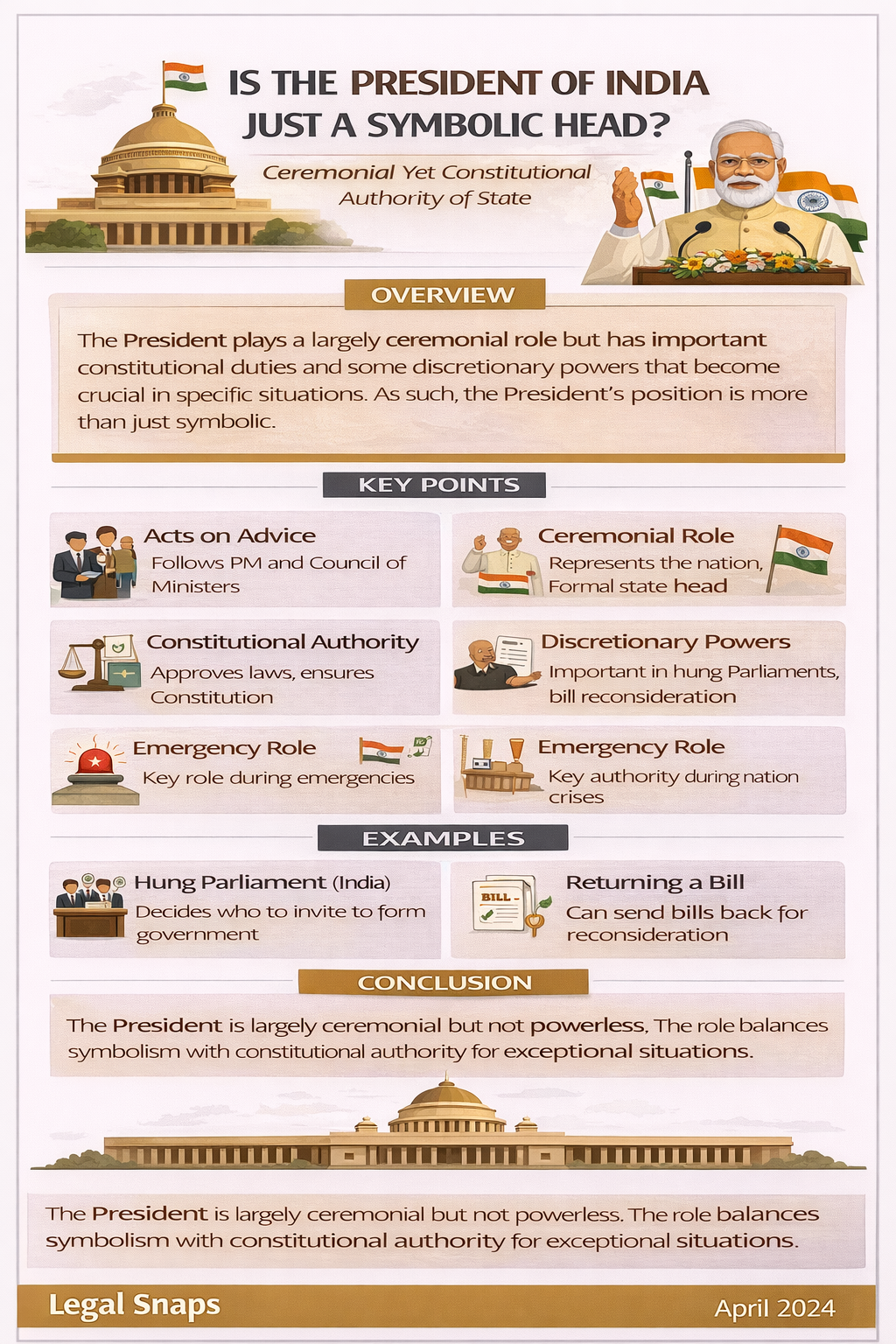
The President of India is often described as a symbolic or ceremonial head, but this is only partly accurate. In day-to-day governance, the President acts on the advice of the Prime Minister and the Council of Ministers.However, the role is not completely powerless. The President has important constitutional duties and limited discretionary powers in specific situations, especially during political uncertainty. This makes the position more than just symbolic.
Key Points
- Acts on Advice: Exercises powers based on the advice of the Council of Ministers
- Ceremonial Role: Represents the nation as the formal head of state
- Constitutional Authority: Approves laws, appointments, and ensures constitutional functioning
- Discretionary Powers: Acts independently in situations like a hung Parliament or bill reconsideration
- Emergency Role: Plays a formal but crucial role in declaring emergencies
Legal Analysis
Describing the President as purely symbolic is misleading. While routine functions are carried out on ministerial advice, the office becomes crucial during exceptional situations such as government formation or constitutional crises.In these scenarios, the President must exercise judgment rather than simply follow advice, making the role functionally important rather than ceremonial.
At the same time, the constitutional design ensures that the President does not accumulate excessive power. Real executive authority remains with elected representatives, preserving democratic control.Thus, the role balances symbolism with limited but meaningful authority, becoming significant when normal political processes are uncertain.
Examples
Hung Parliament (India): The President decides which leader to invite to form the government.
Returning a Bill: The President can send a non-money bill back for reconsideration.
Emergency Declaration: The President formally declares a national emergency.
Conclusion
The President of India is largely ceremonial in everyday governance but cannot be dismissed as merely symbolic. The role carries real constitutional importance in specific situations.When exercised properly, it acts as a safeguard for constitutional balance. Its effectiveness depends on responsible use of limited powers and the context in which they are applied.