Under 17
Powers of the President
The President of India holds significant constitutional powers, but most are exercised on the advice of the Council of Ministers. While the position appears powerful on paper, it is largely ceremonial in practice. However, in exceptional situations, the President plays a crucial role in maintaining constitutional balance.
Overview
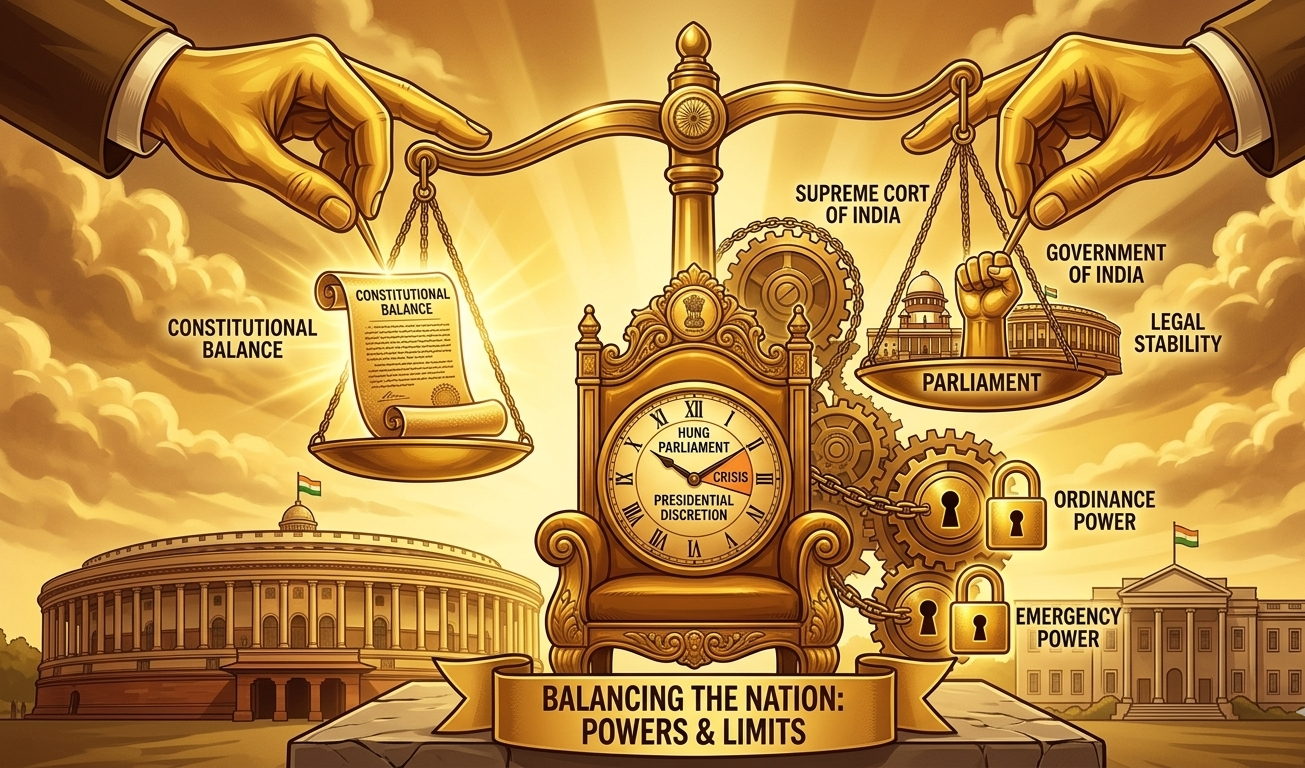
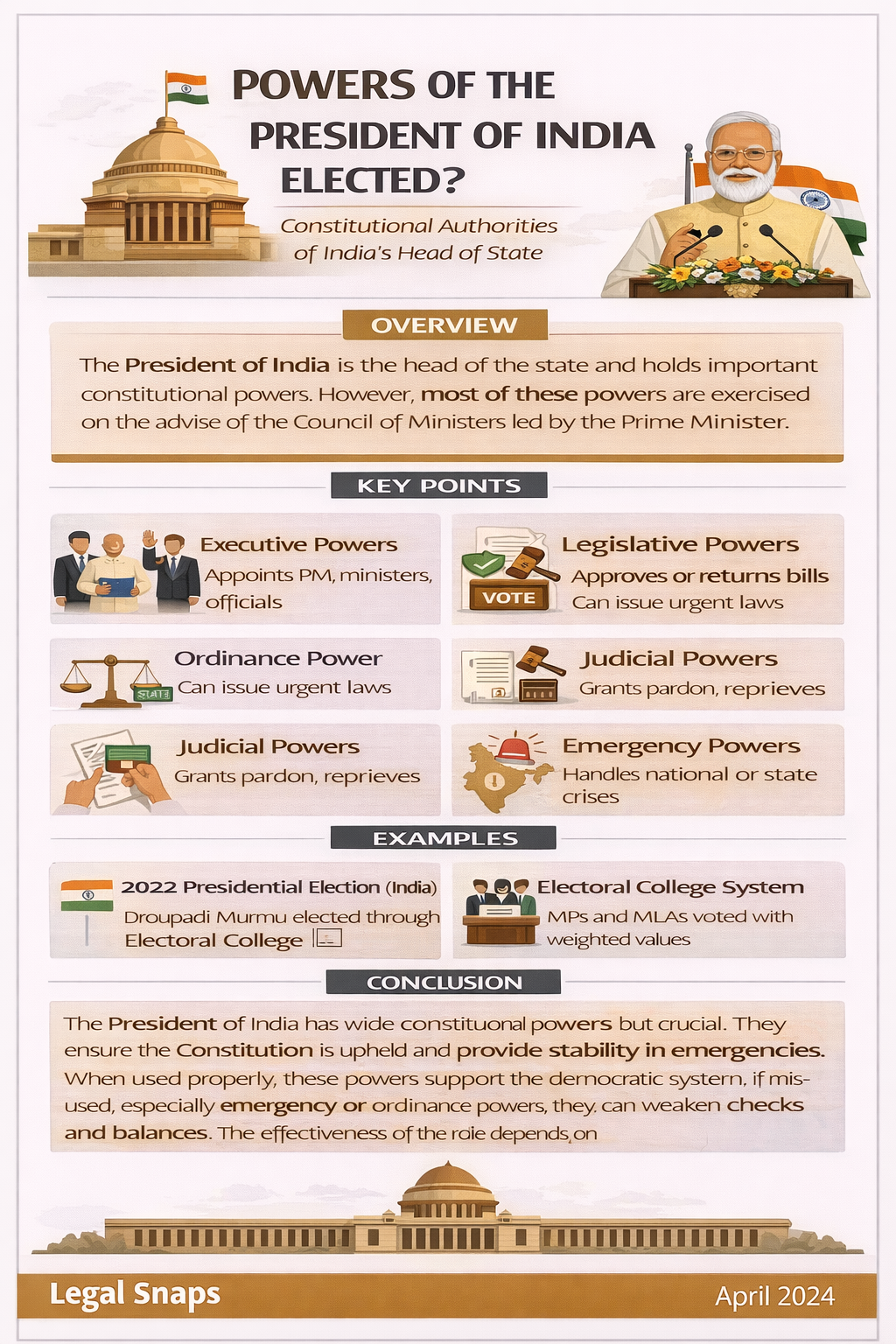
The President of India is the head of the state and holds important constitutional powers. However, these powers are generally exercised on the advice of the Council of Ministers led by the Prime Minister.The President ensures that the government functions according to the Constitution. Their responsibilities include approving laws, appointing officials, and handling emergencies. While the role appears powerful in theory, it is mostly ceremonial in practice.
Key Points
- Executive Powers: Appoints the Prime Minister, ministers, judges, governors, and other officials
- Legislative Powers: Gives assent to bills and can return non-money bills for reconsideration
- Ordinance Power: Can issue ordinances when Parliament is not in session
- Judicial Powers: Grants pardon, reprieve, remission, or commutation of sentences
- Emergency Powers: Can declare national, state, or financial emergencies, expanding central control
Legal Analysis
The President’s powers are constitutionally significant but are exercised primarily on ministerial advice, ensuring that real authority remains with elected representatives. This maintains democratic accountability within the system.However, in specific situations such as a hung Parliament or constitutional crisis, the President may exercise discretion. These moments highlight the importance of the office beyond its ceremonial nature.
Powers such as issuing ordinances and declaring emergencies are strong constitutional tools. While they allow swift action, their misuse can bypass democratic processes and weaken institutional checks.Therefore, the role is not entirely symbolic. Its effectiveness depends on constitutional restraint and responsible use of discretionary powers.
Examples
Ordinance Power (India): Used to enact urgent laws when Parliament is not in session.
Pardon Power: The President can commute or reduce sentences, including death penalties.
Hung Parliament: The President decides which leader to invite to form the government.
Conclusion
The President of India holds wide constitutional powers but operates largely on the advice of the government. This ensures stability and adherence to democratic principles.When exercised properly, these powers support governance and constitutional balance. However, misuse—especially of emergency or ordinance powers—can weaken checks and balances. The effectiveness of the role depends on restraint and constitutional responsibility.