Under 17
Can India shift to Presidential System? Pros and Cons
India can shift to a presidential system, but doing so would require major constitutional changes and political consensus. While it may offer stability and fixed leadership, it also raises concerns about reduced accountability and concentration of power. The real question is whether such a shift suits India’s political and institutional realities.
Overview
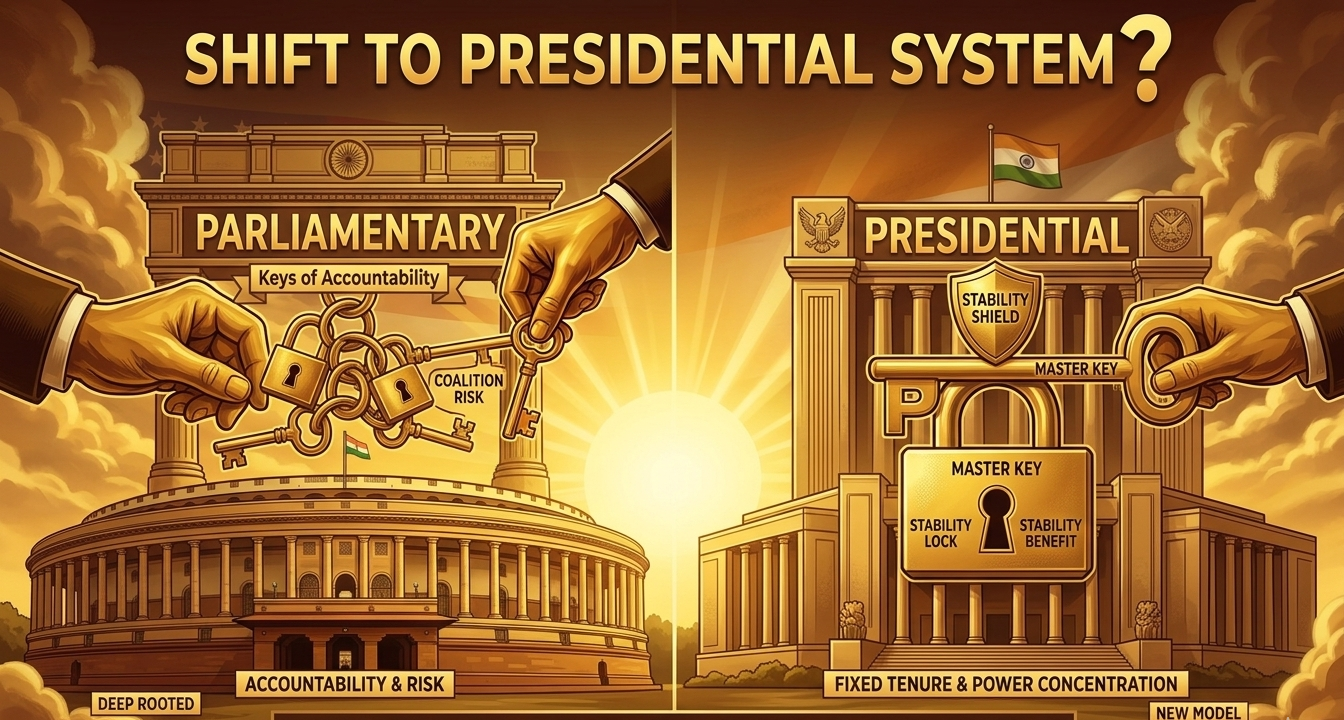
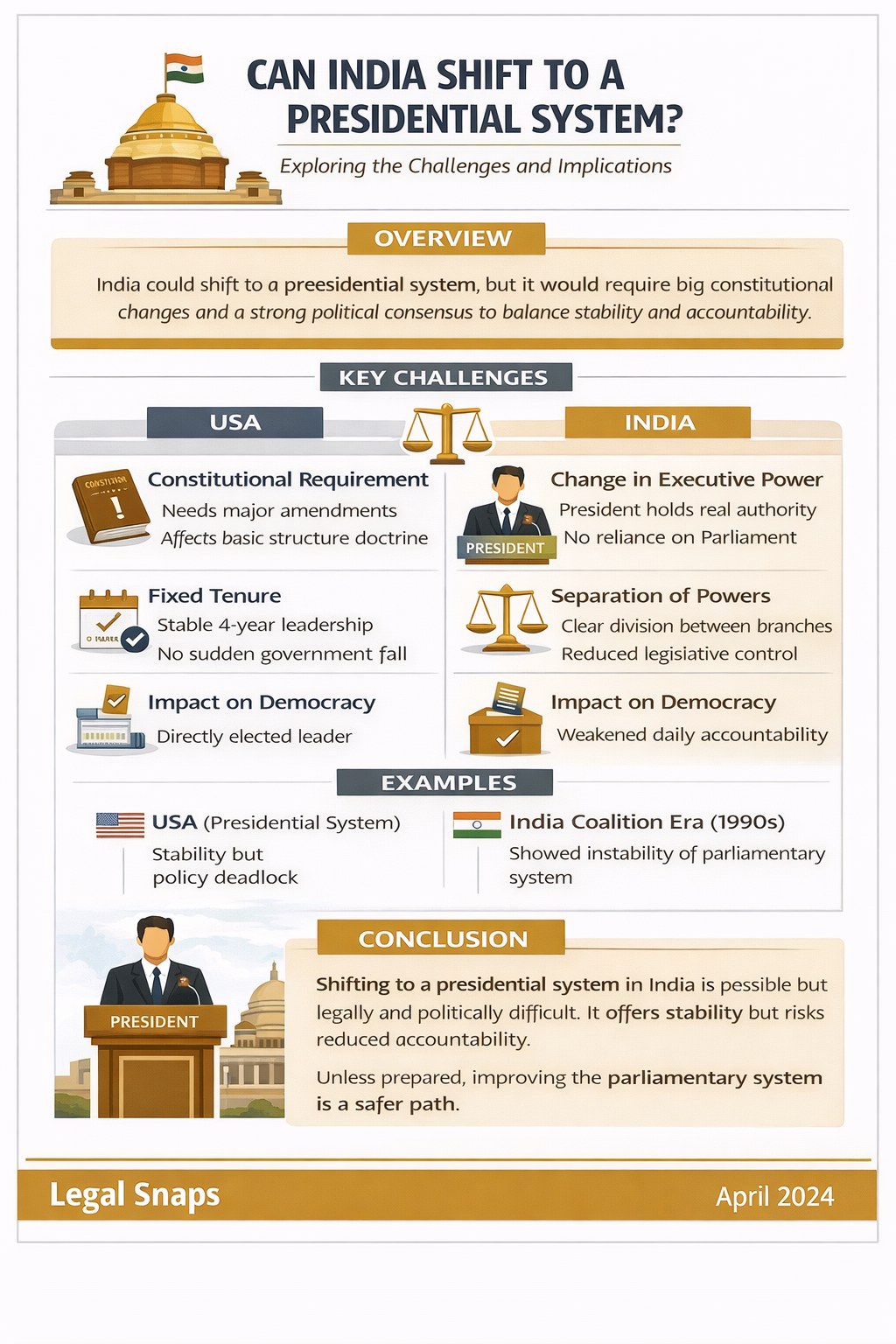
India can shift to a presidential system, but it is not a simple transition. It would require major constitutional amendments and strong political consensus. The current parliamentary system is deeply embedded in the functioning of institutions and governance practices.A presidential model would fundamentally change how executive power is structured and exercised. It would alter the relationship between the executive and legislature, as well as the method of leadership selection. The debate ultimately centers on stability versus accountability in governance.
Key Points
- Constitutional Requirement: Requires major amendments; may affect the basic structure doctrine
- Change in Executive Power: President becomes the real executive; no dependency on Parliament
- Fixed Tenure: Ensures stable leadership; no sudden government collapse
Legal Analysis
Adopting a presidential system could provide greater stability by ensuring fixed tenure and reducing reliance on coalition politics. This can lead to more consistent policy implementation and fewer disruptions in governance.However, the risks are significant. Concentrating executive power in a single individual in a diverse and complex country like India may weaken checks and balances, especially if institutions are not robust enough to counterbalance authority.
India’s political culture is also deeply rooted in parliamentary accountability, where the government remains answerable to the legislature. Removing this mechanism could reduce responsiveness and weaken democratic oversight.Additionally, constitutional constraints such as the basic structure doctrine make such a transformation legally complex. It is not merely a political decision but one that faces serious judicial limitations.
Examples
USA (Presidential System): Provides stable leadership with fixed tenure but often faces policy deadlock between branches.
India Coalition Era (1990s): Demonstrated instability within the parliamentary system due to fragmented political support.
Latin American Countries: Some presidential systems have experienced excessive concentration of power in the executive.
Conclusion
India can technically shift to a presidential system, but it represents a high-risk structural change. While it offers stability and decisive leadership, it also raises concerns about reduced accountability and concentration of power.In practice, strengthening the existing parliamentary system may be more effective than replacing it entirely. The success of any system ultimately depends on institutional strength and political responsibility.