Under 17
Difference between Parliamentary and Presidential System
Parliamentary and presidential systems differ in how executive power is structured and exercised. Parliamentary systems link the executive to the legislature, ensuring accountability but risking instability. Presidential systems separate powers, providing stability but often causing deadlock. These differences shape how effectively governments function in real-world political conditions.
Overview
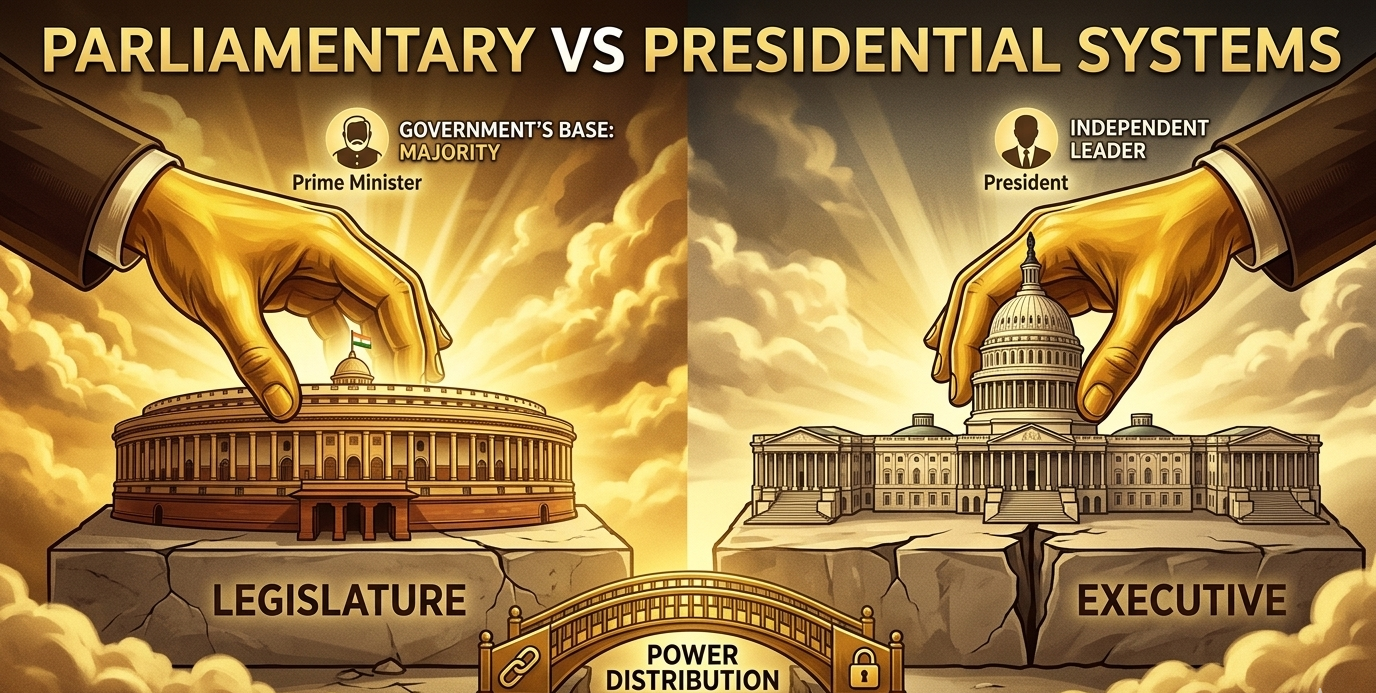
A parliamentary system and a presidential system are two major forms of democratic government. The main difference lies in how the executive is formed and how power is distributed. In a parliamentary system, the executive comes from the legislature and depends on its support. In a presidential system, the executive is separately elected and operates independently of the legislature.This structural difference directly affects how governments function. Parliamentary systems prioritize coordination and accountability, while presidential systems emphasize separation and stability. Understanding both helps in comparing governance models across different countries.
Key Points
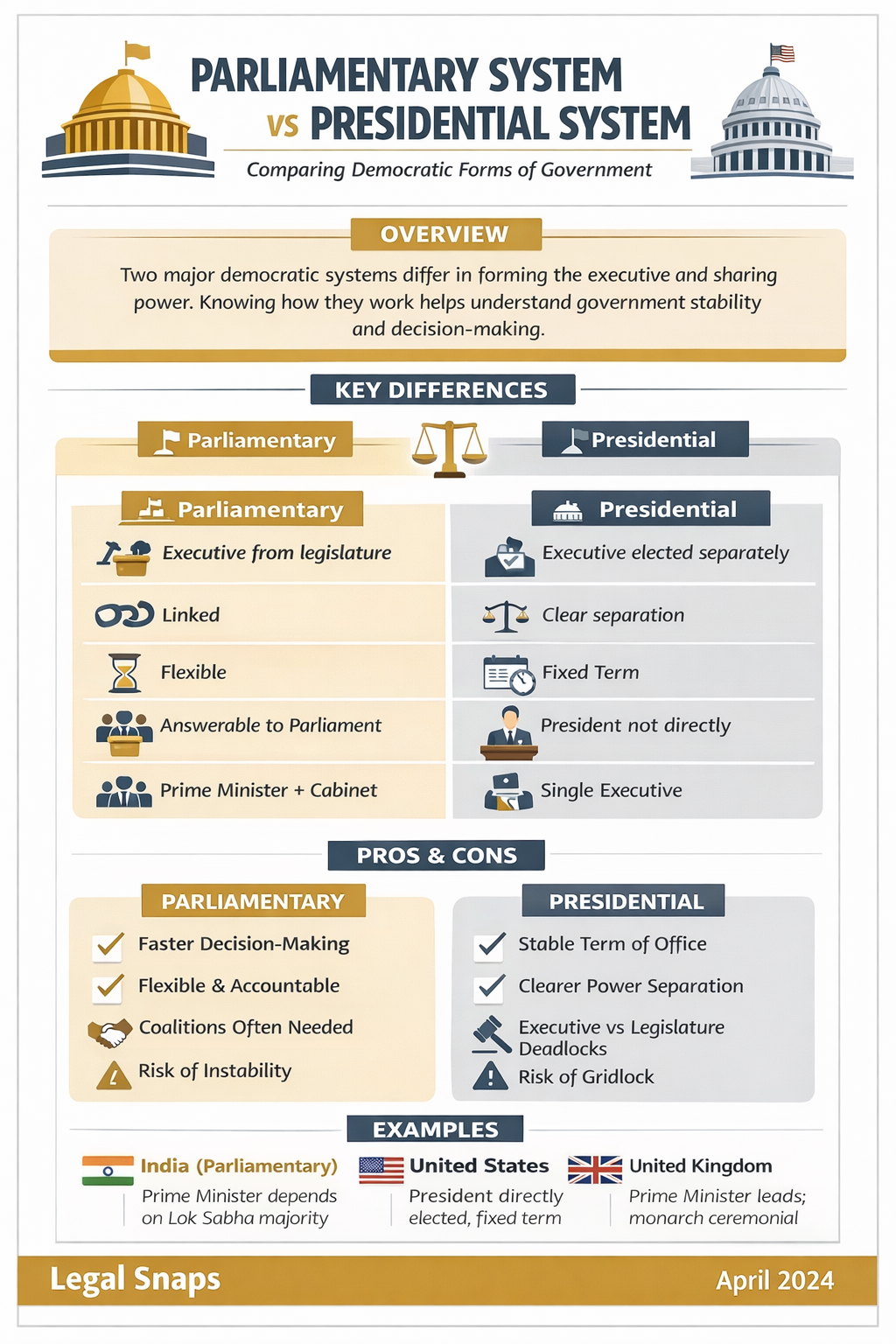
- Executive Formation: Parliamentary – from legislature; Presidential – separately elected
- Separation of Powers: Parliamentary – powers are linked; Presidential – clear separation
- Tenure: Parliamentary – flexible; Presidential – fixed term
- Accountability: Parliamentary – answerable to legislature; Presidential – not directly accountable
- Leadership Structure: Parliamentary – Prime Minister + Cabinet; Presidential – single executive President
Legal Analysis
The parliamentary system promotes efficiency by aligning the executive and legislature, allowing quicker law-making and coordinated governance. However, this dependency on majority support can lead to instability, especially in coalition governments where political compromises are frequent.In contrast, the presidential system ensures stability through a fixed tenure and institutional separation of powers. The executive does not rely on legislative confidence, which reduces the risk of sudden government collapse. However, this independence can also create friction between branches.
A major drawback of the presidential system is the risk of policy deadlock when the executive and legislature are controlled by different political forces. On the other hand, parliamentary systems risk instability but maintain continuous accountability through legislative oversight.Ultimately, both systems involve trade-offs: parliamentary systems favor accountability and flexibility, while presidential systems prioritize stability and institutional independence.
Examples
India (Parliamentary): The Prime Minister depends on the majority in the Lok Sabha and can be removed through a no-confidence motion.
United States (Presidential): The President is directly elected and serves a fixed term, independent of the legislature.
United Kingdom (Parliamentary): The Prime Minister leads the government while the Monarch serves as a ceremonial head.
Conclusion
Both parliamentary and presidential systems aim to ensure effective governance but follow fundamentally different approaches. Parliamentary systems emphasize accountability and adaptability, while presidential systems focus on stability and clear separation of powers.Each system performs well under the right political conditions. However, misuse or imbalance can lead to instability in parliamentary systems or deadlock in presidential systems, ultimately affecting governance outcomes.