ब्लॉग
बदलत असलेला भारतीय कायदा — निकाल, नियम, आणि त्यांचा तुमच्यासाठी खरा अर्थ.

The Cancellation of Dealership Agreement is a Serious Business Supreme Court of India in HPCL v. Dharamnath Singh
The Supreme Court held that cancellation of dealership agreements is a serious commercial action.Termination must strictly follow contractual terms and natural justice.Arbitrary cancellation invites judicial scrutiny.Dealership termination demands fairness, evidence, and proportionality.
Promotion in Judiciary Merit-Cum-Seniority Emphasized Over Seniority-Cum-Merit
The Supreme Court clarified that merit-cum-seniority gives primacy to merit in judicial promotions.Seniority alone cannot justify elevation where merit is the governing standard.Judicial performance, integrity, and competence must drive advancement.Excellence in the judiciary outweighs mere length of service.
2 मिनिटांचे वाचन →
Comprehensive Guide to India’s Digital Personal Data Protection Act, 2023
India’s Digital Personal Data Protection Act, 2023 creates a comprehensive privacy framework.It introduces consent-based processing, enforceable user rights, and regulatory oversight.Businesses face strict compliance obligations and significant monetary penalties.Data protection is now a statutory mandate not a policy choice.
2 मिनिटांचे वाचन →
Land Acquisition Objections Are a Fundamental Right
The Supreme Court has reaffirmed that the right to object in land acquisition is a substantive safeguard.Authorities must meaningfully consider objections before final acquisition.Mechanical approval renders proceedings vulnerable to judicial review.State power to acquire land is sovereign but not absolute.
2 मिनिटांचे वाचन →
Legal Profession Is Sui Generis
The Supreme Court has held that the legal profession is sui generis and not covered under the Consumer Protection Act.Advocates cannot be treated as ordinary service providers for professional conduct.Complaints against lawyers must be addressed under the Advocates Act through Bar Councils.The ruling safeguards the independence and institutional integrity of the legal profession.
2 मिनिटांचे वाचन →
Ensuring Efficiency: Supreme Court Upholds “Weeding Out Undesirable Elements” as Essential for Disciplined Forces
The Supreme Court upholds “weeding out” in disciplined forces.Higher standards apply to armed and uniformed services.Administrative removal is not always punitive dismissal. Institutional discipline outweighs individual continuation in service.
1 मिनिटांचे वाचन →
Acceptance Is Binding: Supreme Court Rules on Urban Planning Dispute
Once planning conditions are accepted, they become legally binding.A party cannot accept benefits and later challenge obligations.The Supreme Court reinforces estoppel in urban planning disputes.Acceptance brings finality to municipal decision-making.
1 मिनिटांचे वाचन →
The Public Examinations (Prevention of Unfair Means) Act, 2024
The Public Examinations (Prevention of Unfair Means) Act, 2024 criminalises organized and technology-driven exam fraud. It introduces stringent penalties for question paper leaks, impersonation, and digital manipulation. The law expands liability to intermediaries and service providers. The Act strengthens meritocracy and restores integrity in public examinations.
2 मिनिटांचे वाचन →
Supreme Court Upholds Democratic Integrity
The Supreme Court granted interim bail during the election period, emphasizing the “vis viva” or living force of democracy. The Court balanced personal liberty with ongoing investigation. It clarified that the order does not reflect on guilt or innocence. The ruling reinforces constitutional protection of democratic participation.
1 मिनिटांचे वाचन →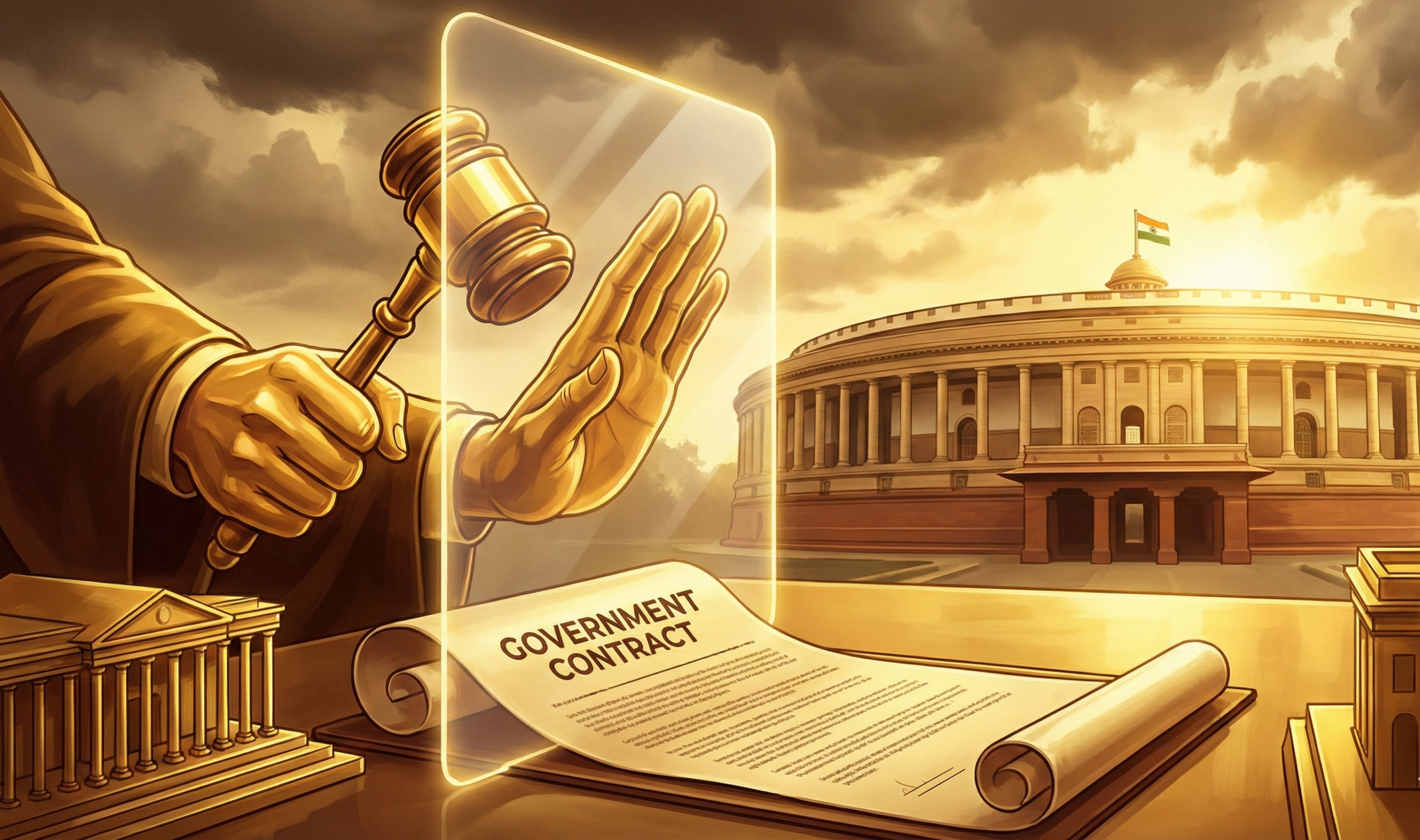
Supreme Court Clarifies Scope of Judicial Review in Government Contract Disputes
The Supreme Court has clarified that judicial review in government contract disputes is limited and restrained. Courts cannot re-evaluate commercial decisions of the State unless illegality or arbitrariness is established. Writ jurisdiction is not a substitute for civil remedies or arbitration. The ruling strengthens administrative autonomy while preserving constitutional safeguards
2 मिनिटांचे वाचन →
Supreme Court Upholds Minimum Qualifying Marks for Viva Voce in Judicial Selections
The Supreme Court has upheld minimum qualifying marks for viva voce in judicial recruitment. The Court ruled that interviews are essential to assess judicial temperament and suitability. Fixing cut-offs does not violate equality principles if applied uniformly. The judgment reinforces merit, transparency, and institutional integrity in judicial appointment
2 मिनिटांचे वाचन →
Non-Retroactivity of Rules in Ongoing Exams
The Supreme Court has ruled that recruitment or examination rules cannot be changed once the selection process has begun. Candidates acquire a legitimate expectation that the notified rules will govern the entire process. Any midstream alteration in eligibility or evaluation norms is arbitrary and violates constitutional guarantees of fairness. The judgment reinforces transparency and stability in public employment
2 मिनिटांचे वाचन →
Supreme Court Upholds Appointment of Technical Assistants as Engineers in Tamil Nadu
The Supreme Court upheld Tamil Nadu’s decision to appoint Technical Assistants as Engineers, affirming the primacy of statutory service rules. The Court clarified that qualification equivalence is an executive determination and judicial review is limited. It rejected challenges under Articles 14 and 16, reinforcing administrative autonomy. The ruling sets an important precedent for public employment and service jurisprudence.
2 मिनिटांचे वाचन →
The 3-Year Practice Rule for Judges: Good or Bad for Indian Courts?
The Supreme Court’s recent decision (All India Judges Association v. Union of India, May 20, 2025) to mandate a minimum of three years of legal practice for civil judge aspirants has ignited a nationwide debate, lauded by some for enhancing judicial quality and criticized by others for its potential exclusionary impact.
3 मिनिटांचे वाचन →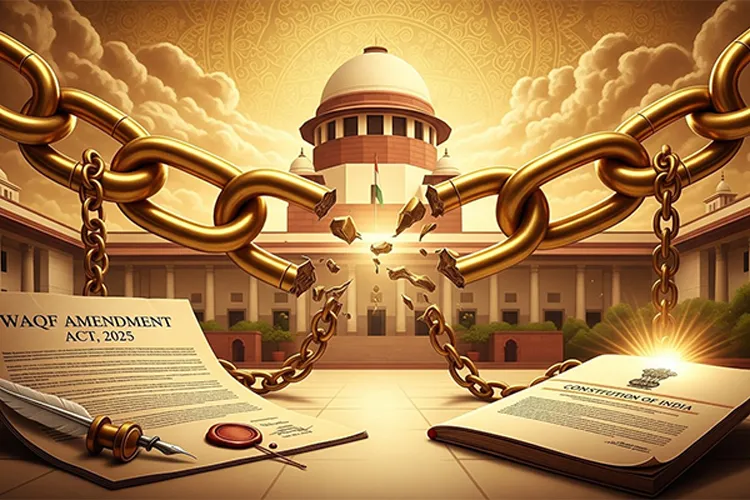
India’s New Waqf Regime: Is it Constitutional?
The Supreme Court is currently hearing a batch of petitions challenging the constitutional validity of the Waqf Amendment Act, 2025. This Act introduces significant changes to Waqf declarations and board compositions, raising concerns about religious autonomy and executive overreach.
3 मिनिटांचे वाचन →