Under 17
Role of Lok Sabha vs Rajya Sabha in Lawmaking
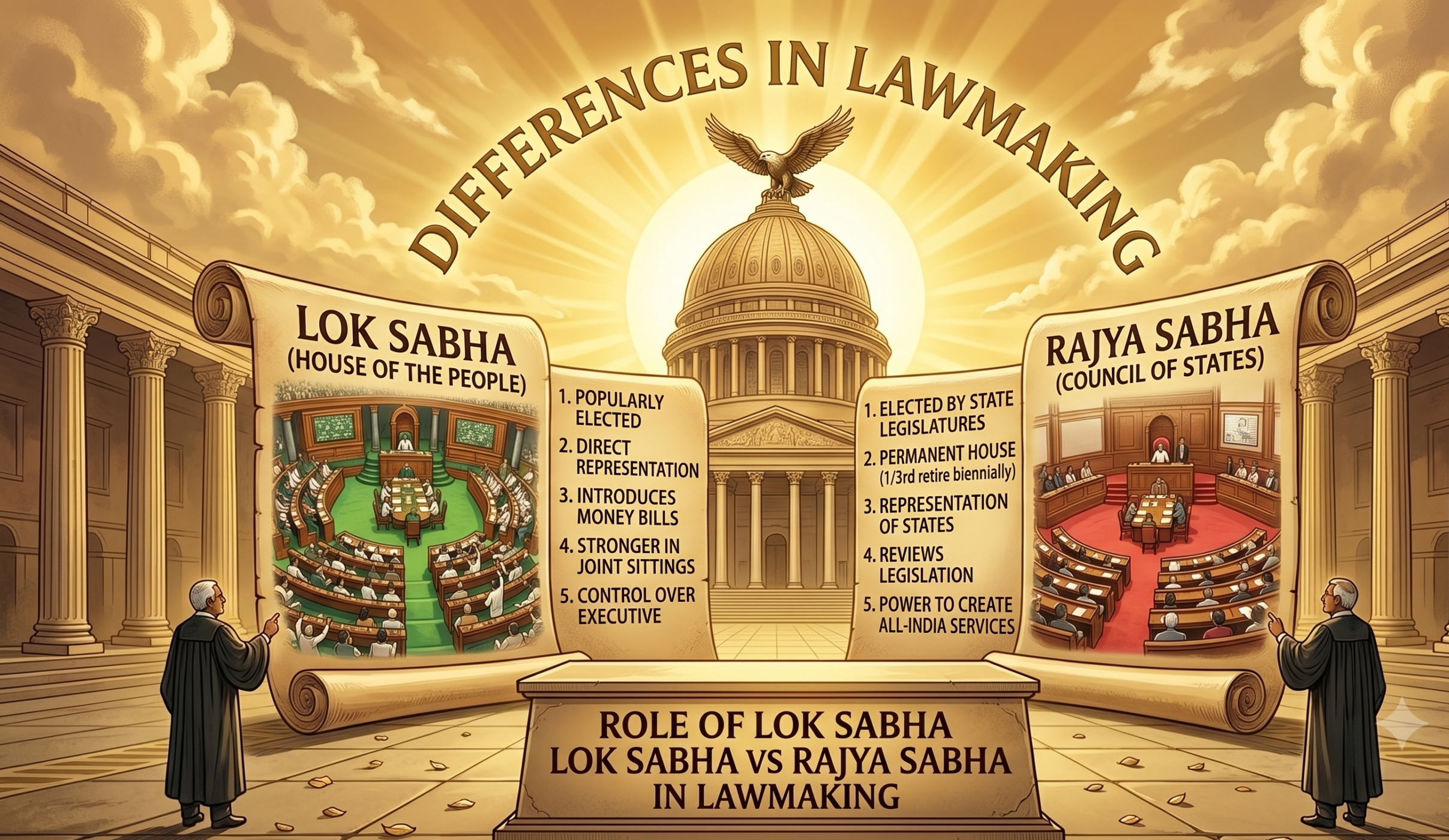
Lok Sabha and Rajya Sabha are the two Houses of Parliament that work together to make laws in India. Their bicameral structure ensures representation of both the people and the states while providing multiple levels of legislative scrutiny.
Overview
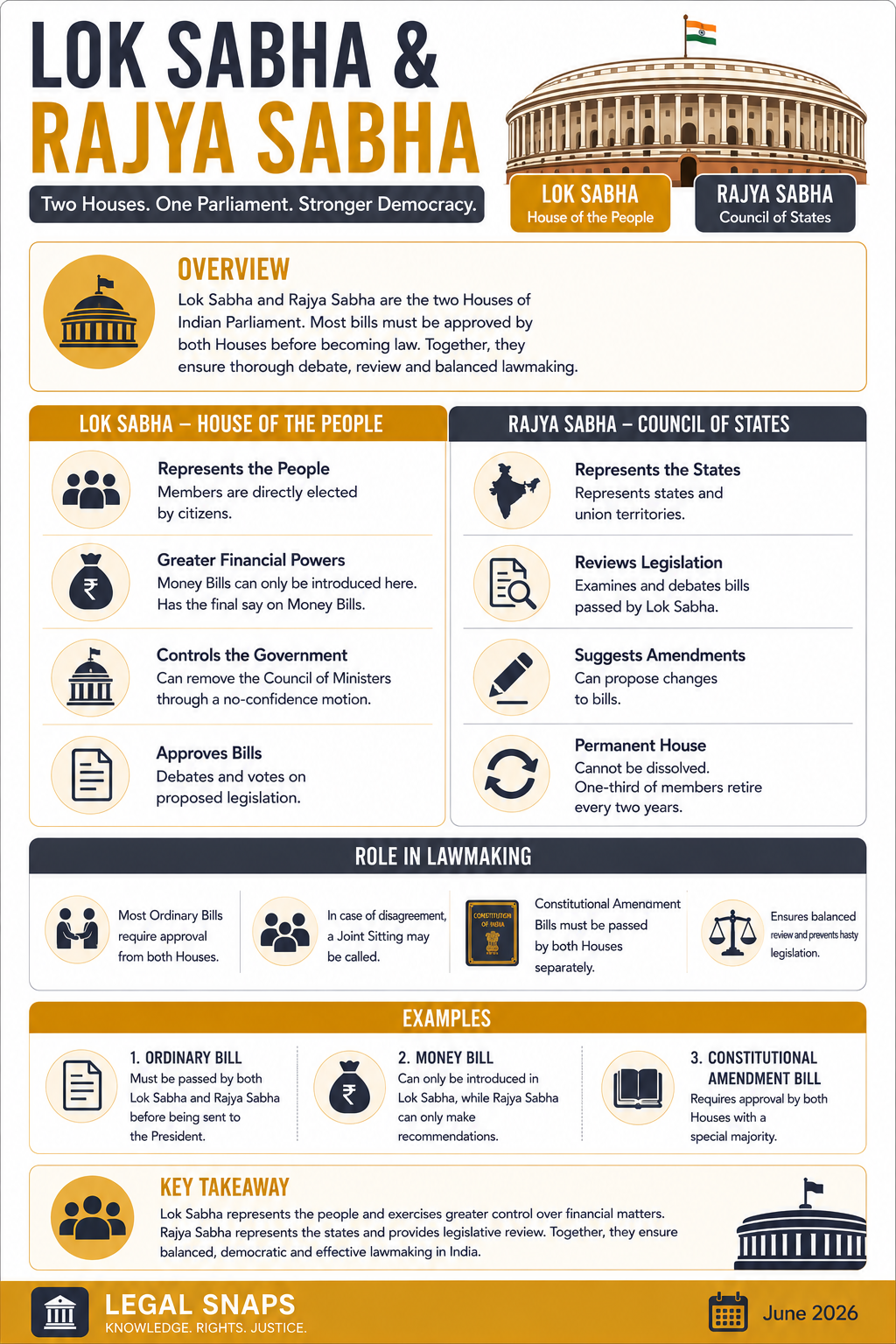
The Indian Parliament consists of two Houses—Lok Sabha (House of the People) and Rajya Sabha (Council of States). Most laws require approval from both Houses before they can become law.While Lok Sabha directly represents citizens through elected members, Rajya Sabha represents the interests of states and union territories. Together, they strengthen democratic decision-making and legislative accountability.
Key Points
- Lok Sabha: Directly elected House representing the people
- Financial Powers: Money Bills originate only in Lok Sabha
- Government Accountability: Can remove the Council of Ministers through a no-confidence motion
- Rajya Sabha: Represents states and union territories
- Legislative Review: Examines and debates bills passed by Lok Sabha
- Permanent House: Not subject to dissolution
- Joint Role: Most bills require approval from both Houses
Legal Analysis
India’s bicameral parliamentary structure is designed to balance democratic representation with legislative scrutiny. Lok Sabha reflects the direct will of the people, while Rajya Sabha provides a federal perspective by representing states.This two-House system reduces the risk of hasty law-making by ensuring that proposed legislation undergoes debate and review at multiple levels before enactment.
Lok Sabha enjoys greater powers in financial matters and government accountability. Rajya Sabha, however, plays a significant role in reviewing legislation and safeguarding federal interests.Although disagreements between the Houses can sometimes delay legislation, the bicameral structure remains an important constitutional safeguard that improves legislative quality and democratic governance.
Examples
Ordinary Bill: Requires approval by both Lok Sabha and Rajya Sabha.
Money Bill: Can only be introduced in Lok Sabha; Rajya Sabha may recommend changes.
Constitutional Amendment Bill: Must be passed separately by both Houses with a special majority.
Conclusion
Lok Sabha and Rajya Sabha perform complementary roles within India’s parliamentary democracy. One represents the people directly, while the other represents the states and provides legislative review.Together, they ensure balanced law-making, strengthen democratic accountability, and uphold the constitutional framework of India. Effective cooperation between both Houses is essential for producing well-considered and effective legislation.
“`