Under 17
What is Judicial Review ?
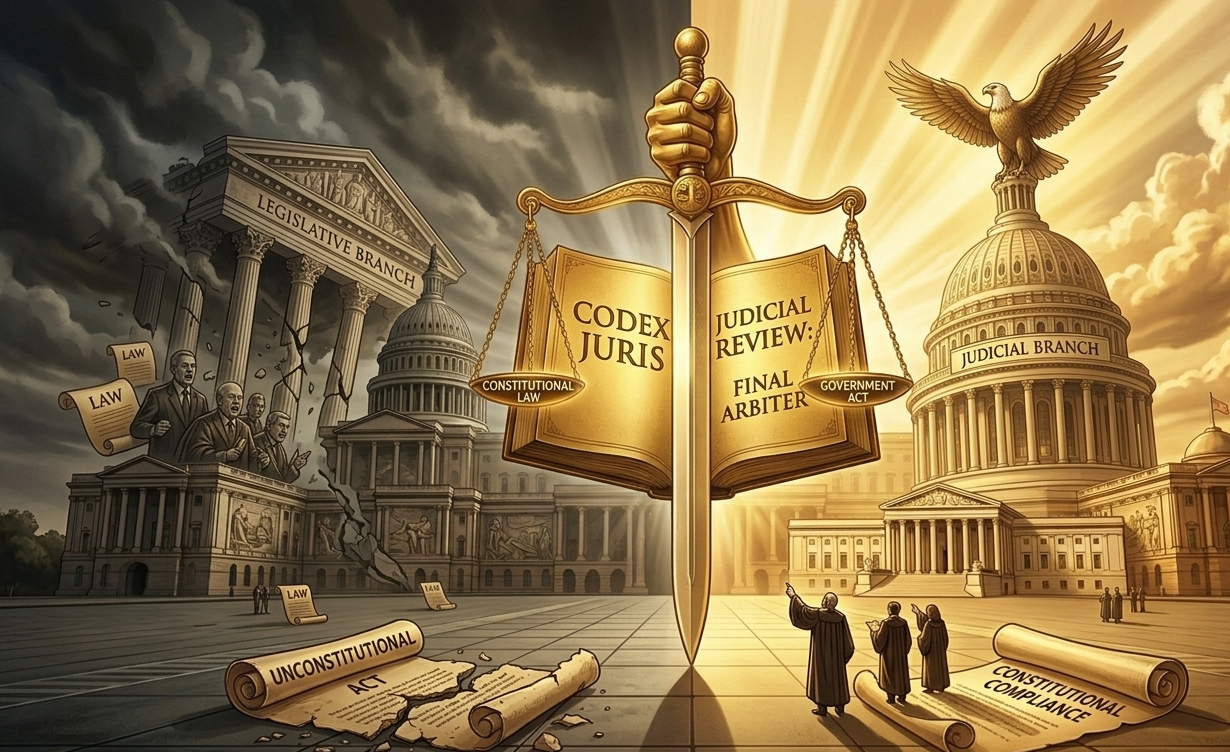
Judicial Review is the constitutional power of courts to examine laws and government actions for compliance with the Constitution. It serves as a key safeguard against misuse of power and protects fundamental rights.
Overview
Judicial Review is the power of courts to examine laws, executive actions, and government decisions to determine whether they comply with the Constitution. If a law or action violates constitutional provisions, the court can declare it invalid. In India, both the Supreme Court and High Courts exercise this power. Judicial Review is considered one of the most important features of the constitutional framework and plays a crucial role in preserving the rule of law.
Key Points
- Checks Constitutionality: Reviews laws and government actions for constitutional compliance
- Protects Fundamental Rights: Prevents violations of citizens’ constitutional rights
- Maintains Balance of Power: Acts as a check on the Legislature and Executive
- Can Strike Down Laws: Invalidates unconstitutional laws, policies, and actions
- Exercised By: Supreme Court and High Courts
Legal Analysis
Judicial Review is essential because it ensures that all organs of government remain subject to the Constitution. It prevents arbitrary exercise of power and protects democratic governance.Through this power, courts have played a significant role in safeguarding individual liberties, preserving constitutional values, and maintaining institutional balance.
At the same time, debates often arise regarding judicial activism and judicial overreach. Critics argue that excessive intervention by courts may affect the functions of elected institutions.Therefore, Judicial Review must be exercised carefully, balancing constitutional protection with respect for the powers of the Legislature and Executive.
Examples
Kesavananda Bharati Case (1973): The Supreme Court established the Basic Structure Doctrine and limited Parliament’s amending power.
NJAC Case (2015): The Court struck down the National Judicial Appointments Commission as unconstitutional.
Minerva Mills Case (1980): Reinforced constitutional limits on Parliament’s power to amend the Constitution.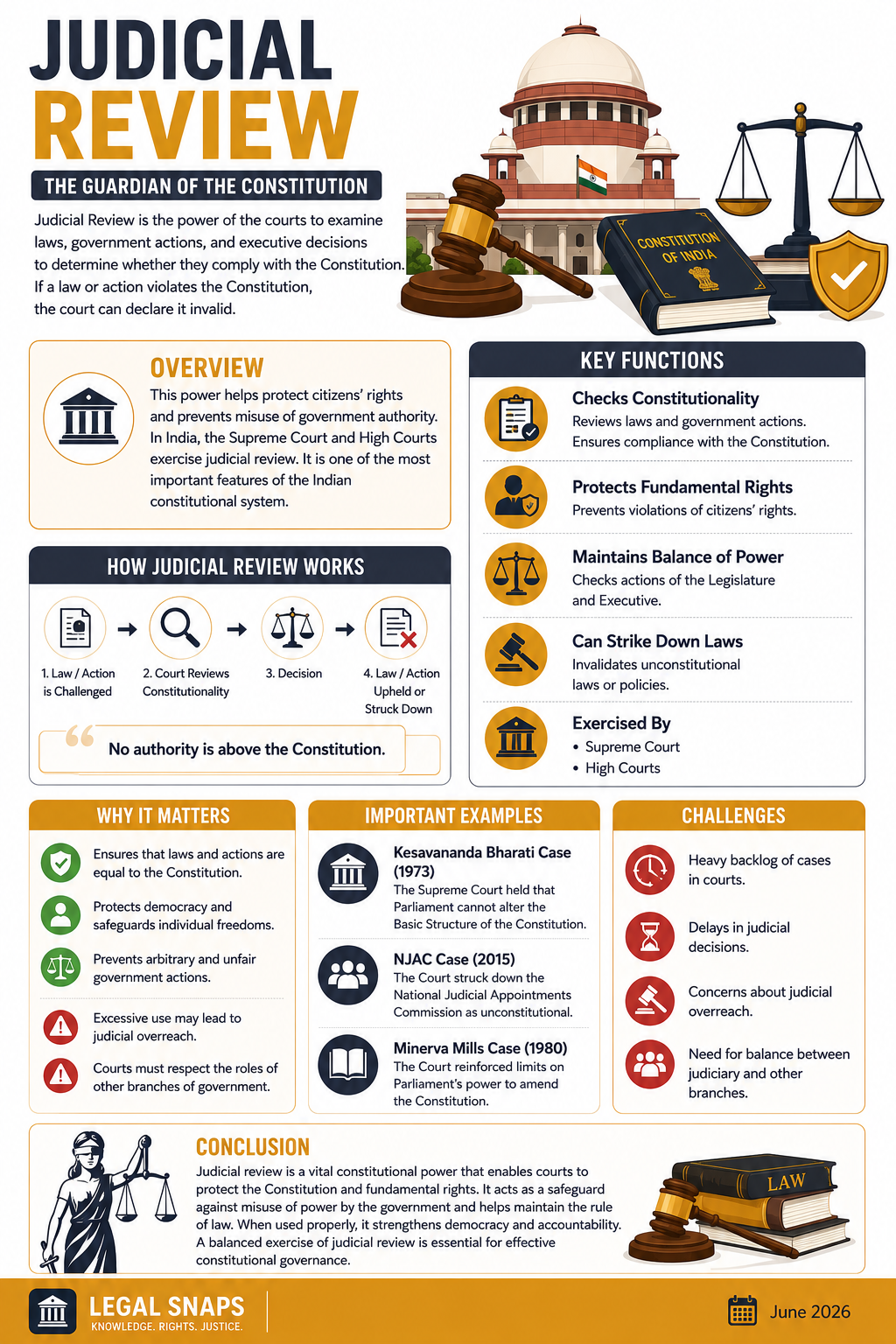
Conclusion
Judicial Review is a vital constitutional mechanism that protects the Constitution, safeguards fundamental rights, and ensures accountability within government institutions.When exercised responsibly, it strengthens democracy, upholds the rule of law, and prevents misuse of power. A balanced approach to Judicial Review remains essential for effective constitutional governance and institutional harmony.
“`