Under 17
Difference between Vidhan Sabha and Vidhan Parishad
Vidhan Sabha and Vidhan Parishad are the two houses of a state legislature in India. While the Sabha is directly elected and holds real power, the Parishad acts mainly as a reviewing body. Together, they create a system that balances representation with review.
Overview
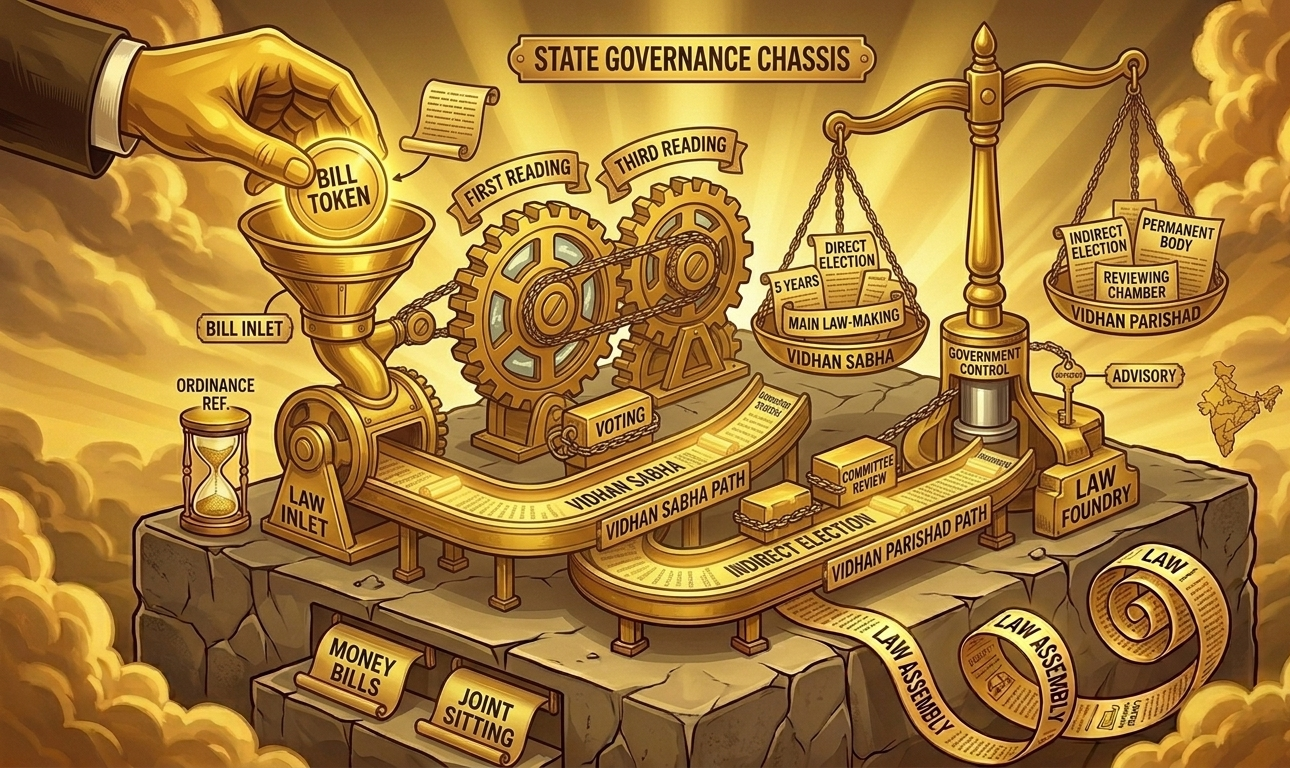
Vidhan Sabha and Vidhan Parishad are the two types of houses in a state legislature in India. Vidhan Sabha is the lower house and directly represents the people, while Vidhan Parishad is the upper house that acts as a reviewing body.Not all states have a Vidhan Parishad, as only some follow a bicameral system. The Vidhan Sabha holds greater power, especially over the executive and financial matters, while the Parishad mainly reviews and suggests changes to laws.
Key Points
- Nature: Vidhan Sabha – lower house; Vidhan Parishad – upper house
- Election: Sabha – directly elected; Parishad – indirectly elected
- Power: Sabha – more powerful; Parishad – limited powers
- Tenure: Sabha – 5 years and can be dissolved; Parishad – permanent body
- Role in Government: Sabha – controls state government; Parishad – advisory and review role
Legal Analysis
The Vidhan Sabha is the primary center of power in state governance because it directly represents the electorate and controls the executive. It plays a decisive role in law-making and financial matters.The Vidhan Parishad provides an additional layer of scrutiny by reviewing legislation, which can improve the quality of laws and prevent hasty decisions.
However, due to its limited powers and indirect election, the Parishad often has less influence. Critics argue that it may delay legislation without adding substantial value.Thus, while the bicameral structure promotes review and balance, its effectiveness depends on how actively the Parishad contributes alongside the Sabha.
Examples
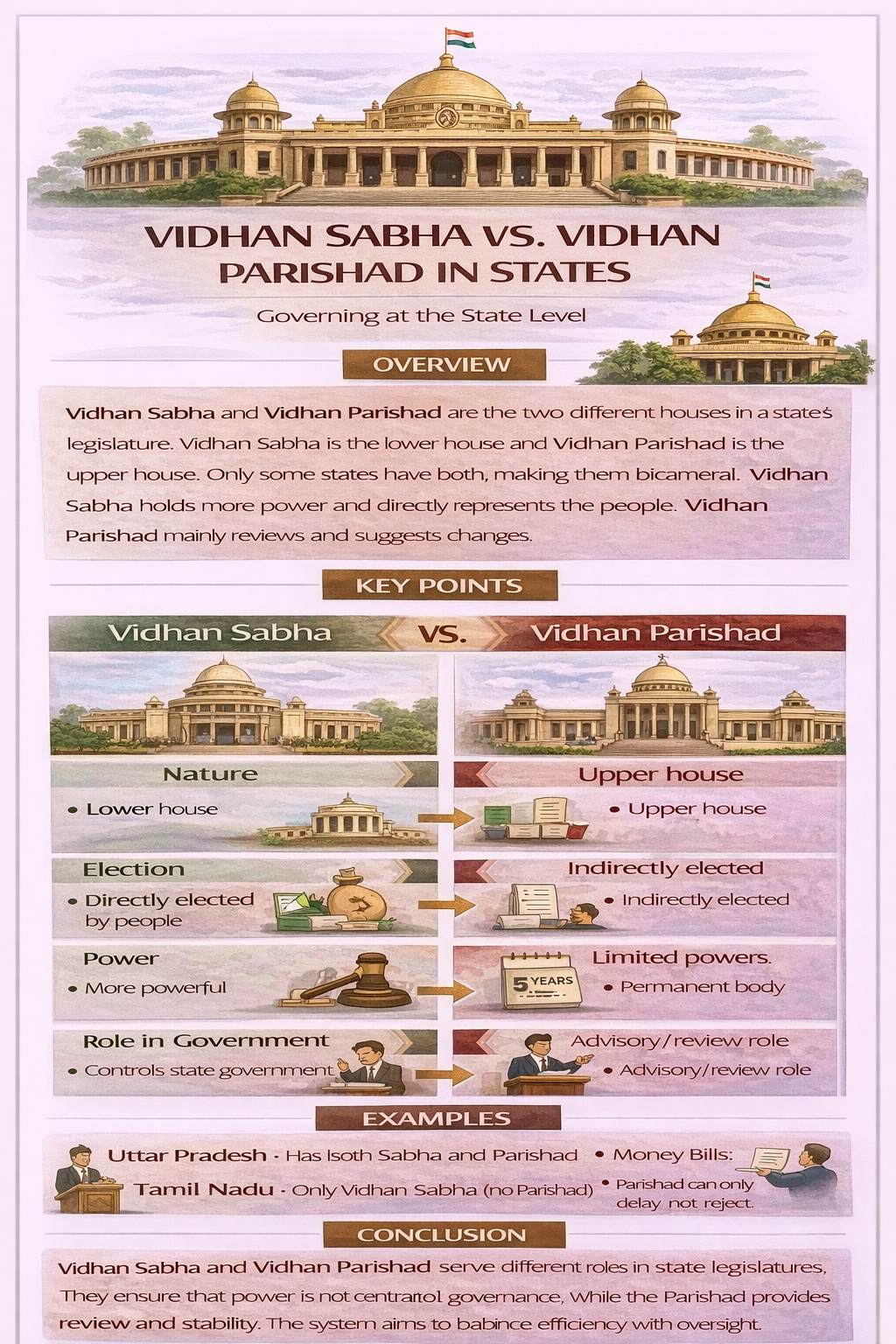
Uttar Pradesh: Has both Vidhan Sabha and Vidhan Parishad (bicameral legislature).
Tamil Nadu: Has only Vidhan Sabha (unicameral legislature).
Money Bills: Vidhan Parishad can delay but cannot reject them.
Conclusion
Vidhan Sabha and Vidhan Parishad perform different functions within state legislatures. The Sabha ensures democratic control and governance, while the Parishad provides review and continuity.Although the system aims to balance efficiency with oversight, real authority rests with the Vidhan Sabha. The effectiveness of both depends on responsible functioning and active participation.