Under 17
What is Question Hour and why it matters?
Question Hour is the first hour of a Parliament sitting where MPs question ministers on government actions. It is one of the most direct tools of accountability, forcing the government to answer publicly. Its effectiveness depends on how seriously it is used.
Overview
Question Hour is the first hour of a Parliament sitting during which Members of Parliament (MPs) ask questions to ministers. It serves as a key mechanism to hold the government accountable for its actions and decisions.Ministers are required to respond either orally or in writing. This process promotes transparency, compels explanations of policies, and allows important public issues to be raised in Parliament.
Key Points
- Timing: Conducted during the first hour of a sitting on working days
- Types of Questions: Starred (oral answers with follow-up) and Unstarred (written answers)
- Purpose: Seeks information and ensures government accountability
- Minister’s Duty: Ministers must respond and may face supplementary questions
- Public Importance: Raises national issues and promotes transparency
Legal Analysis
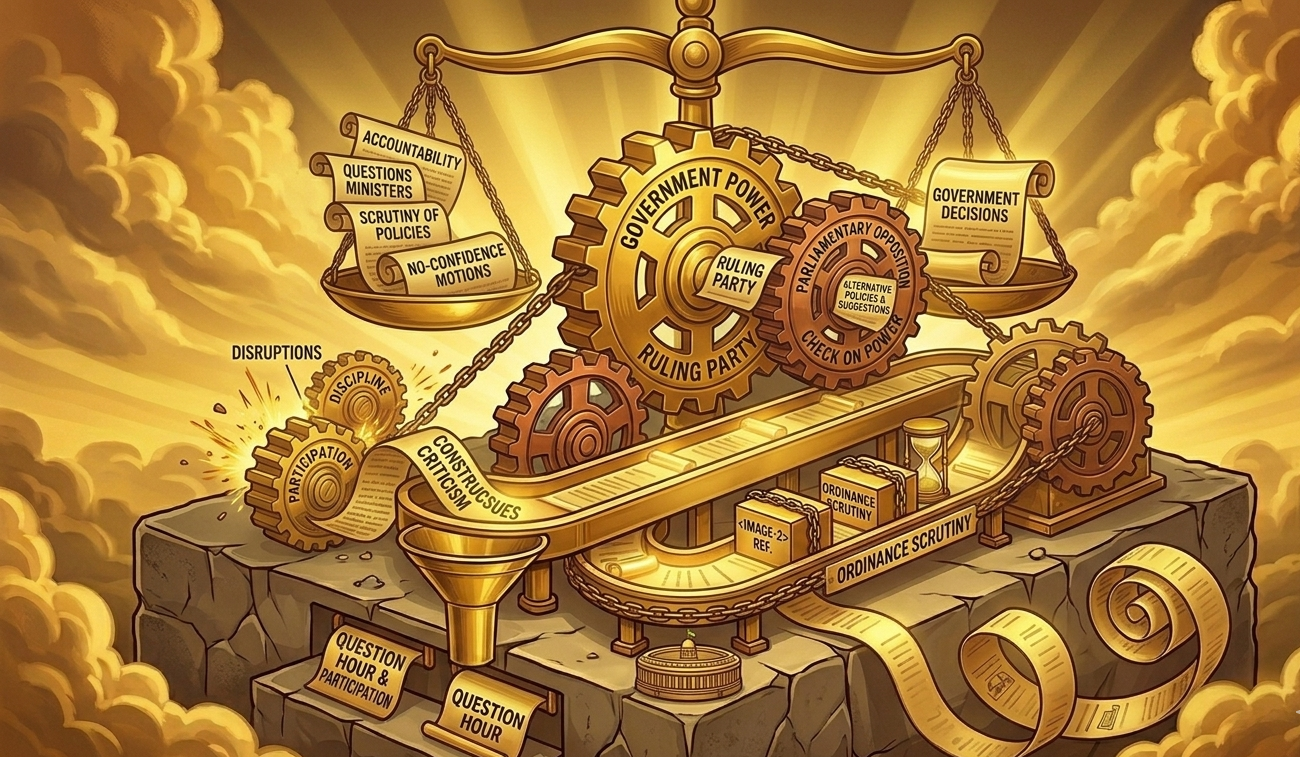
Question Hour is a powerful accountability mechanism because it requires the government to respond to Parliament on a regular basis. It creates a direct channel for scrutiny of executive actions.It can expose inefficiencies, policy failures, or administrative gaps, making it a critical tool for democratic oversight.
However, its effectiveness depends on the quality of questions and the seriousness of participation. Disruptions, weak questioning, or evasive answers can reduce its impact.Despite these limitations, when used properly, Question Hour remains one of the most effective methods of ensuring transparency and accountability in governance.
Examples
Policy Questions (India): MPs raise issues related to government schemes, spending, and administrative decisions.
Starred Questions: Allow supplementary questions, enabling deeper scrutiny of ministers.
Exposing Issues: Past Question Hour sessions have revealed governance failures and gaps.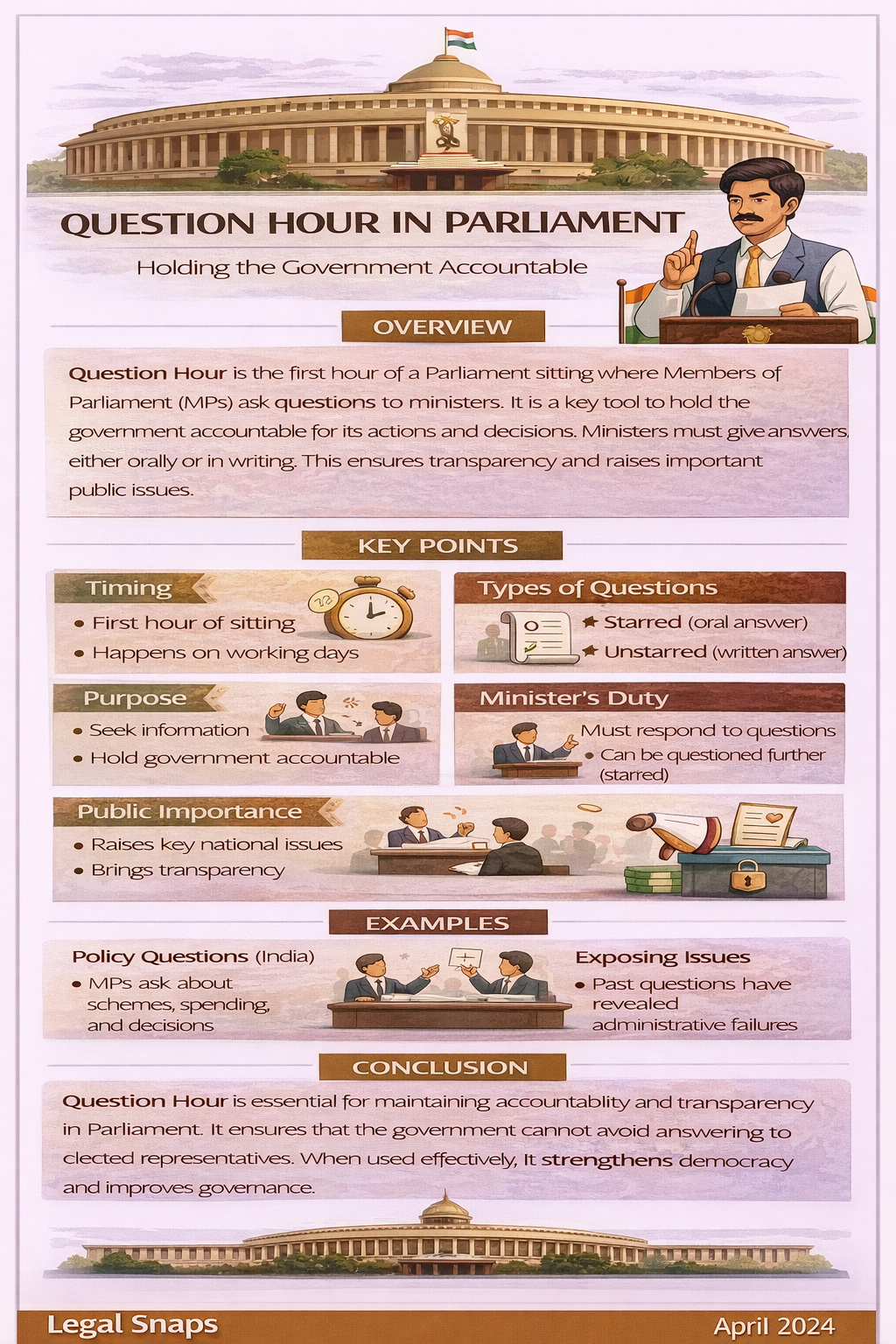
Conclusion
Question Hour is essential for maintaining accountability and transparency in Parliament. It ensures that the government remains answerable to elected representatives.When used effectively, it strengthens democratic oversight and governance. However, disruptions or weak participation can reduce its impact. Its value depends on active and serious engagement by MPs.