Under 17
What is the Council of Ministers?
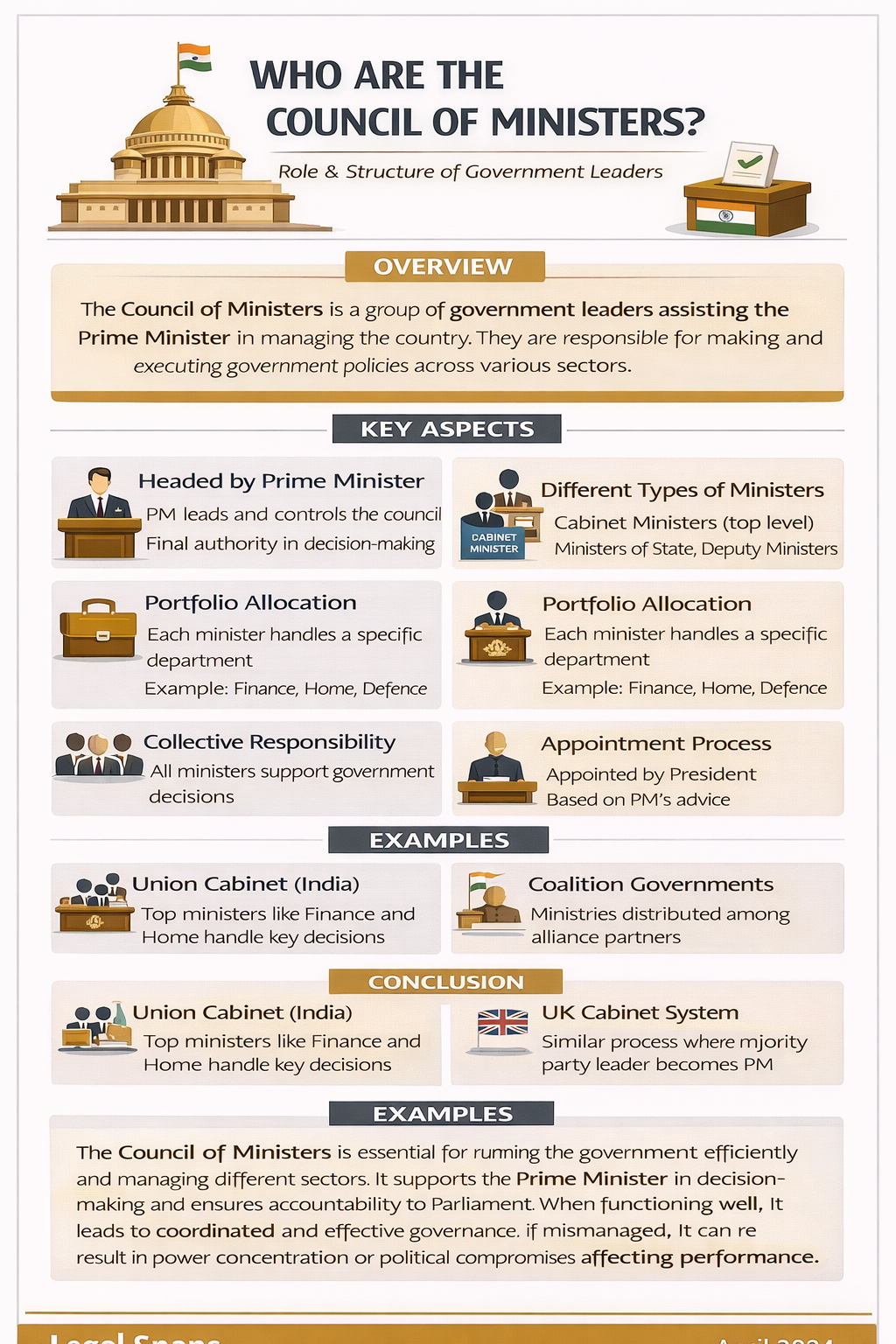
The Council of Ministers is the core executive body that assists the Prime Minister in governing the country. It consists of ministers handling different departments and operates on the principle of collective responsibility. While it ensures division of work and specialization, its effectiveness depends on leadership and political balance.
Overview
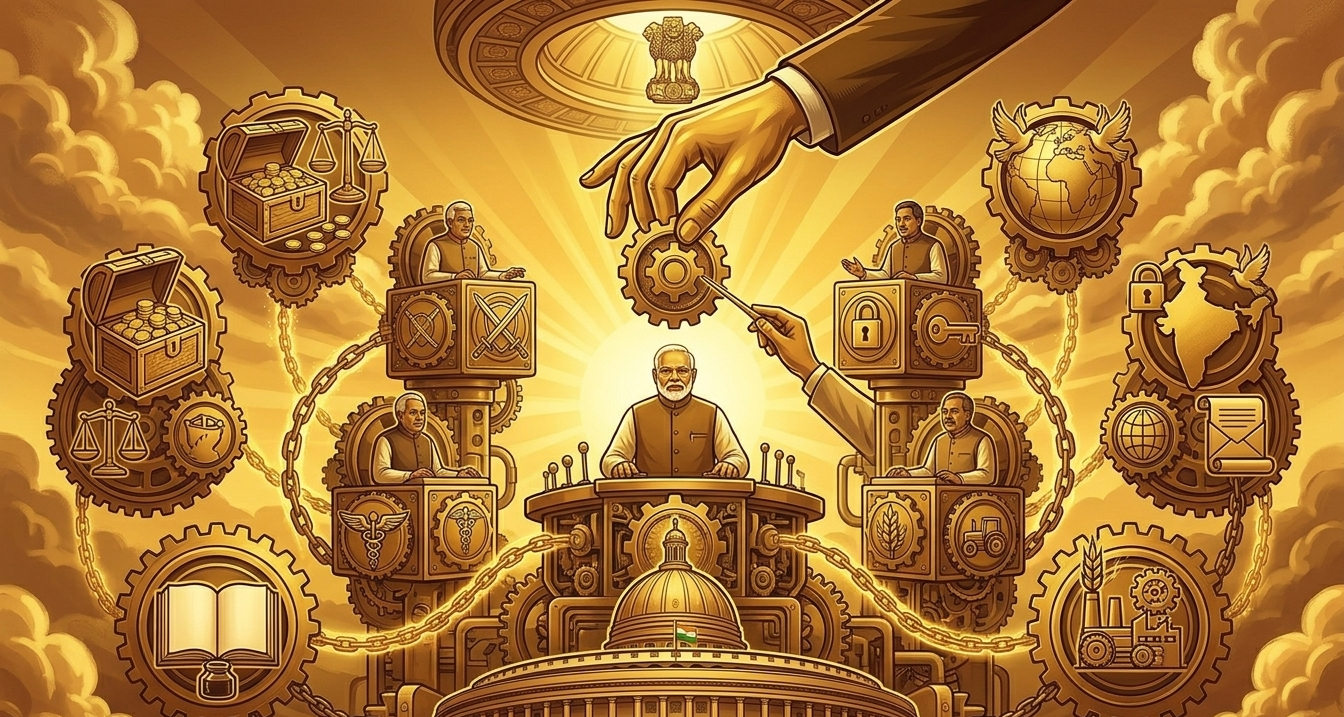
The Council of Ministers is the group of government leaders who assist the Prime Minister in running the country. It includes different levels of ministers responsible for various departments such as finance, defence, and education.The ministers are appointed by the President on the advice of the Prime Minister. This body is responsible for making and implementing government policies and functions as the central decision-making team within the executive.
Key Points
- Headed by Prime Minister: PM leads and controls the Council; final authority in decision-making
- Different Types of Ministers: Cabinet Ministers, Ministers of State, and Deputy Ministers
- Portfolio Allocation: Each minister handles a specific department (e.g., Finance, Home, Defence)
- Collective Responsibility: All ministers support government decisions and are accountable to the Lok Sabha
- Appointment Process: Appointed by the President on the advice of the Prime Minister
Legal Analysis
The Council of Ministers enables efficient governance by dividing responsibilities across different sectors, allowing specialization and focused decision-making. This structure helps the Prime Minister manage complex administrative functions through delegated authority.However, in practice, real power is often concentrated in a few key ministers or the Prime Minister, particularly in strong majority governments. This can reduce the collective nature of decision-making.
In coalition governments, the distribution of ministries may be influenced by political negotiations rather than expertise, which can affect efficiency and policy outcomes.Therefore, while the institutional structure is effective, its performance largely depends on leadership quality, cabinet coordination, and political dynamics.
Examples
Union Cabinet (India): Senior ministers such as Finance and Home play a central role in major policy decisions.
Coalition Governments: Ministries are often distributed among alliance partners to maintain political balance.
United Kingdom: Similar cabinet system operates with collective responsibility to Parliament.
Conclusion
The Council of Ministers is essential for efficient governance, enabling the division of responsibilities and coordinated decision-making. It supports the Prime Minister in managing different sectors of administration.However, its effectiveness depends on how power is distributed and exercised. Strong leadership can drive efficiency, while poor coordination or political compromises can reduce performance.