Under 17
What are State Legislatures?
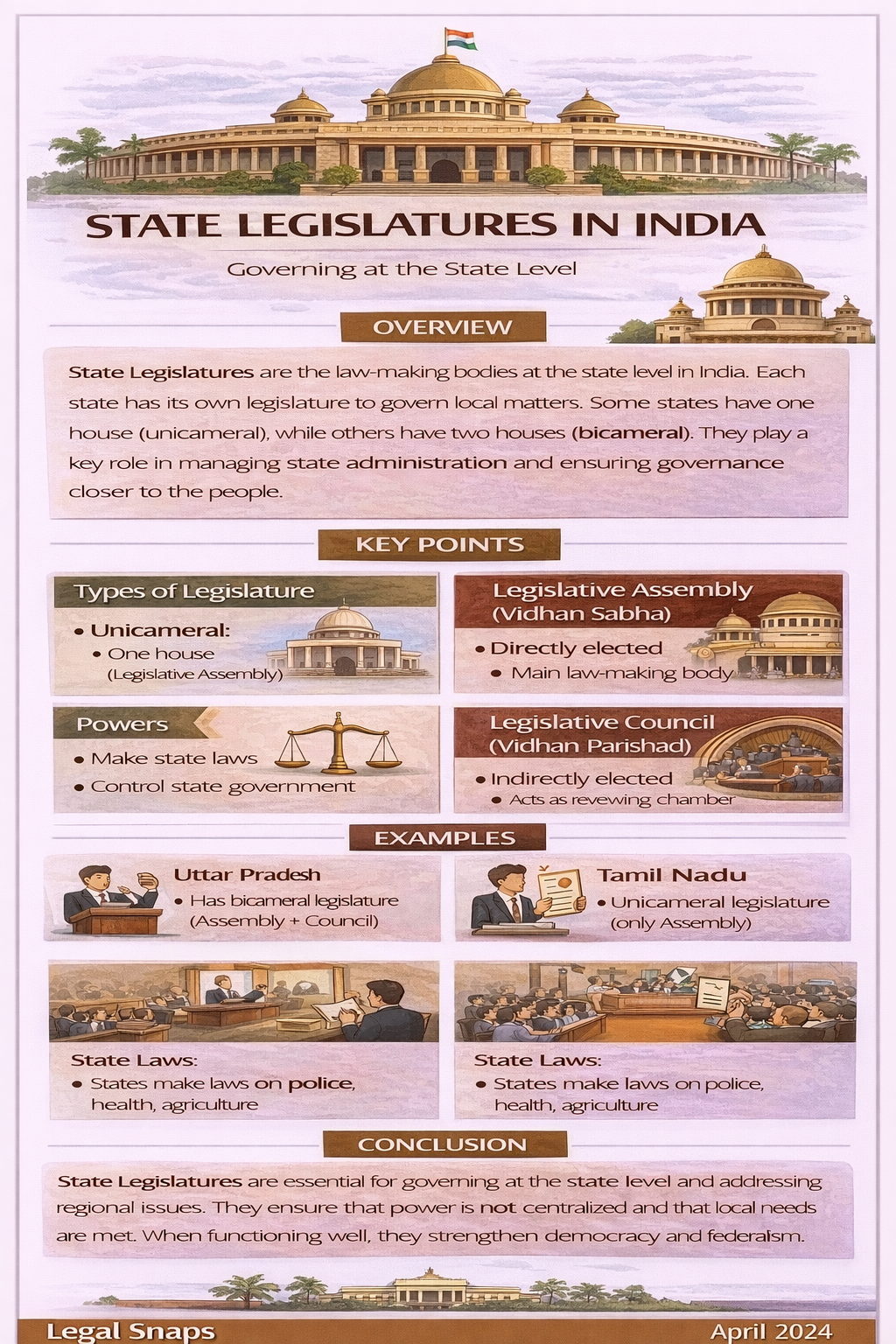
State Legislatures are the law-making bodies at the state level responsible for governing local matters. They operate through either a single house or a two-house system. These institutions bring governance closer to people and strengthen federalism.
Overview
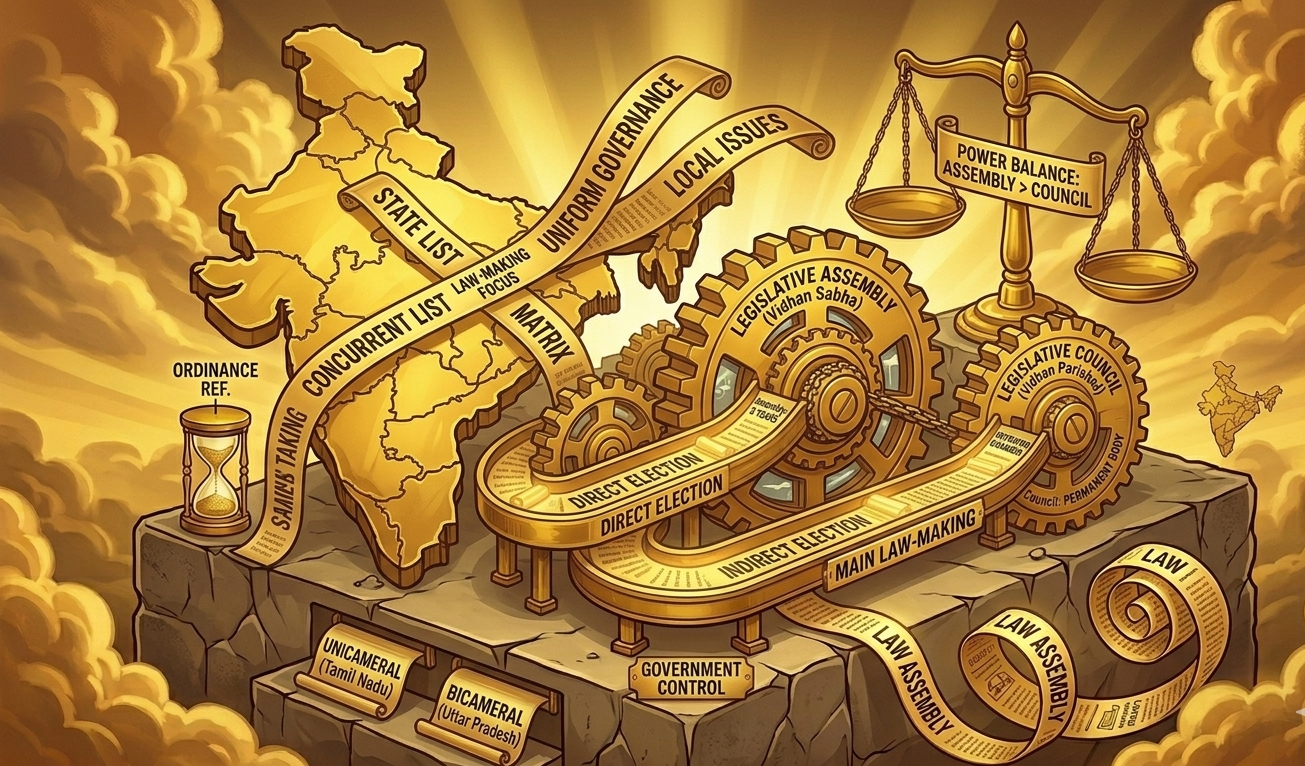
State Legislatures are the law-making bodies at the state level in India. They are responsible for making laws on subjects listed in the State List and Concurrent List of the Constitution.Each state has its own legislature to govern regional matters. Some states follow a unicameral system with one house, while others have a bicameral system with two houses. These bodies play a key role in managing state policies and administration.
Key Points
- Types of Legislature: Unicameral (one house) or Bicameral (two houses)
- Legislative Assembly (Vidhan Sabha): Directly elected; main law-making body
- Legislative Council (Vidhan Parishad): Indirectly elected; acts as a reviewing chamber
- Powers: Makes state laws and controls the state government
- Tenure: Assembly – 5 years; Council – permanent body with staggered terms
Legal Analysis
State Legislatures are central to decentralized governance, allowing states to address local issues more effectively. They ensure that decision-making is not concentrated solely at the national level.The Legislative Assembly holds primary authority, especially in controlling the executive and passing laws. It reflects the direct will of the people at the state level.
Legislative Councils provide an additional layer of review, potentially improving the quality of legislation. However, they are often criticized for limited effectiveness and additional cost.Thus, while the structure supports federal balance, its effectiveness depends on active participation, political accountability, and institutional strength within states.
Examples
Uttar Pradesh: Has a bicameral legislature with both Assembly and Legislative Council.
Tamil Nadu: Follows a unicameral system with only a Legislative Assembly.
State Laws: Legislatures make laws on subjects like police, health, and agriculture.
Conclusion
State Legislatures are essential for governance at the regional level, ensuring that local needs are addressed effectively. They play a key role in maintaining federal balance.When functioning actively, they strengthen democracy and accountability. If weak or inactive, governance at the state level suffers. Their success depends on participation, efficiency, and institutional strength.