Administrative
Comprehensive Guide to India’s Digital Personal Data Protection Act, 2023
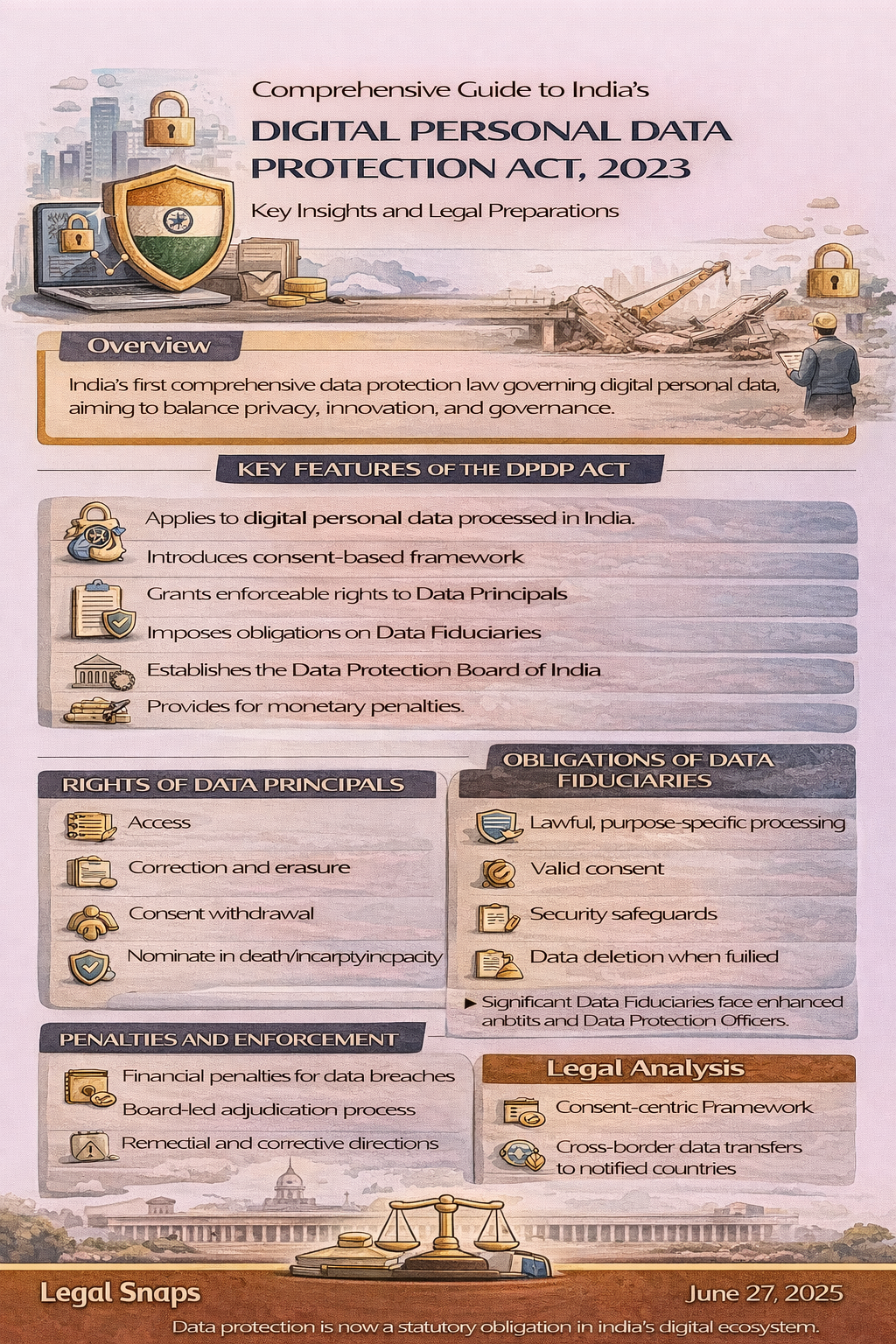
India’s Digital Personal Data Protection Act, 2023 creates a comprehensive privacy framework.It introduces consent-based processing, enforceable user rights, and regulatory oversight.Businesses face strict compliance obligations and significant monetary penalties.Data protection is now a statutory mandate not a policy choice.

Overview
The Digital Personal Data Protection Act, 2023 (DPDP Act) marks India’s first comprehensive data protection framework governing the processing of digital personal data. The legislation establishes enforceable rights for individuals (Data Principals), statutory obligations for entities processing data (Data Fiduciaries), and institutional oversight mechanisms through the Data Protection Board of India.The Act seeks to balance privacy, innovation, and governance while strengthening compliance obligations for businesses operating in India’s digital ecosystem. It represents a structural transformation in India’s privacy regime.
Key points
- Applies to digital personal data processed within India and certain cross-border processing.
- Introduces a consent-based processing framework with clear notice requirements.
- Grants enforceable statutory rights to Data Principals.
- Imposes compliance obligations on Data Fiduciaries and Significant Data Fiduciaries.
- Establishes the Data Protection Board of India for adjudication and enforcement.
- Provides substantial monetary penalties for non-compliance and data breaches.
Legal Analysis
The DPDP Act adopts a consent-centric architecture, aligning India’s privacy framework with global standards such as the GDPR. Consent must be informed, specific, unambiguous, and easily withdrawable. This strengthens informational autonomy and shifts control over personal data back to individuals.
At the same time, the Act incorporates calibrated flexibility by permitting certain “legitimate uses” without consent, including state functions, legal compliance, and emergencies. This reflects a balancing approach between privacy protection and governance needs.
Cross-border data transfers are permitted to countries notified by the Central Government, indicating a strategic rather than blanket localization model. This preserves India’s integration with global digital commerce while retaining regulatory oversight.
For corporations, the Act creates significant compliance implications. Organizations must conduct data audits, update privacy policies, strengthen cybersecurity frameworks, implement grievance redressal systems, and prepare for regulatory scrutiny. Financial penalties for violations are substantial, reinforcing deterrence and corporate accountability.
Conclusion
The Digital Personal Data Protection Act, 2023 represents a transformative shift in India’s privacy governance. It moves data protection from policy rhetoric to enforceable statutory obligation, creating structured rights, defined responsibilities, and institutional enforcement mechanisms.By combining consent-driven safeguards with calibrated regulatory flexibility, the Act seeks to balance innovation and privacy in India’s rapidly expanding digital economy. Data protection is no longer optional — it is a legal mandate backed by accountability and penalties.