Crime
Every Contradiction or Omission Is Not — Court Ruling
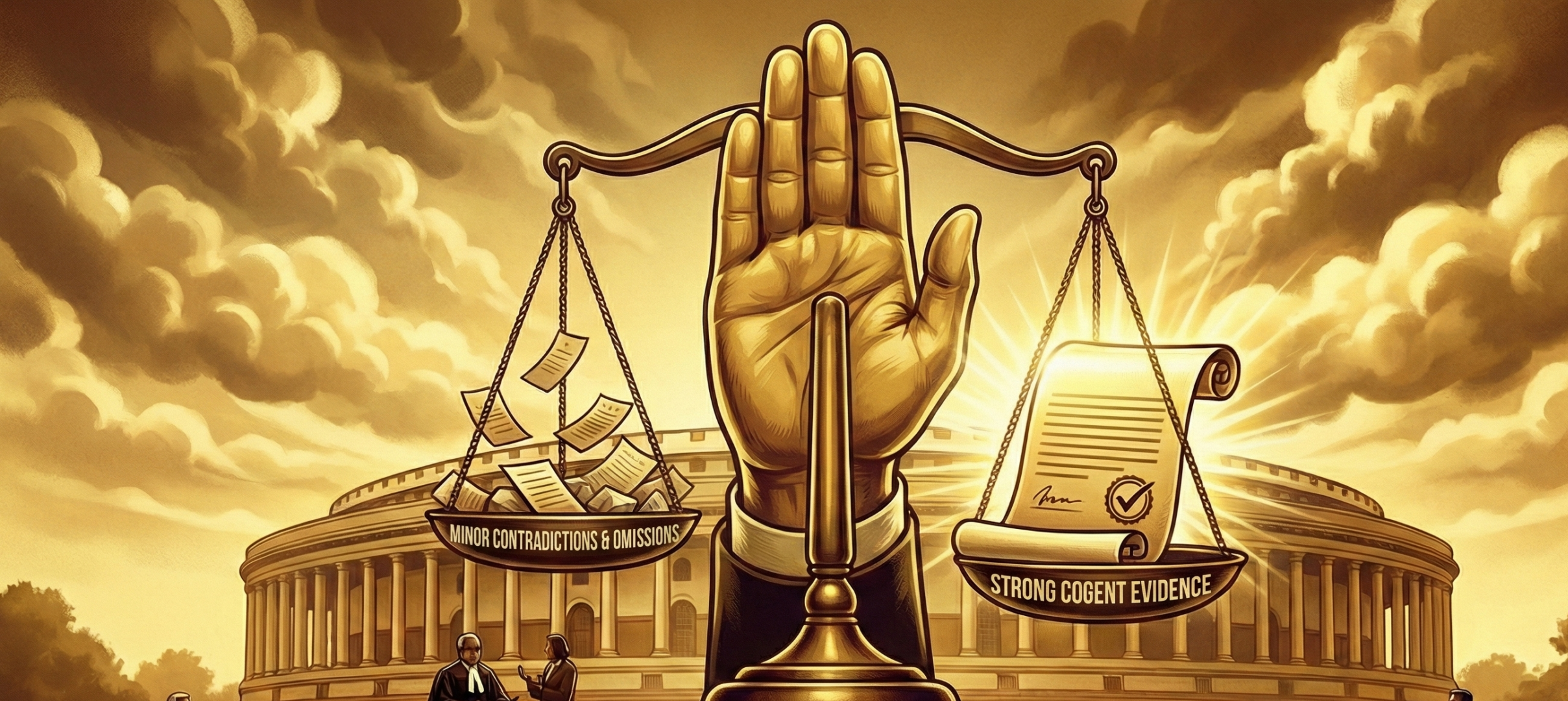
The Supreme Court has ruled that minor contradictions or omissions in witness testimony are not enough to invoke Section 319 Cr.P.C. Courts can summon additional accused only when strong and cogent evidence emerges during trial. The judgment raises the evidentiary threshold and reinforces judicial restraint. It safeguards personal liberty while preventing mechanical use of extraordinary criminal powers.
Overview
The Supreme Court of India has reiterated that not every contradiction or omission in witness testimony is sufficient to invoke Section 319 of the Code of Criminal Procedure (Cr.P.C.), which empowers courts to summon additional accused during a criminal trial. The Court stressed that this power must be exercised sparingly and only when strong and cogent evidence emerges during trial, reaffirming the exceptional nature of Section 319 and its direct impact on personal liberty.
Key Points
- Section 319 Cr.P.C. is an extraordinary power, not mechanical.
- Strong and cogent evidence is mandatory.
- Minor contradictions are insufficient grounds.
- Independent judicial scrutiny is required.
- Protects individuals from unwarranted prosecution.
Analysis
The Supreme Court clarified that Section 319 Cr.P.C. is an extraordinary judicial power meant to be exercised only in exceptional circumstances. Unlike the stage of framing charges, which requires only a prima facie case, invoking Section 319 demands a significantly higher evidentiary threshold. Summoning an additional accused during trial is a serious judicial act and cannot be treated as routine procedural discretion.
The Court firmly held that the evidence must be strong, reliable, and capable of leading to conviction if left unrebutted. Mere suspicion, conjecture, or minor inconsistencies in testimony do not satisfy this standard. Only material evidence that directly implicates an individual can justify invoking Section 319.
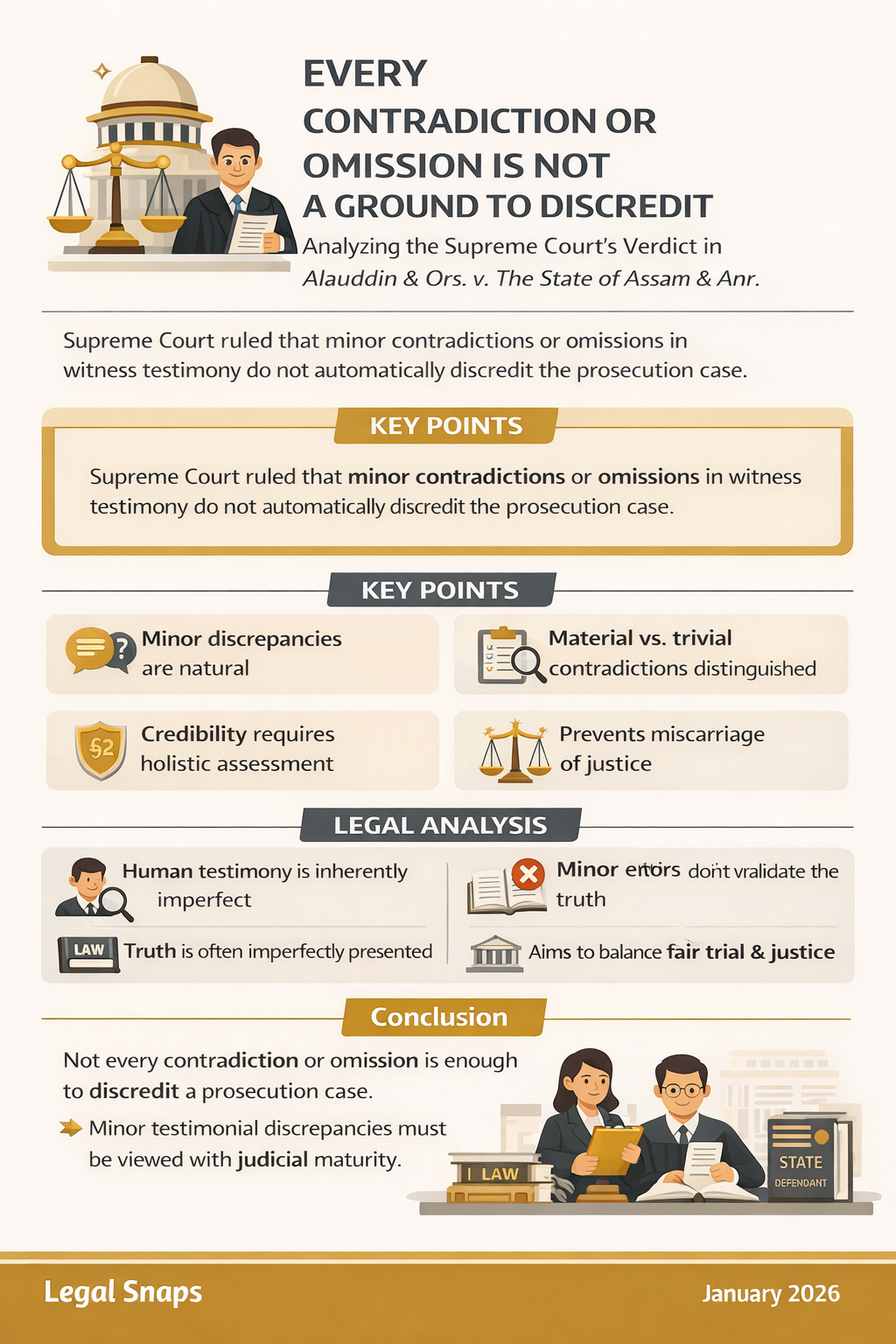
Recognising the imperfections of human testimony, the Court observed that minor contradictions and omissions are natural consequences of perception, memory, and narration. Such discrepancies do not automatically indicate criminal involvement of additional persons. Elevating trivial inconsistencies into grounds for summoning accused individuals would weaken procedural safeguards in criminal trials.
Importantly, the Court anchored its reasoning in the protection of personal liberty under Article 21. Being summoned as an accused exposes an individual to stigma, legal burden, and the rigours of trial. Therefore, judicial discretion under Section 319 must be exercised cautiously, with clear reasoning and compelling evidence.
Conclusion
The Supreme Court has clearly laid down that every contradiction or omission is not a ground to summon an accused under Section 319 Cr.P.C. Only when strong, cogent, and credible evidence emerges during trial can this exceptional power be exercised. By raising the evidentiary threshold and discouraging mechanical application, the judgment strengthens procedural fairness, protects individual liberty, and ensures that criminal trials remain evidence-based rather than suspicion-driven.