బ్లాగులు
మారుతున్న భారతీయ చట్టం — తీర్పులు, నియమాలు, అవి మీకు నిజంగా ఏమి అర్థం.

How Government Policies Are Implemented
Government policies achieve real impact only when they are effectively implemented. Implementation transforms policy goals into programs, services, and actions that directly benefit citizens.
What is Public Policy?
Public policy is the roadmap governments use to solve public problems and improve citizens’ lives. It guides decision-making in areas such as education, healthcare, employment, environment, and public welfare.
1 నిమిషాల పఠనం →
What is a Joint Sitting?
A Joint Sitting is a special constitutional mechanism used to resolve disagreements between the Lok Sabha and Rajya Sabha over an Ordinary Bill. It helps prevent legislative deadlocks and allows Parliament to complete the law-making process.
2 నిమిషాల పఠనం →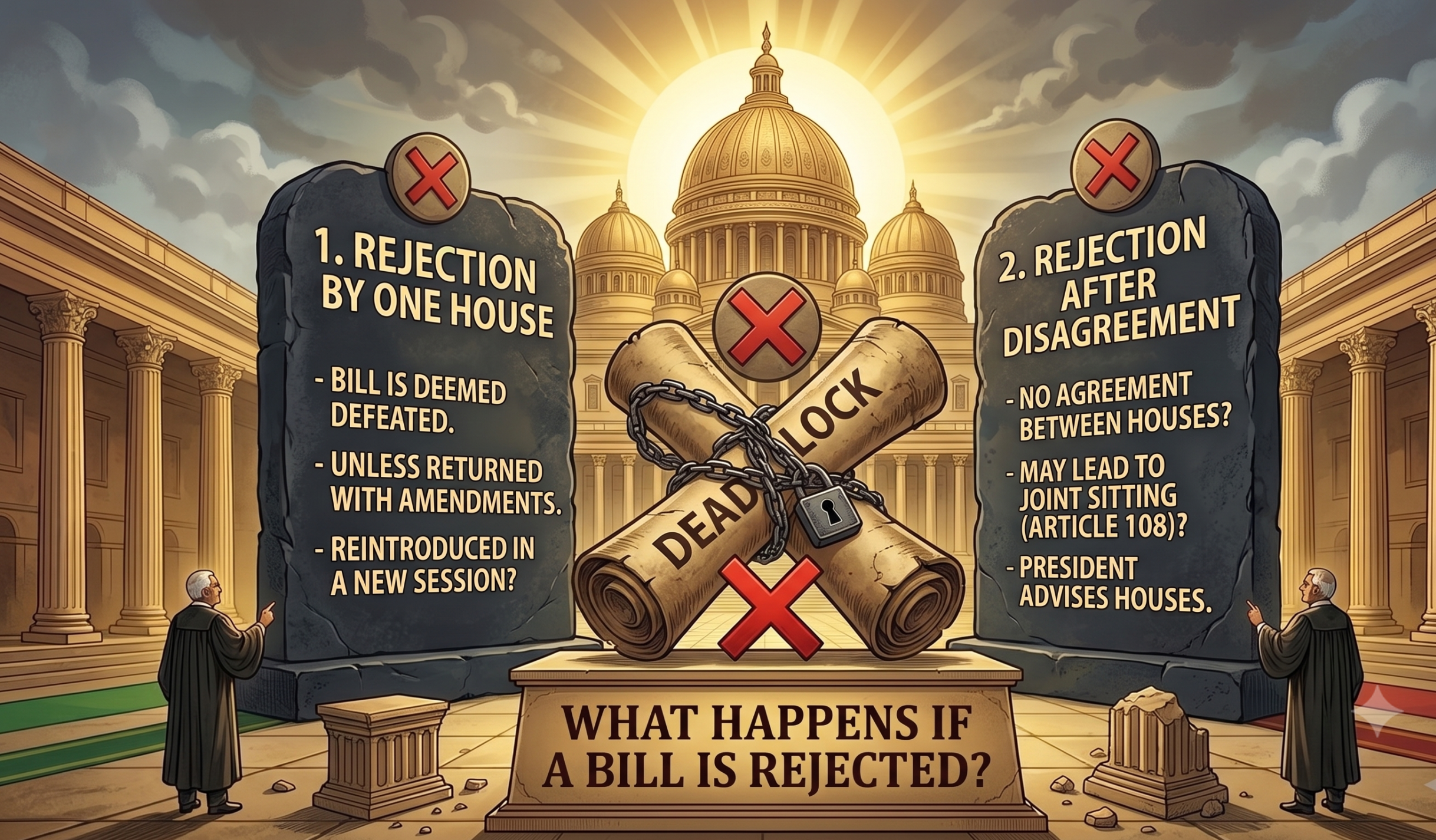
What Happens if a Bill is Rejected?
Not every bill introduced in Parliament becomes law. If a bill is rejected during the legislative process, it may fail completely or trigger special constitutional procedures depending on the type of bill involved.
2 నిమిషాల పఠనం →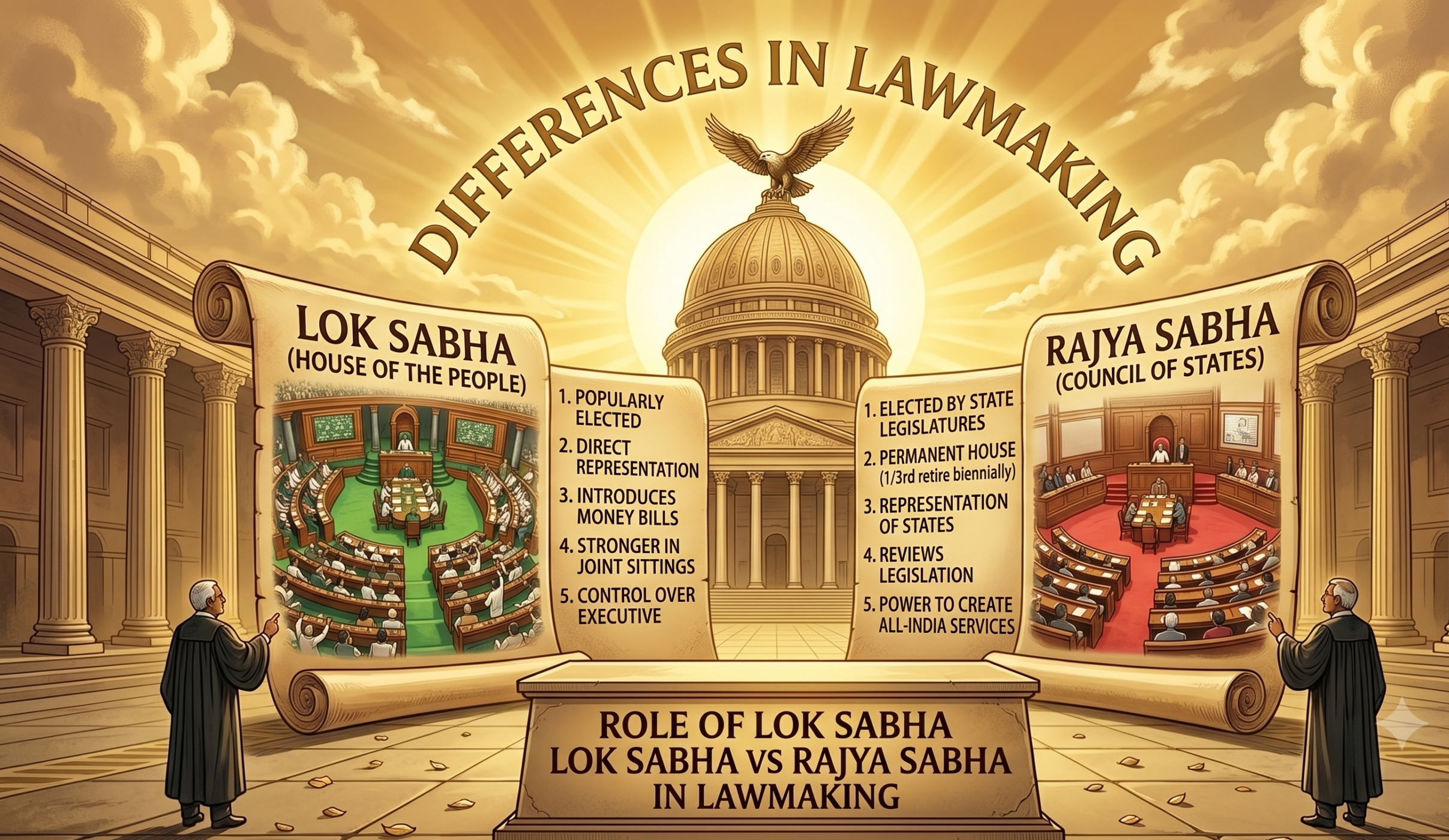
Role of Lok Sabha vs Rajya Sabha in Lawmaking
Lok Sabha and Rajya Sabha are the two Houses of Parliament that work together to make laws in India. Their bicameral structure ensures representation of both the people and the states while providing multiple levels of legislative scrutiny.
2 నిమిషాల పఠనం →
Types of Bills in India (Money Bill, Ordinary Bill, and Others)
Bills are proposals for new laws or amendments to existing laws. The Indian Constitution recognizes different types of bills, each following a specific legislative procedure based on its subject matter and importance.
2 నిమిషాల పఠనం →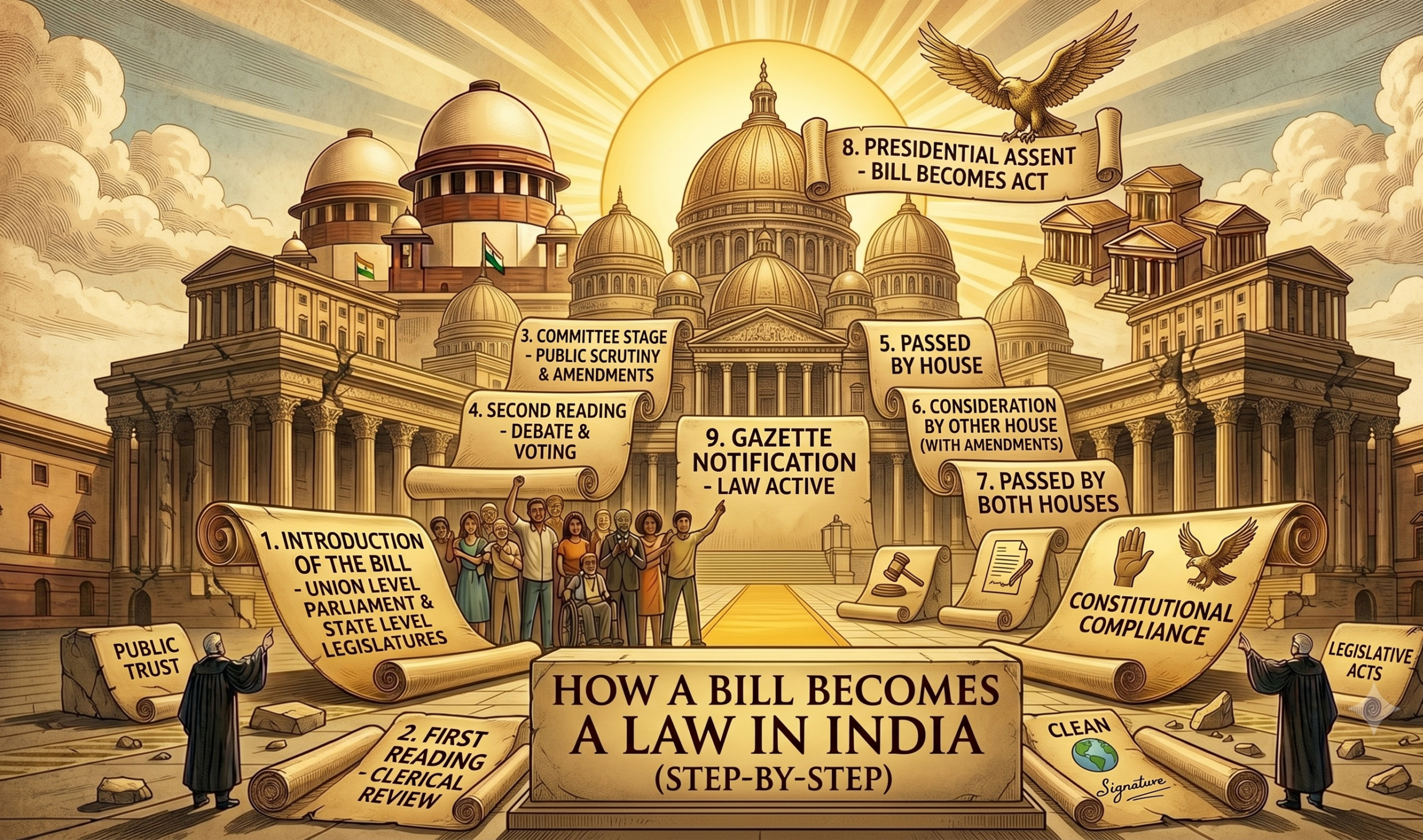
How a Bill Becomes a Law in India (Step-by-Step)
A bill is a proposal for a new law or a change to an existing law. Before becoming a law, it must pass through several stages of scrutiny, debate, approval, and Presidential assent.
1 నిమిషాల పఠనం →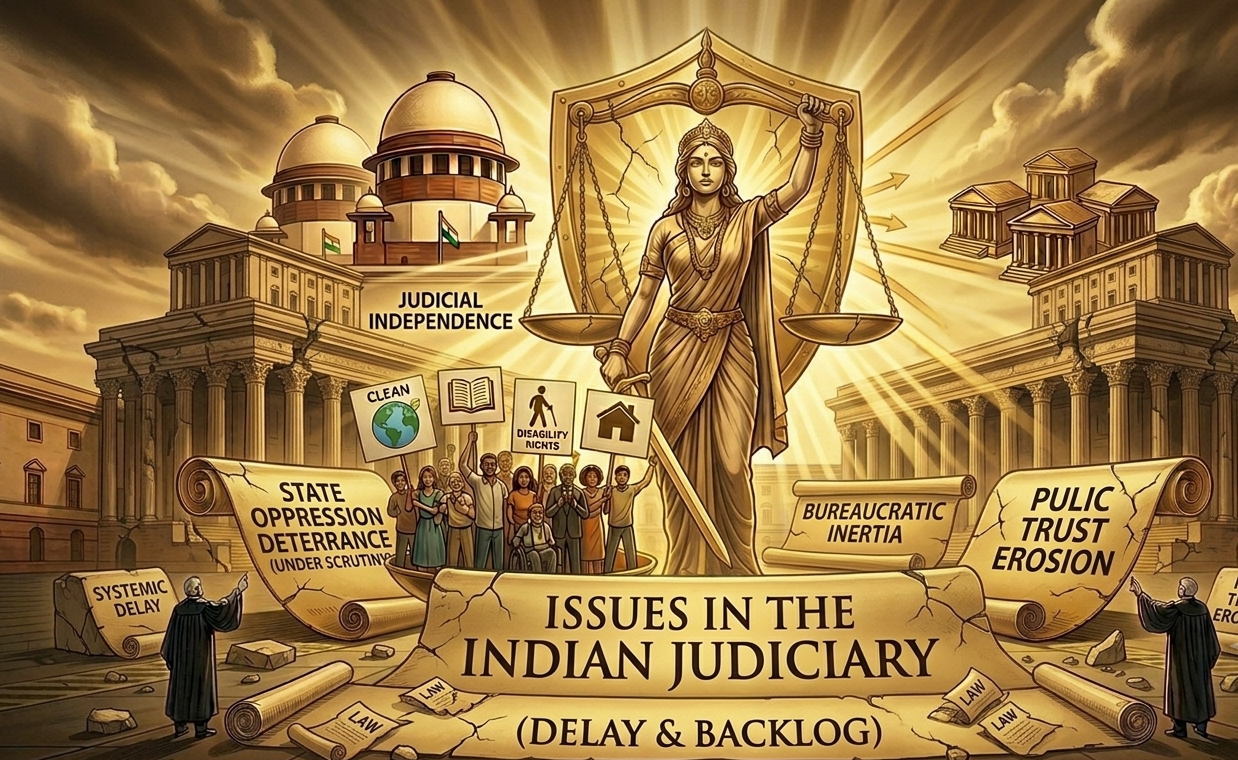
Issues in the Indian Judiciary (Delay and Backlog)
Judicial delays and case backlogs are among the most serious challenges facing India’s justice system. They affect access to justice, increase litigation costs, and reduce public confidence in the courts.
2 నిమిషాల పఠనం →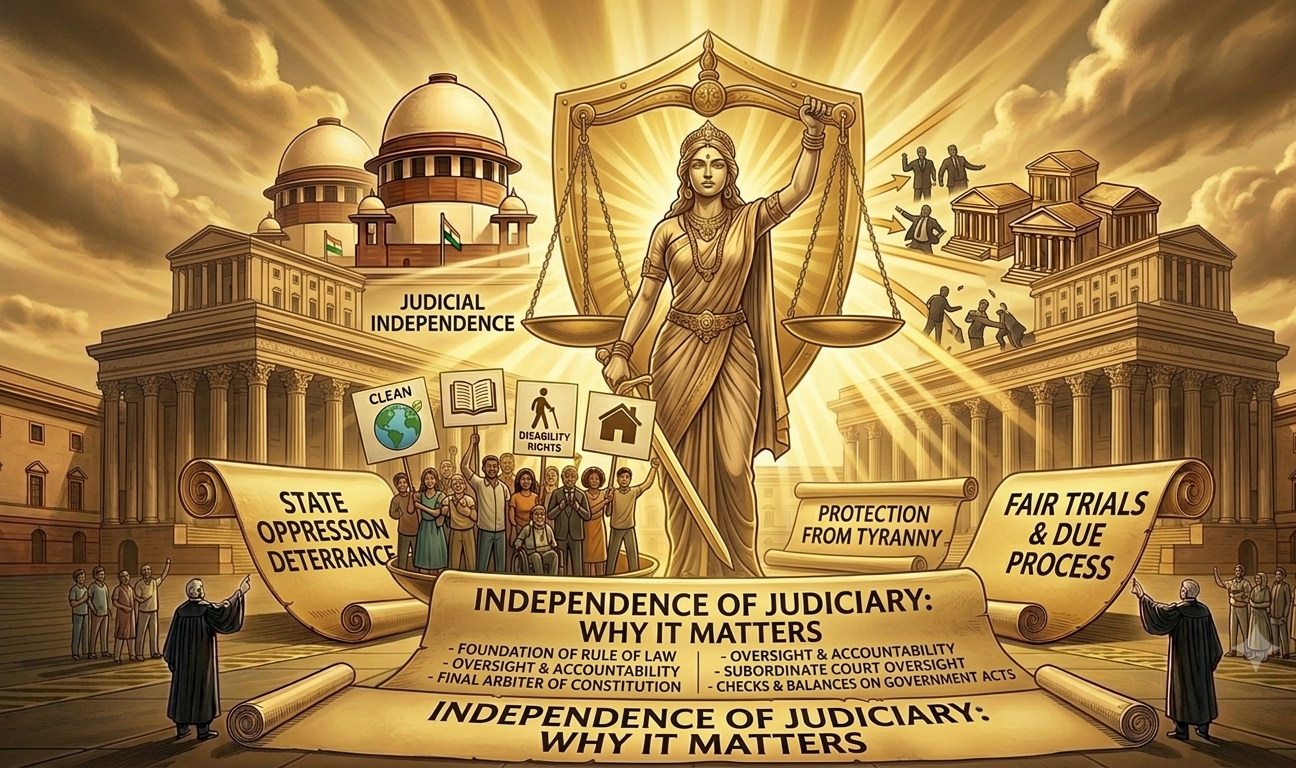
Independence of Judiciary: Why It Matters
Judicial independence ensures that judges can decide cases based solely on the Constitution and the law, free from political influence or external pressure. It is a fundamental pillar of democracy and the rule of law.
2 నిమిషాల పఠనం →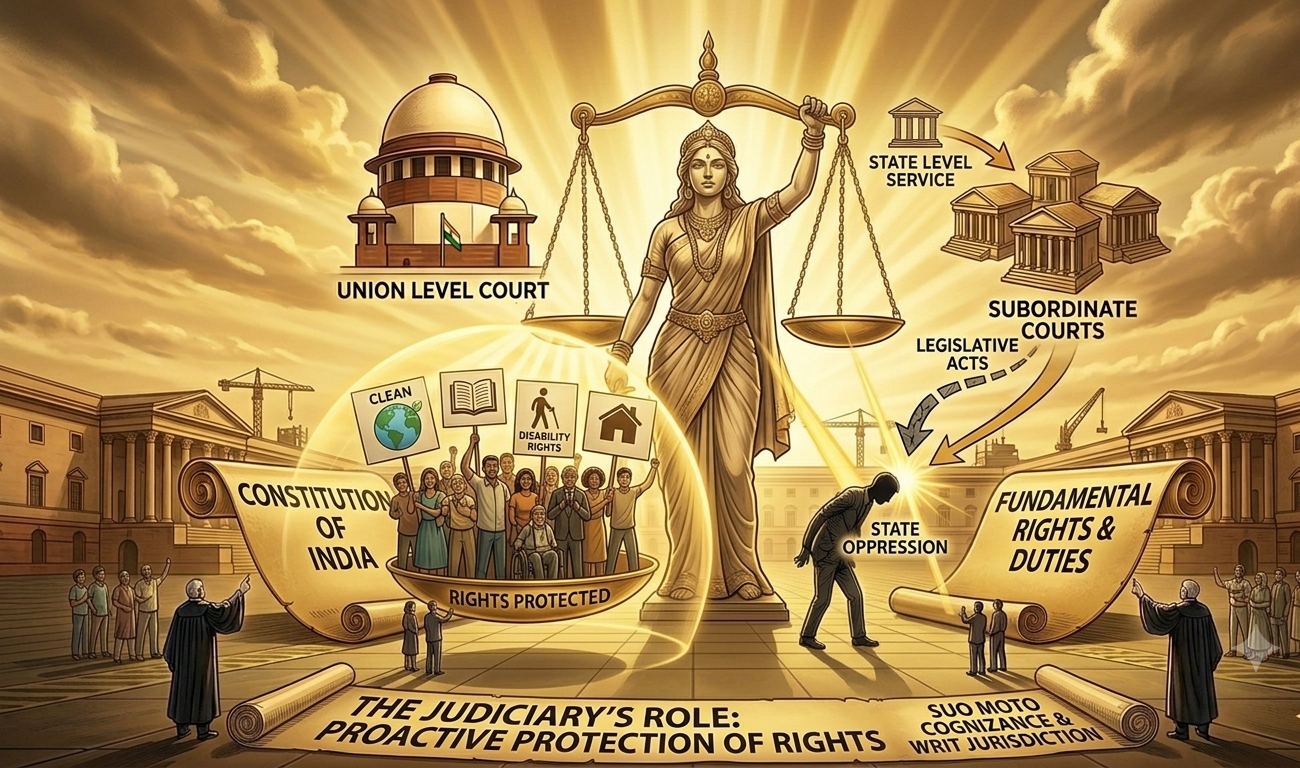
595
The judiciary acts as the guardian of citizens’ rights by ensuring that laws and government actions comply with the Constitution. Through judicial review and constitutional remedies, courts protect individual freedoms and uphold the rule of law.
2 నిమిషాల పఠనం →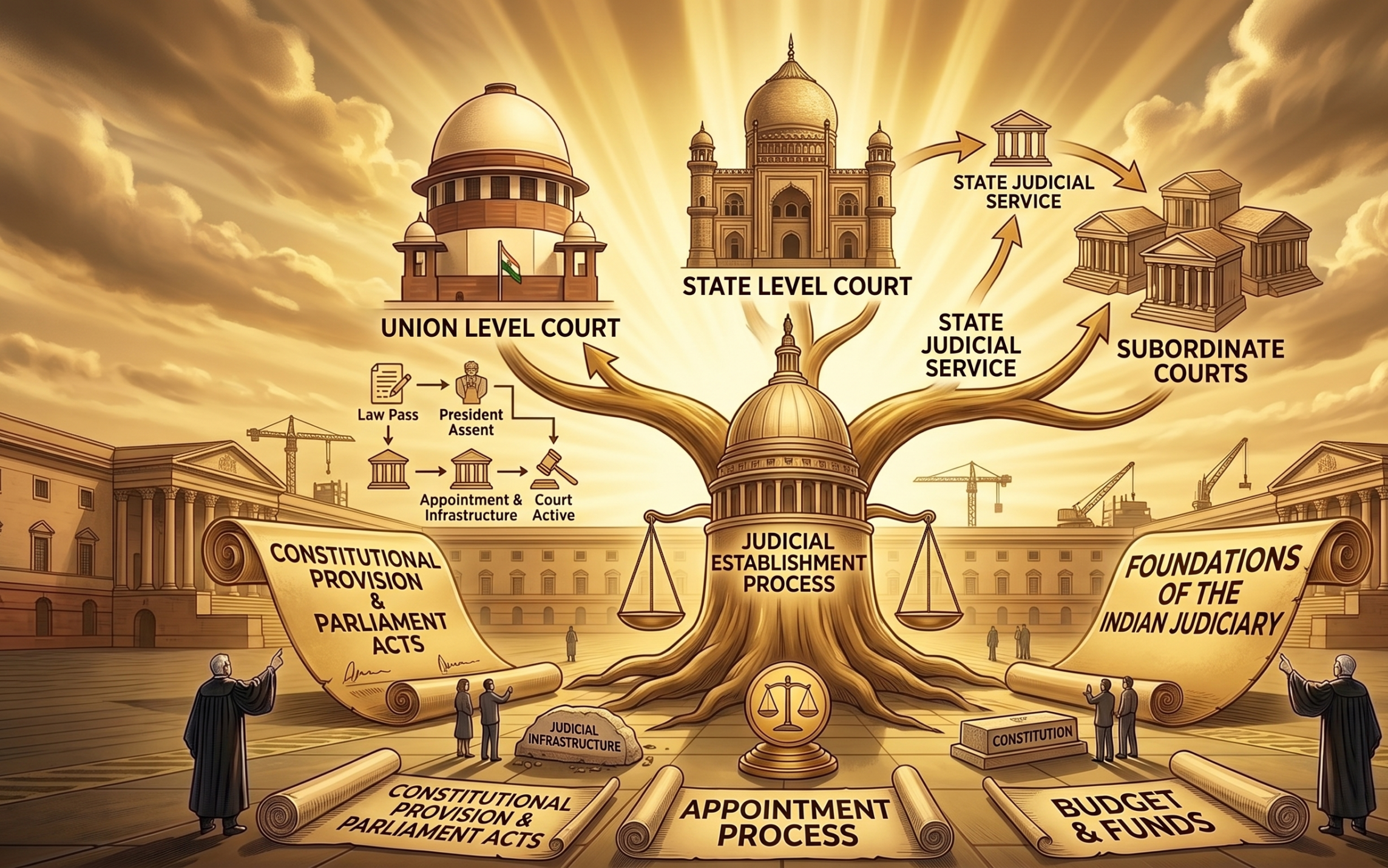
How Courts Are Established in India
Courts in India are established through constitutional provisions and legislation to ensure justice at national, state, and local levels. Their structured hierarchy helps protect rights, resolve disputes, and uphold the rule of law.
2 నిమిషాల పఠనం →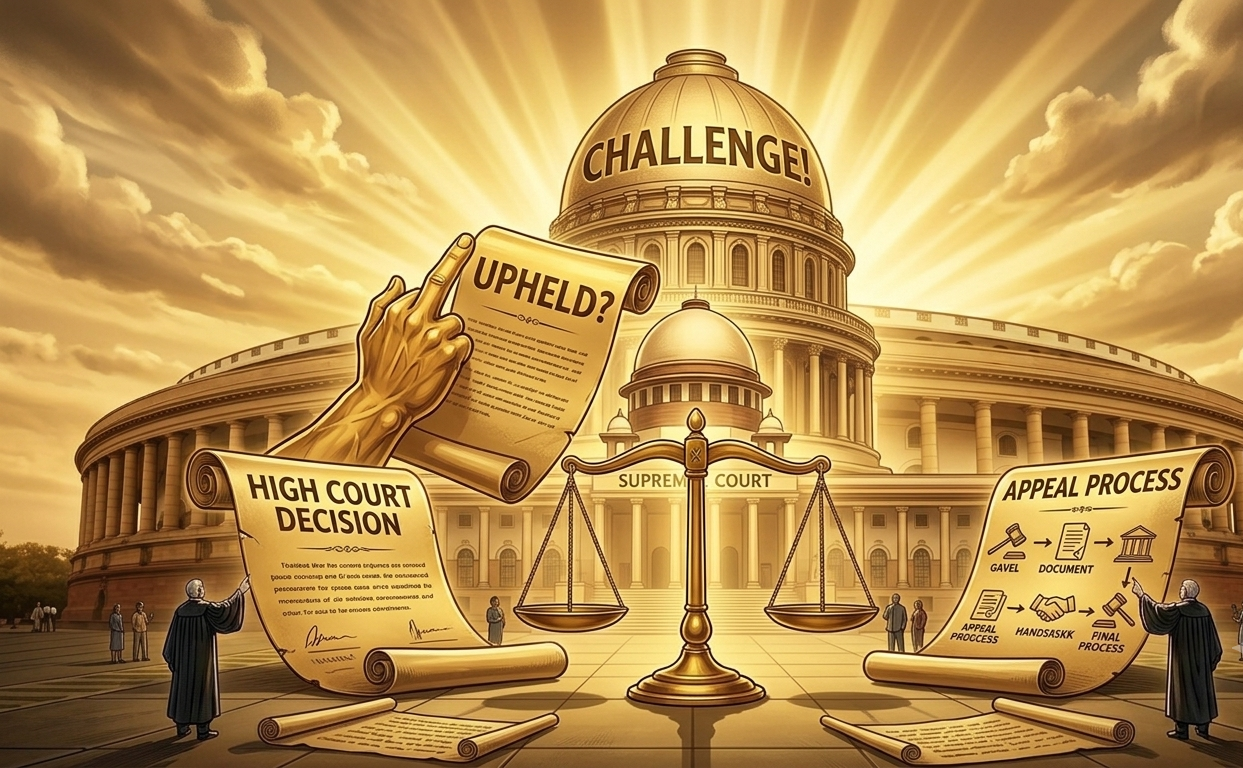
Can a High Court Decision Be Challenged?
A High Court decision can be challenged before the Supreme Court of India through various appellate mechanisms. This ensures judicial review, correction of legal errors, and uniform interpretation of laws across the country.
2 నిమిషాల పఠనం →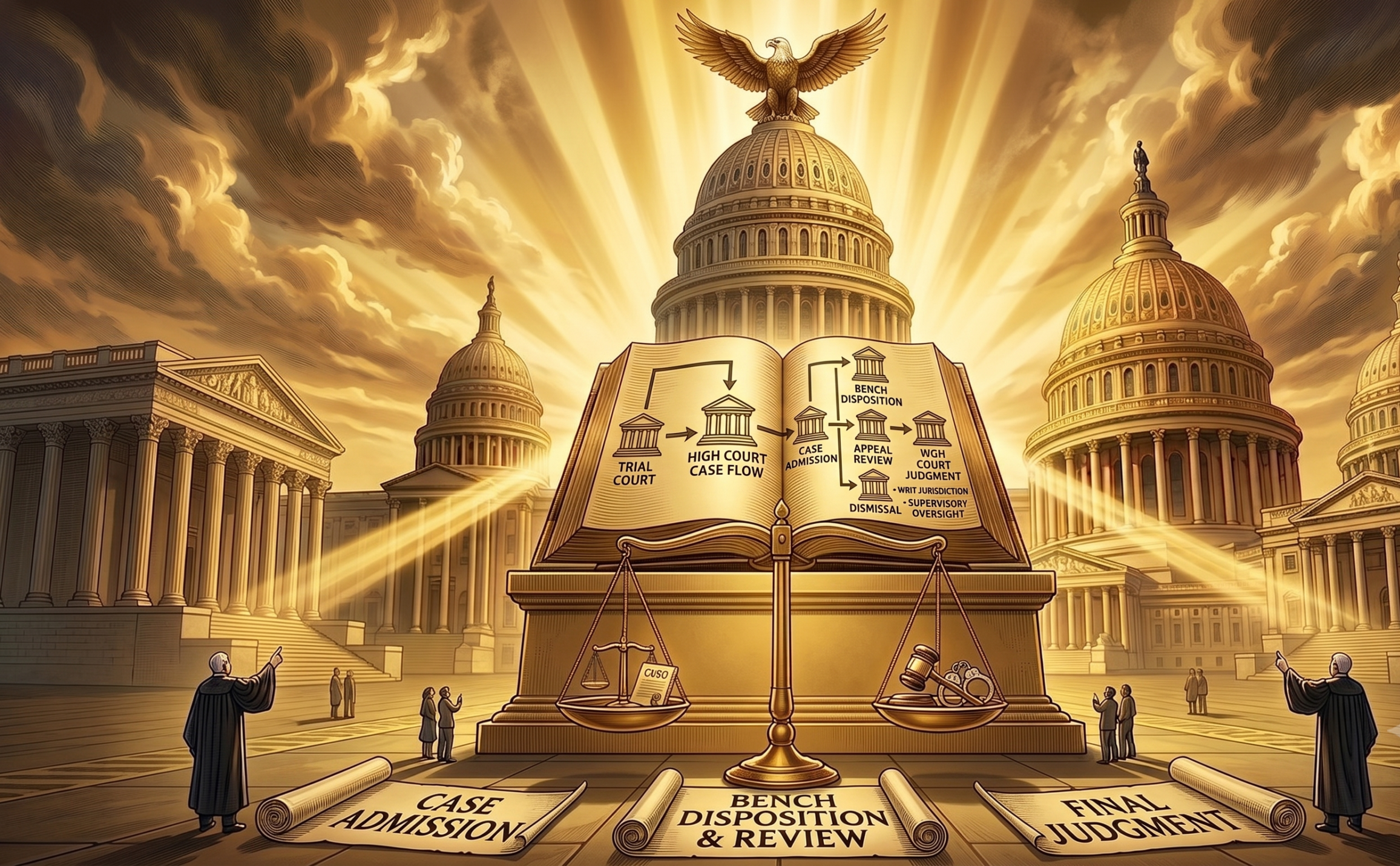
Difference Between High Court and Supreme Court
The High Court and Supreme Court are key pillars of India’s judicial system. While High Courts operate at the state level, the Supreme Court serves as the highest judicial authority in the country.
2 నిమిషాల పఠనం →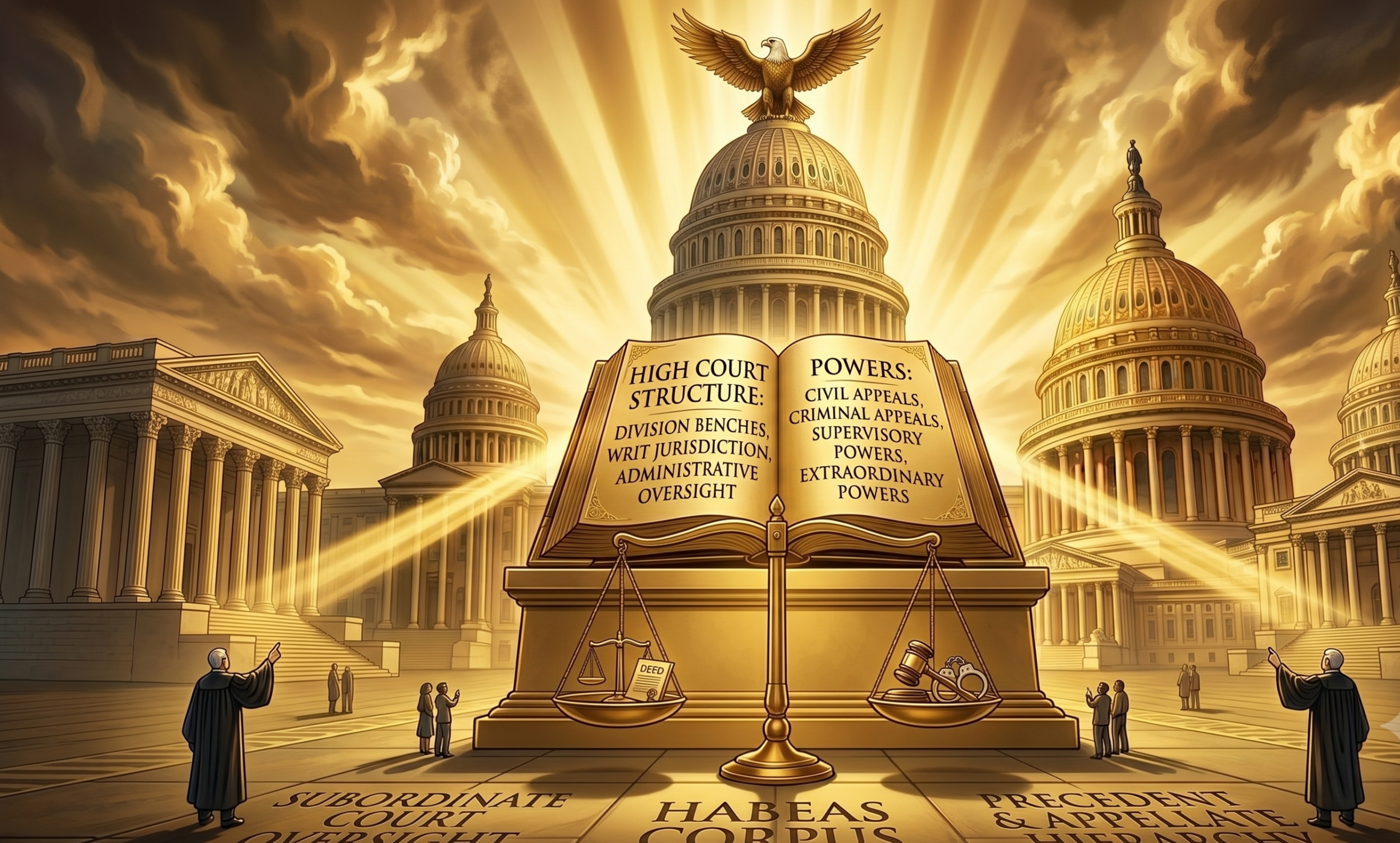
Structure and Powers of High Courts
High Courts are the highest courts at the state level in India. Their structure and constitutional powers enable them to protect rights, supervise lower courts, and ensure the proper administration of justice.
2 నిమిషాల పఠనం →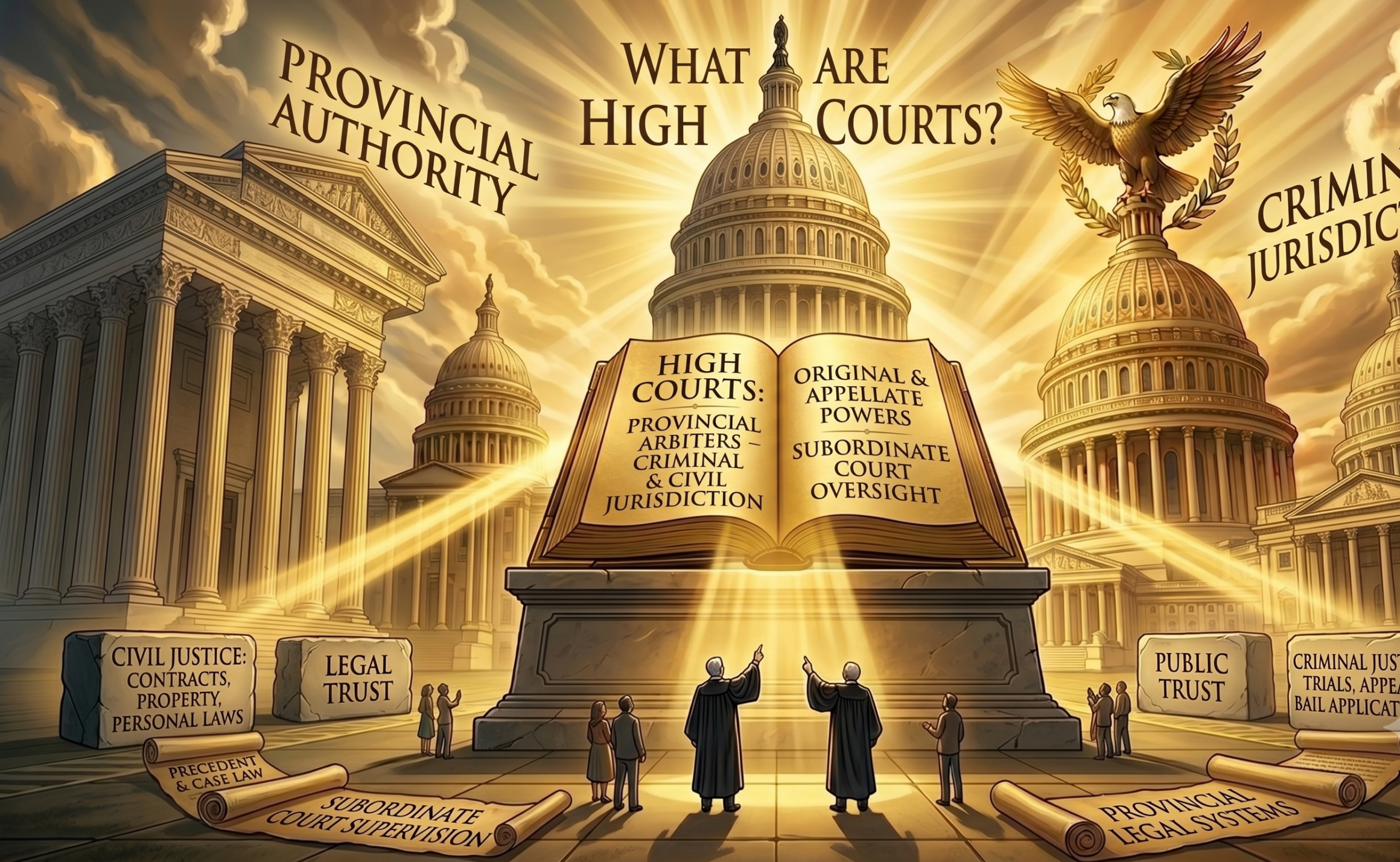
What are High Courts?
High Courts are the highest judicial authorities at the state level in India. They protect rights, supervise lower courts, and ensure that laws are applied fairly and constitutionally within their jurisdiction.
2 నిమిషాల పఠనం →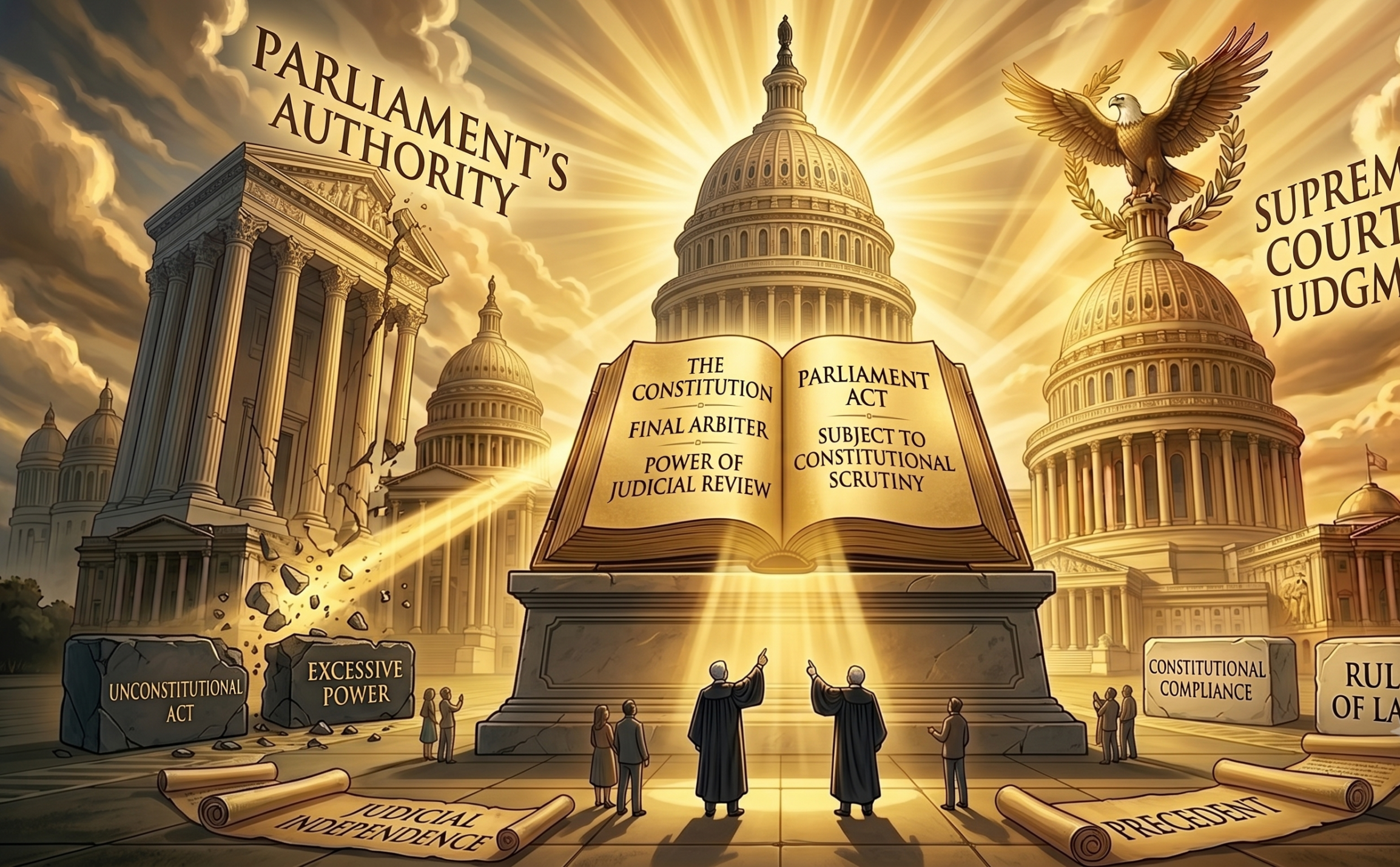
Can Supreme Court overrule Parliament?
The Supreme Court cannot replace Parliament or make laws on its behalf. However, it can review laws passed by Parliament and strike them down if they violate the Constitution.
2 నిమిషాల పఠనం →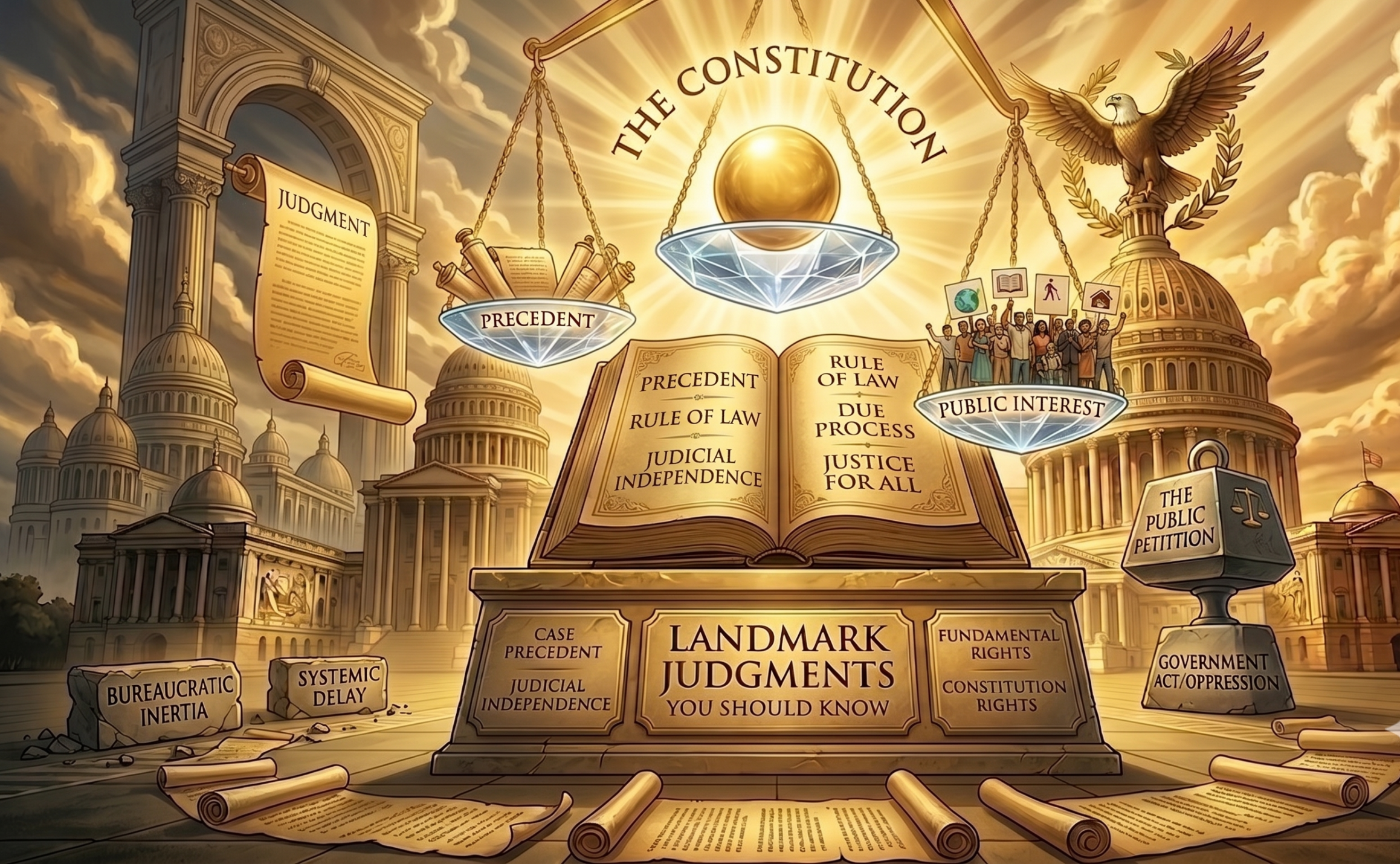
Landmark Judgements You Should Know
Landmark judgments are court decisions that shape constitutional interpretation, strengthen rights, and influence future legal developments. These cases form the foundation of modern Indian constitutional law.
2 నిమిషాల పఠనం →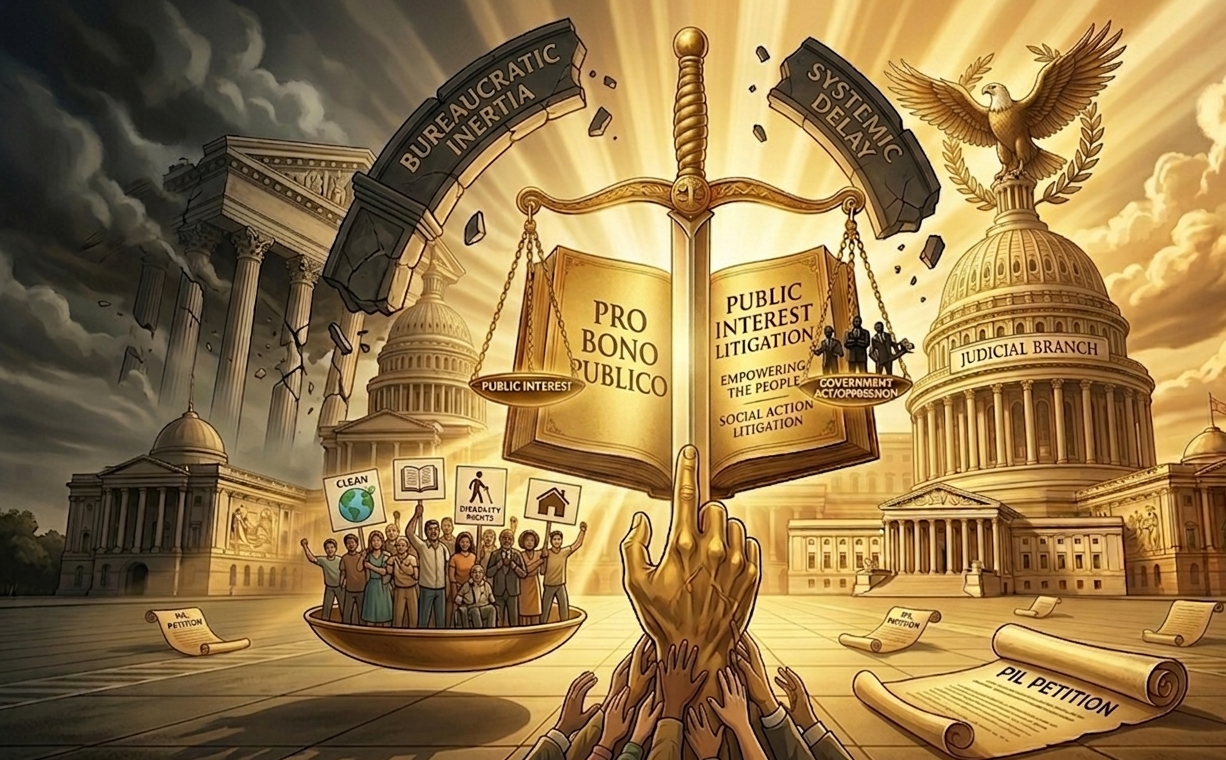
What is Public Interest Litigation (PIL)?
Public Interest Litigation (PIL) allows individuals and organizations to approach courts for matters affecting public welfare and constitutional rights. It has become a powerful tool for expanding access to justice and ensuring government accountability.
2 నిమిషాల పఠనం →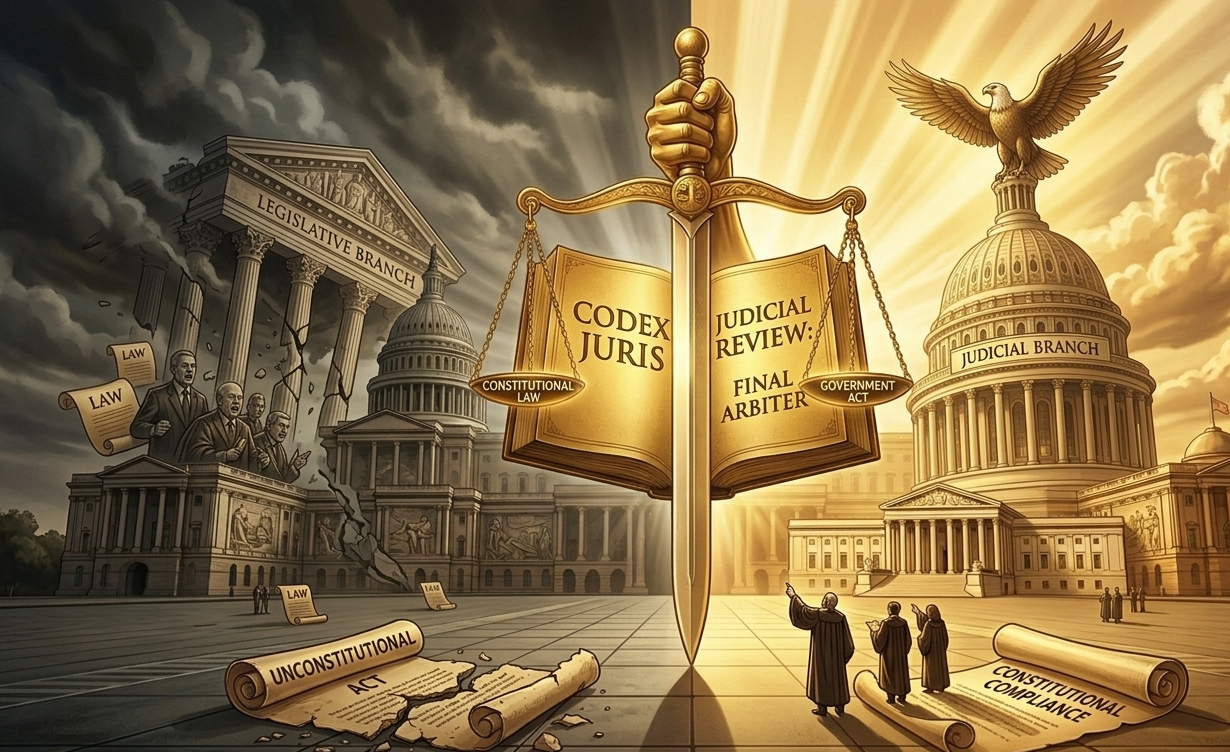
What is Judicial Review ?
Judicial Review is the constitutional power of courts to examine laws and government actions for compliance with the Constitution. It serves as a key safeguard against misuse of power and protects fundamental rights.
2 నిమిషాల పఠనం →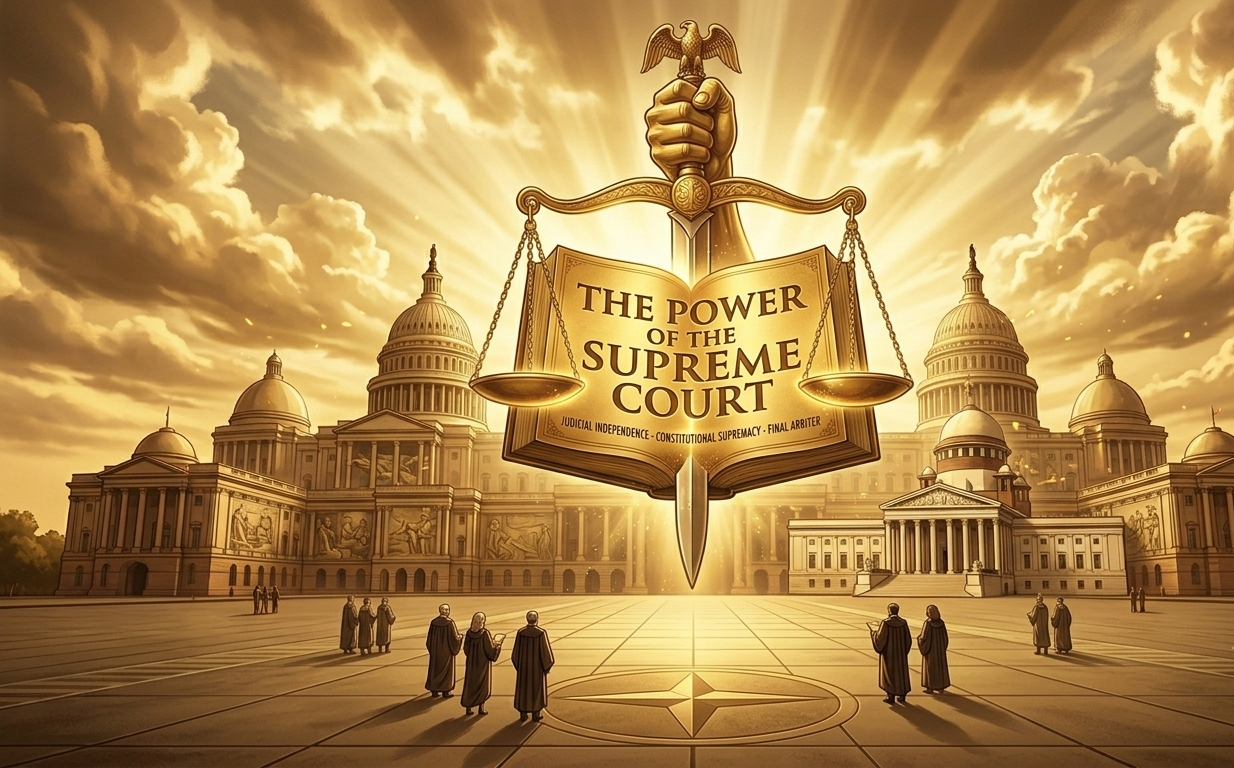
Powers of the Supreme Court
The Supreme Court of India possesses extensive constitutional powers that enable it to protect fundamental rights, interpret laws, review government actions, and maintain constitutional balance. These powers make it the guardian of the Constitution and the final authority in legal disputes.
2 నిమిషాల పఠనం →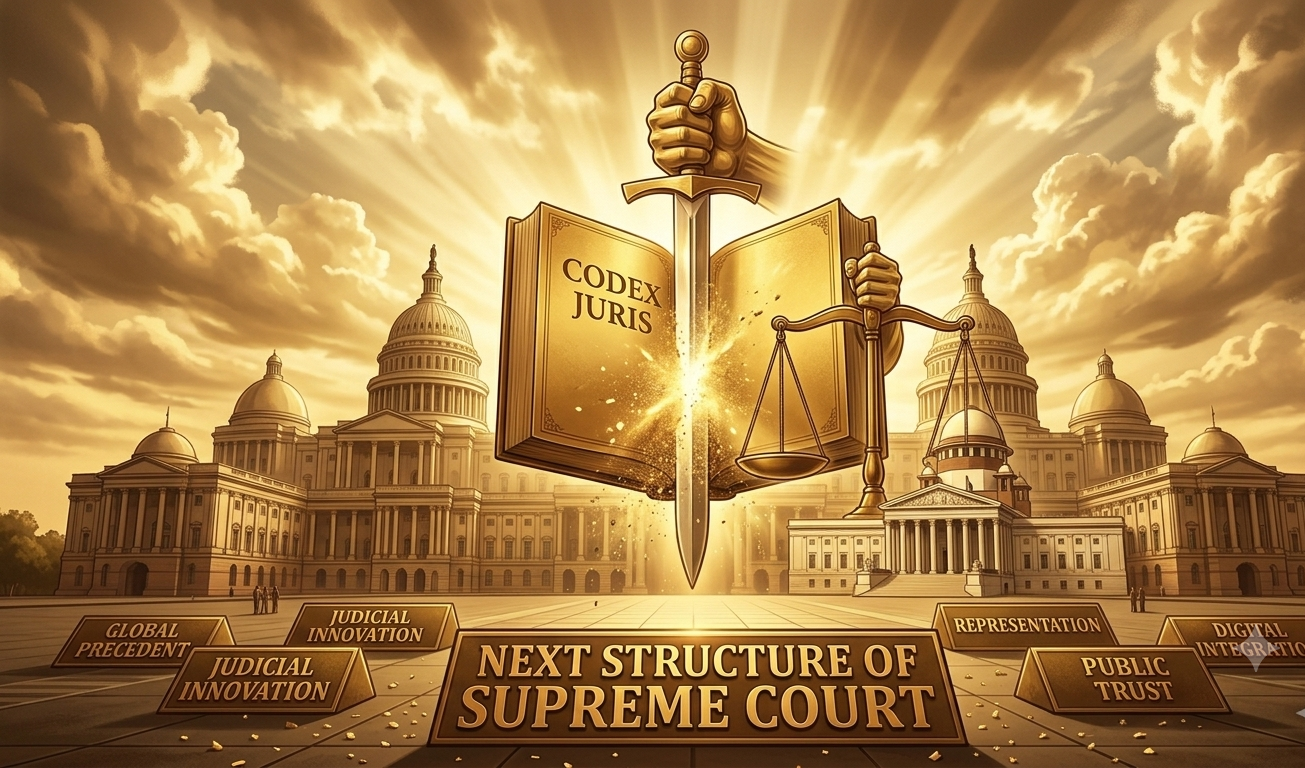
Structure of the Supreme Court
The Supreme Court of India is the highest judicial authority in the country. It protects the Constitution, safeguards fundamental rights, and serves as the final court of appeal for legal disputes.
2 నిమిషాల పఠనం →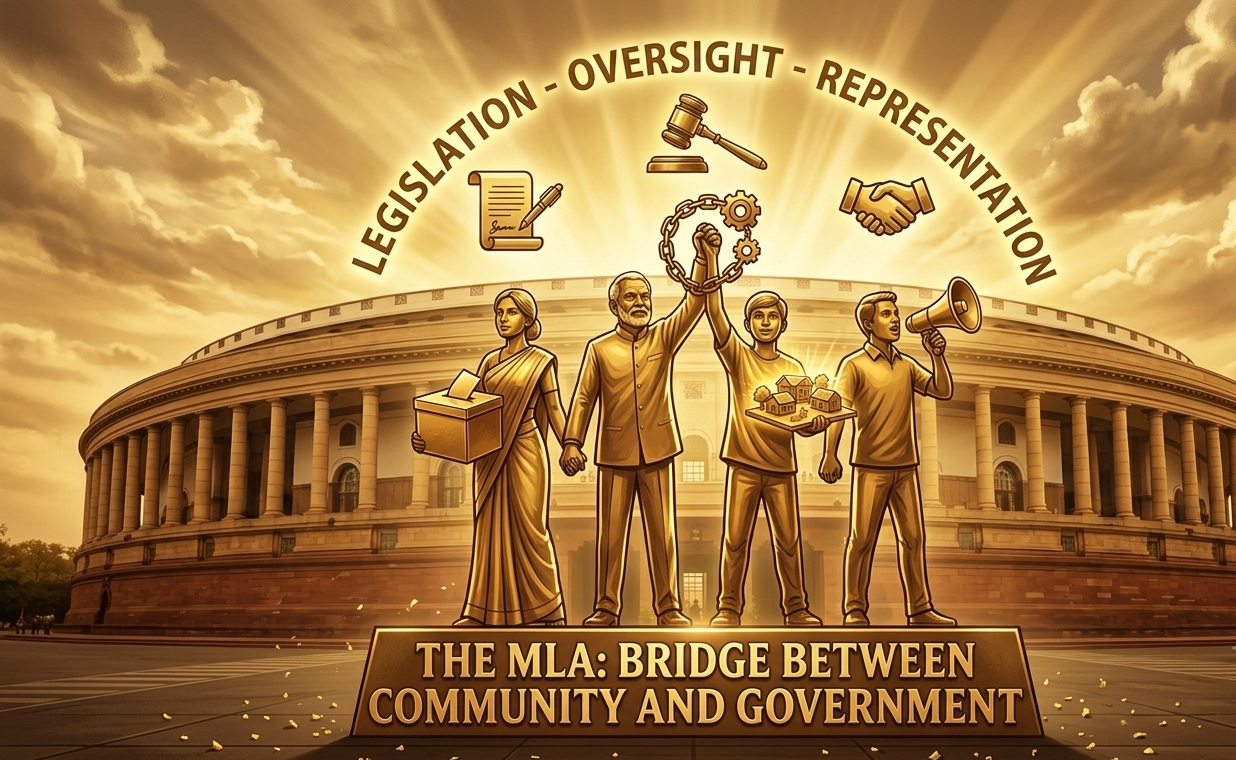
Role of MLAs in governance
Members of the Legislative Assembly (MLAs) are elected representatives who connect citizens with the state government. They make laws, raise public issues, oversee government actions, and help ensure effective governance.
1 నిమిషాల పఠనం →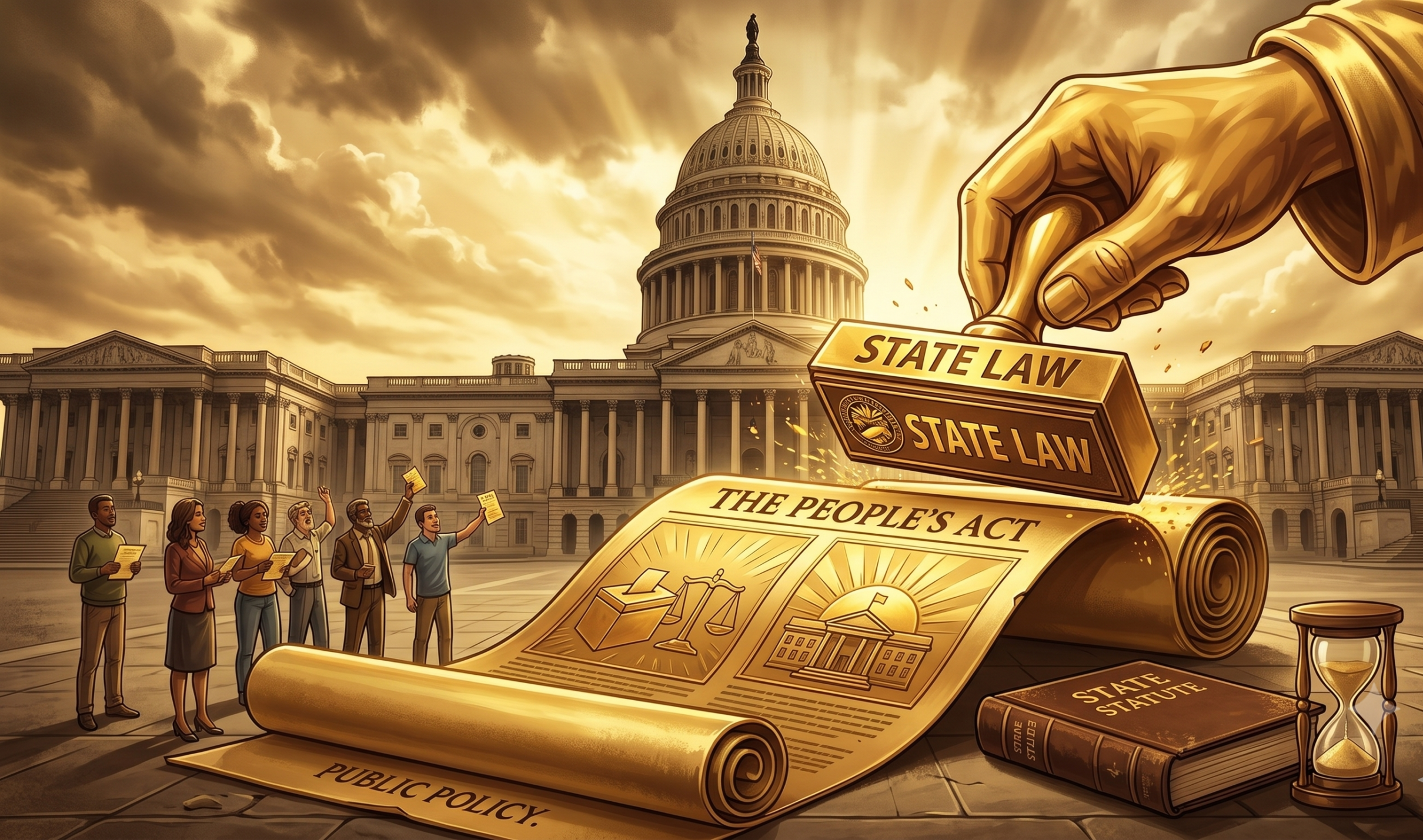
How State Laws Are Made
State laws are created through a structured legislative process involving discussion, review, voting, and approval. This process ensures accountability, representation, and effective governance at the state level.
2 నిమిషాల పఠనం →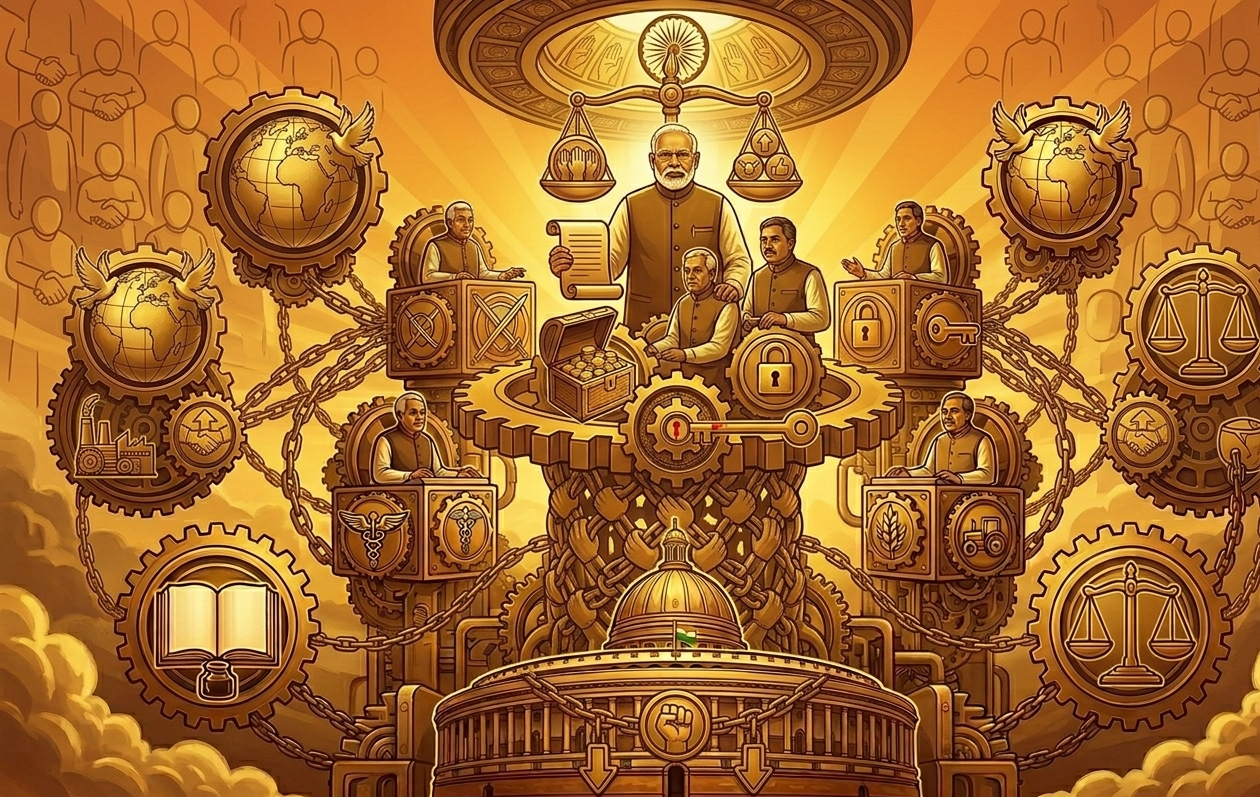
What is Supreme Court of India
The Supreme Court of India is the highest judicial authority and the guardian of the Constitution. It protects fundamental rights, reviews laws, and ensures justice across the country.
1 నిమిషాల పఠనం →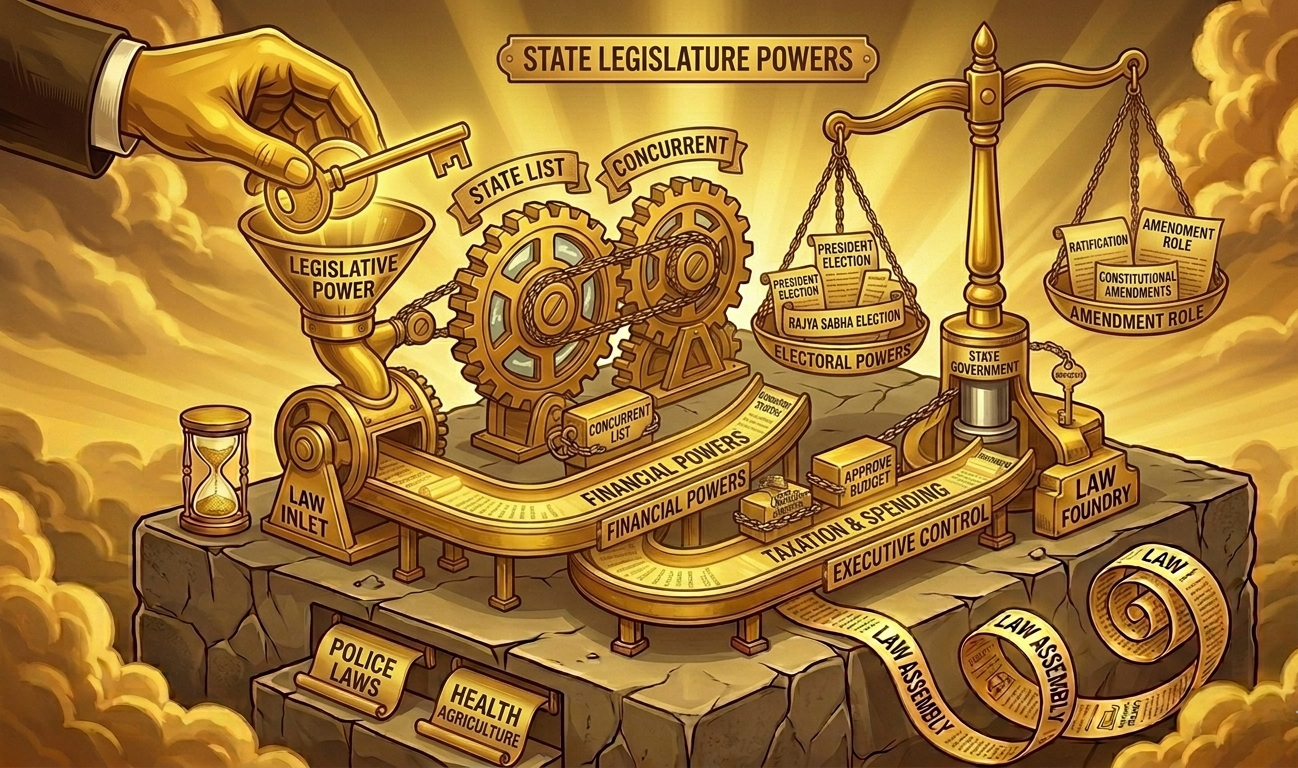
Powers of State Legislature
The State Legislature is responsible for making laws, controlling finances, and holding the state government accountable. It operates within powers defined by the Constitution. Its effectiveness depends on active debate and oversight.
1 నిమిషాల పఠనం →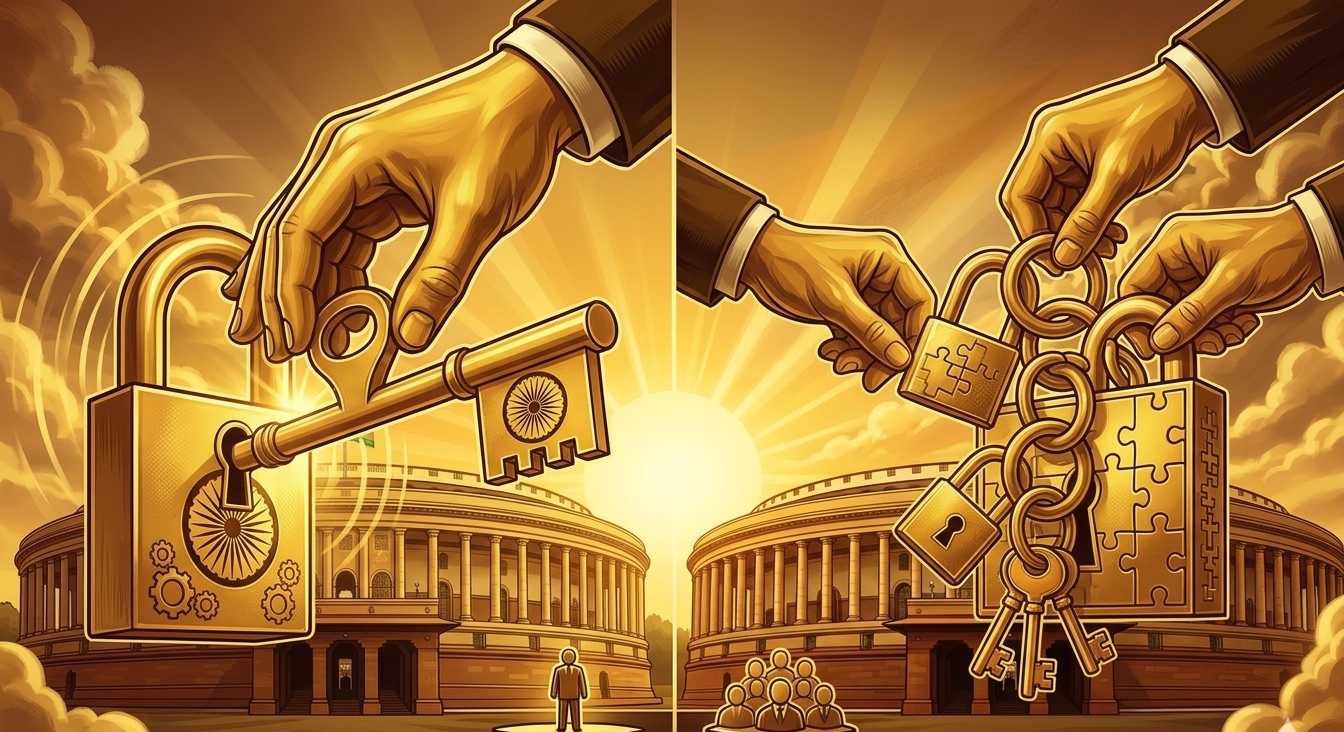
Which states have two houses and why?
Some Indian states follow a bicameral legislature with two houses—Vidhan Sabha and Vidhan Parishad. This system adds a layer of review and broader representation but also increases cost and complexity. That’s why only a few states choose to adopt it.
2 నిమిషాల పఠనం →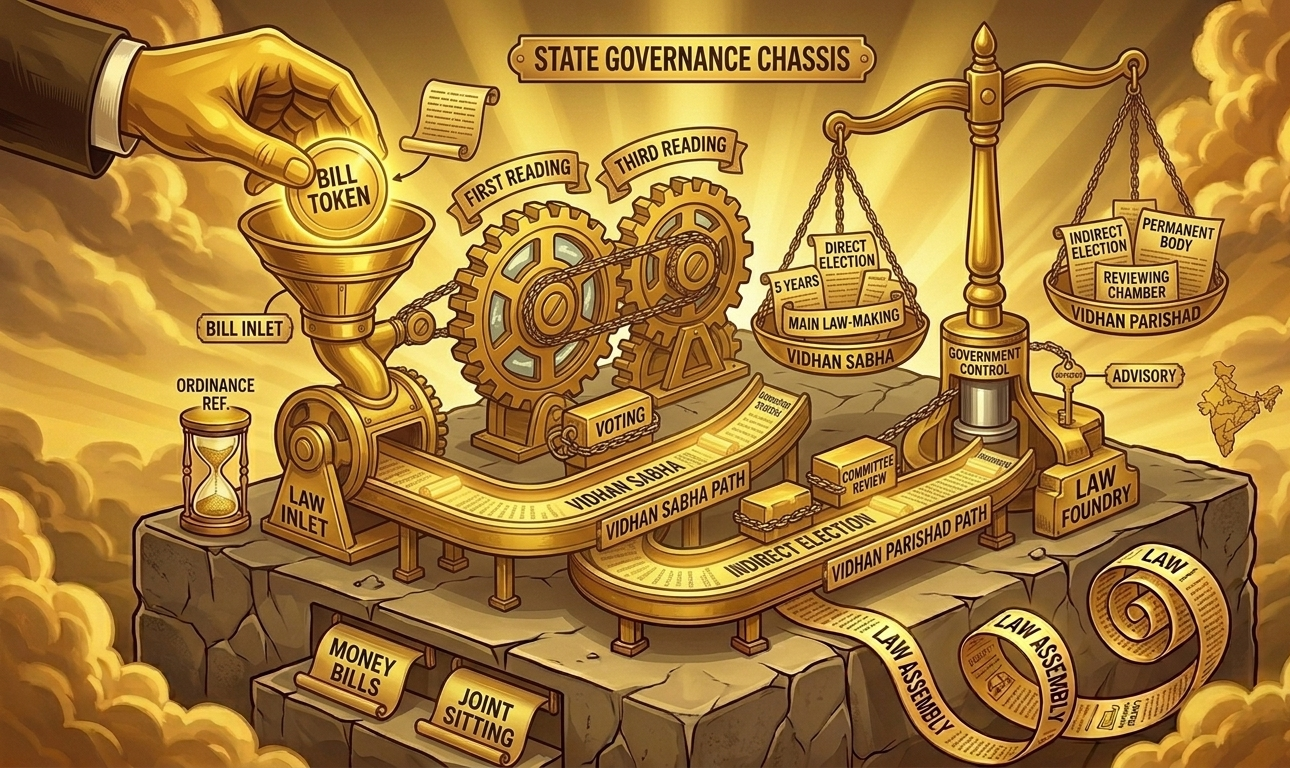
Difference between Vidhan Sabha and Vidhan Parishad
Vidhan Sabha and Vidhan Parishad are the two houses of a state legislature in India. While the Sabha is directly elected and holds real power, the Parishad acts mainly as a reviewing body. Together, they create a system that balances representation with review.
2 నిమిషాల పఠనం →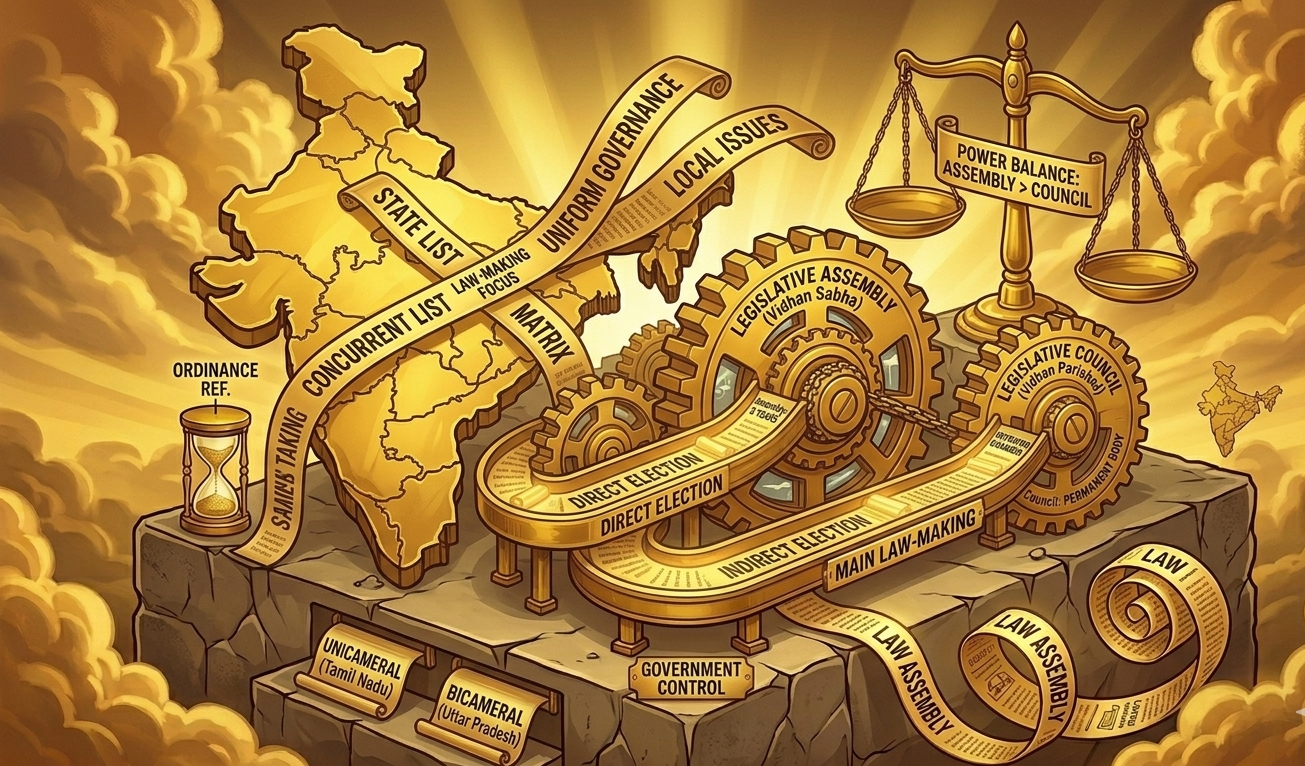
What are State Legislatures?
State Legislatures are the law-making bodies at the state level responsible for governing local matters. They operate through either a single house or a two-house system. These institutions bring governance closer to people and strengthen federalism.
2 నిమిషాల పఠనం →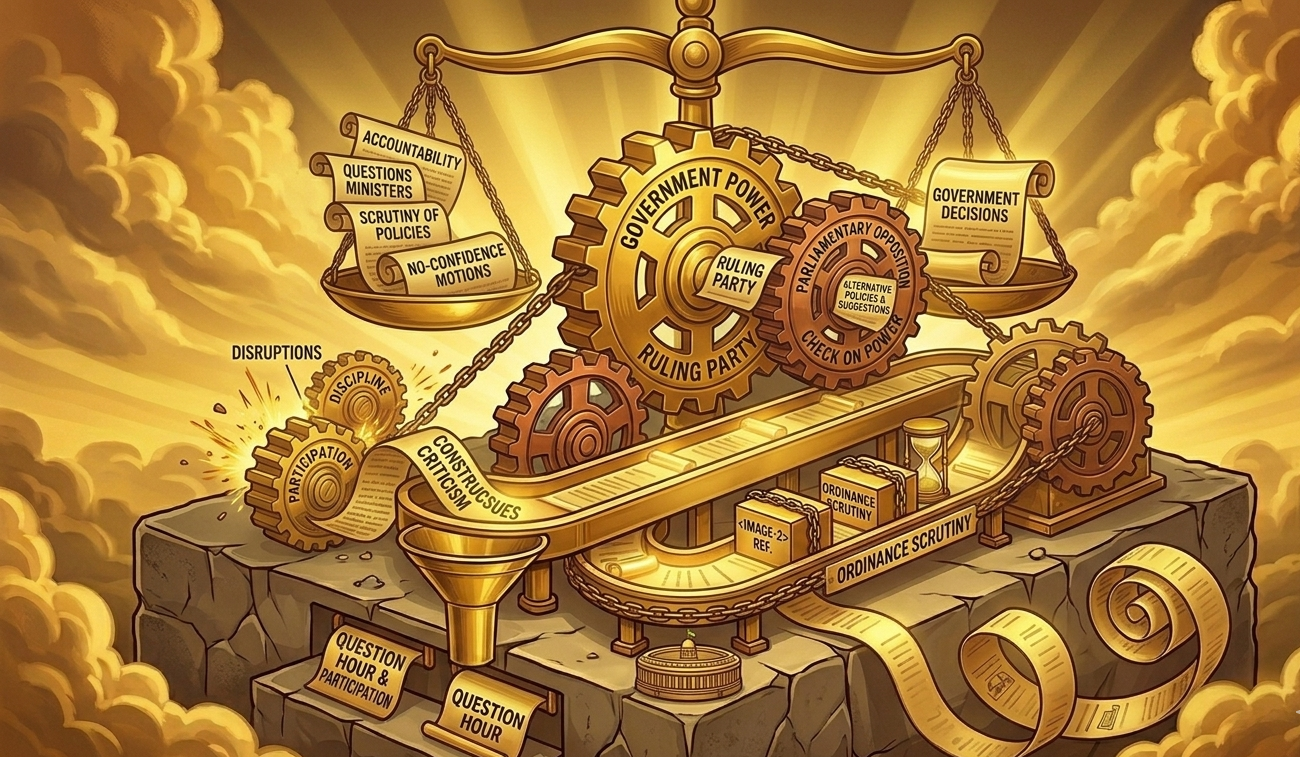
What is Question Hour and why it matters?
Question Hour is the first hour of a Parliament sitting where MPs question ministers on government actions. It is one of the most direct tools of accountability, forcing the government to answer publicly. Its effectiveness depends on how seriously it is used.
1 నిమిషాల పఠనం →Role of opposition in Parliament
The opposition in Parliament is essential for holding the government accountable and preventing misuse of power. By questioning decisions and offering alternatives, it ensures debate and transparency. A democracy is only as strong as its opposition
1 నిమిషాల పఠనం →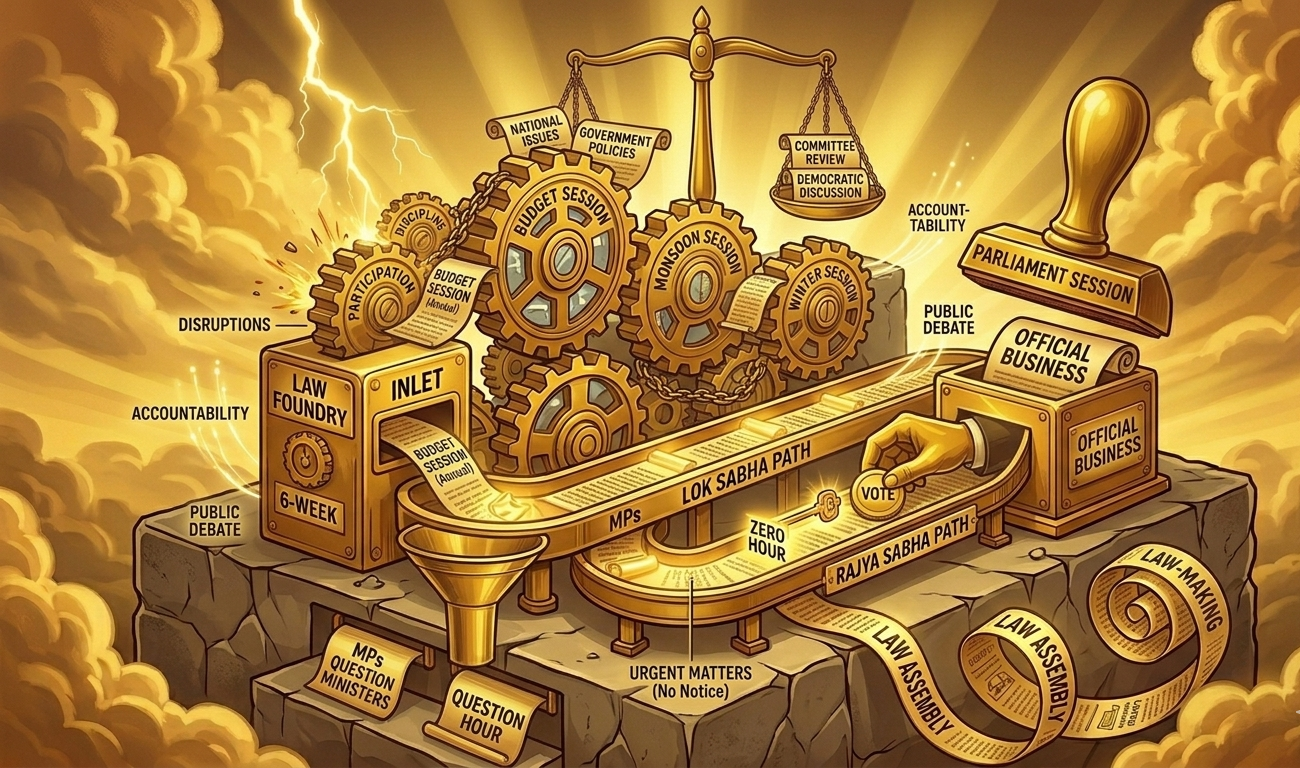
What happens during a Parliament session?
A Parliament session is the period when Lok Sabha and Rajya Sabha meet to conduct official business like law-making and holding the government accountable. These sessions are central to democratic functioning. Their effectiveness depends on meaningful debate and participation.
1 నిమిషాల పఠనం →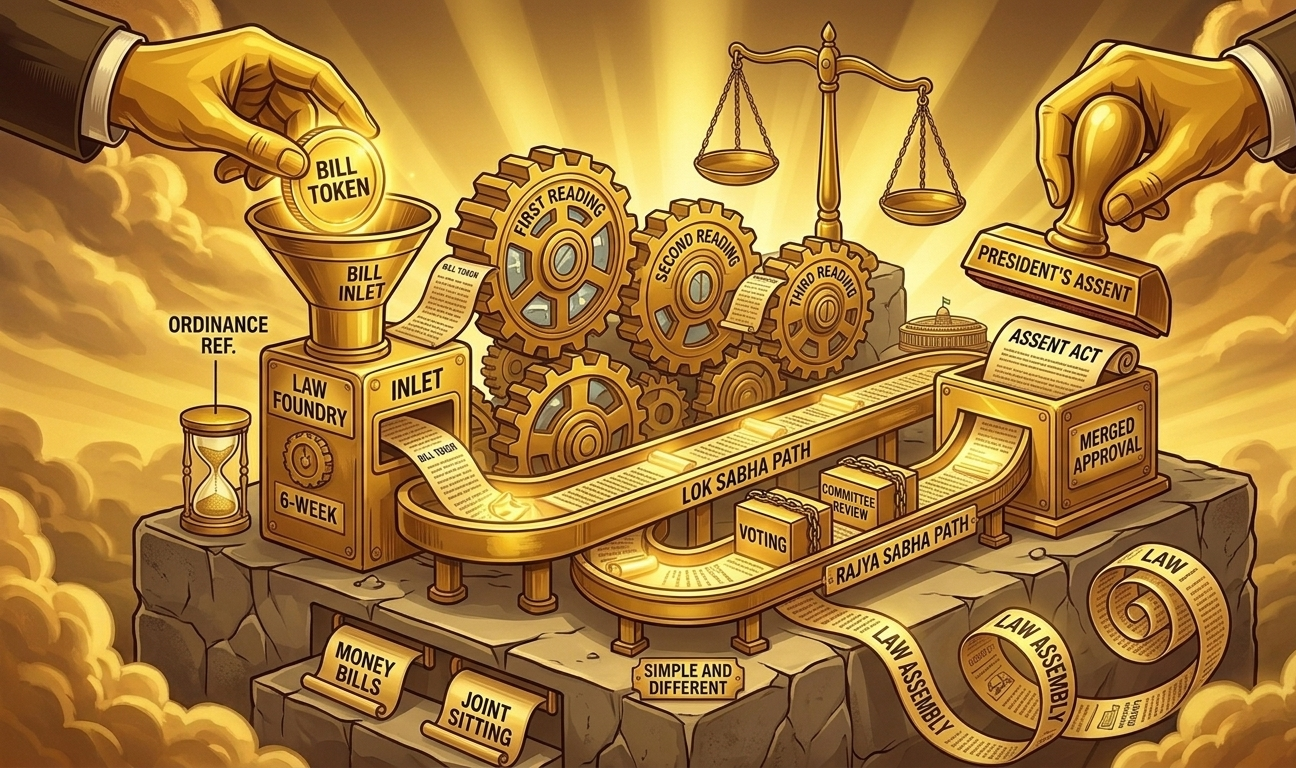
How laws are made in Parliament
Laws in India are made through a structured parliamentary process involving multiple stages of discussion, approval, and review. A Bill must pass both houses and receive the President’s assent to become law. This system ensures accountability but depends on meaningful debate to be effective.
2 నిమిషాల పఠనం →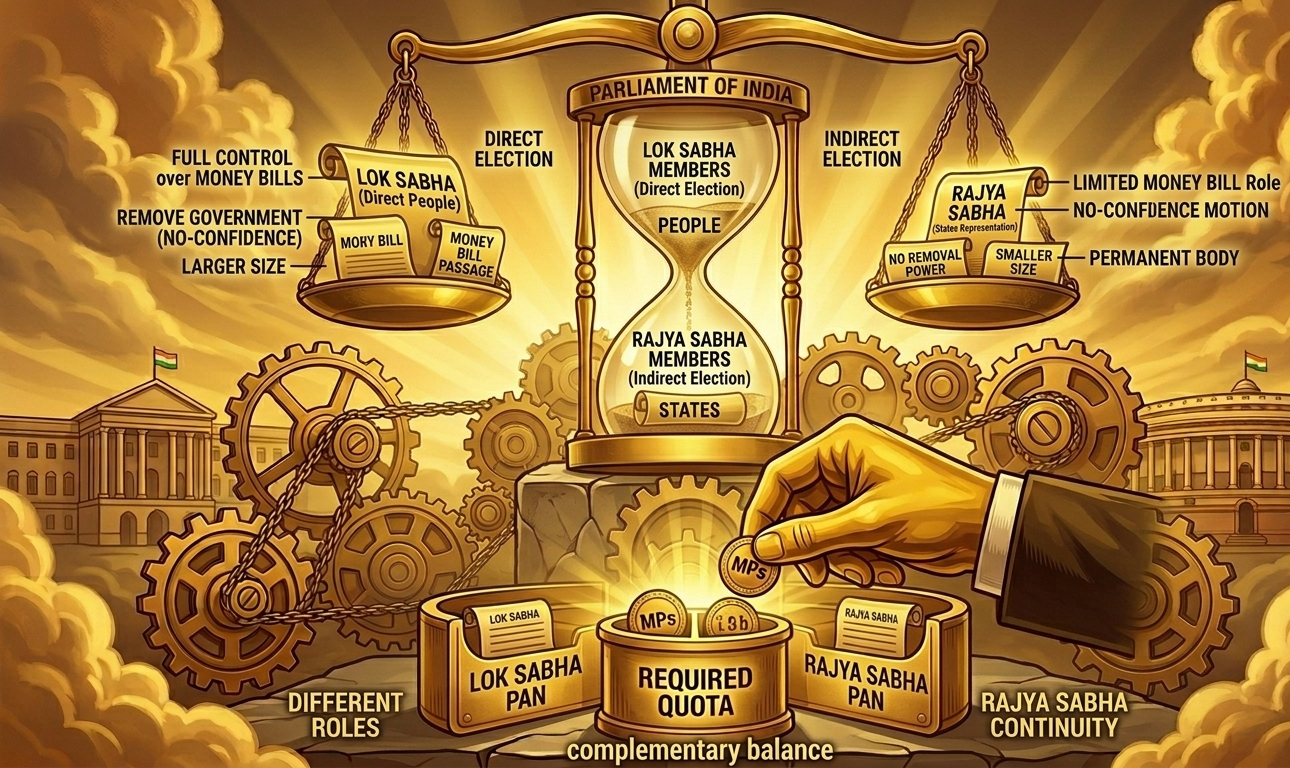
Difference between Lok Sabha and Rajya Sabha
The Parliament of India is a bicameral legislature consisting of Lok Sabha and Rajya Sabha. While Lok Sabha represents the people, Rajya Sabha represents the states, creating a balance in law-making. Together, they ensure accountability, stability, and effective governance.
2 నిమిషాల పఠనం →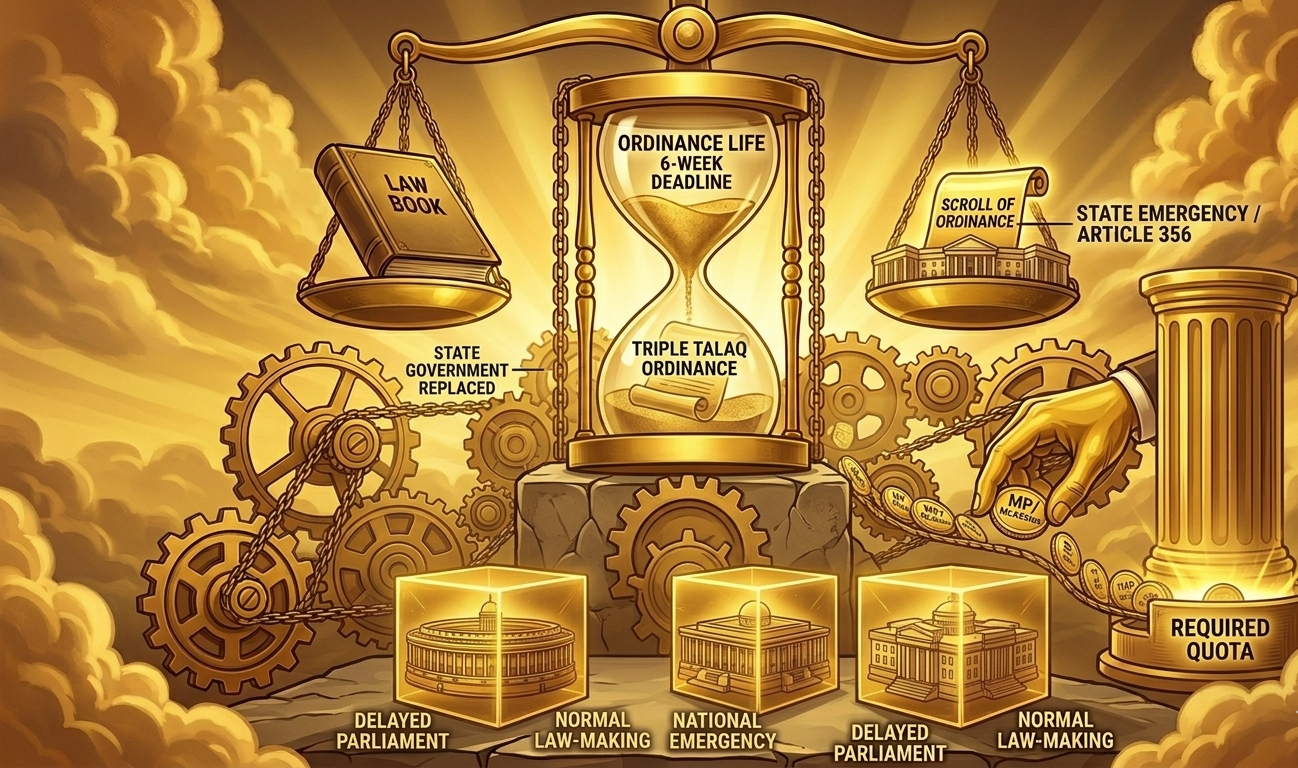
Structure of Parliament: Lok Sabha & Rajya Sabha
The Parliament of India is a bicameral legislature consisting of Lok Sabha and Rajya Sabha. While Lok Sabha represents the people, Rajya Sabha represents the states, creating a balance in law-making. Together, they ensure accountability, stability, and effective governance.
2 నిమిషాల పఠనం →Role of President during emergencies
During emergencies, the President of India becomes the formal authority through which extraordinary powers are exercised. While acting on Cabinet advice, the President’s approval activates provisions that shift power toward the Union. These powers ensure stability in crises but carry serious risks if misused.
2 నిమిషాల పఠనం →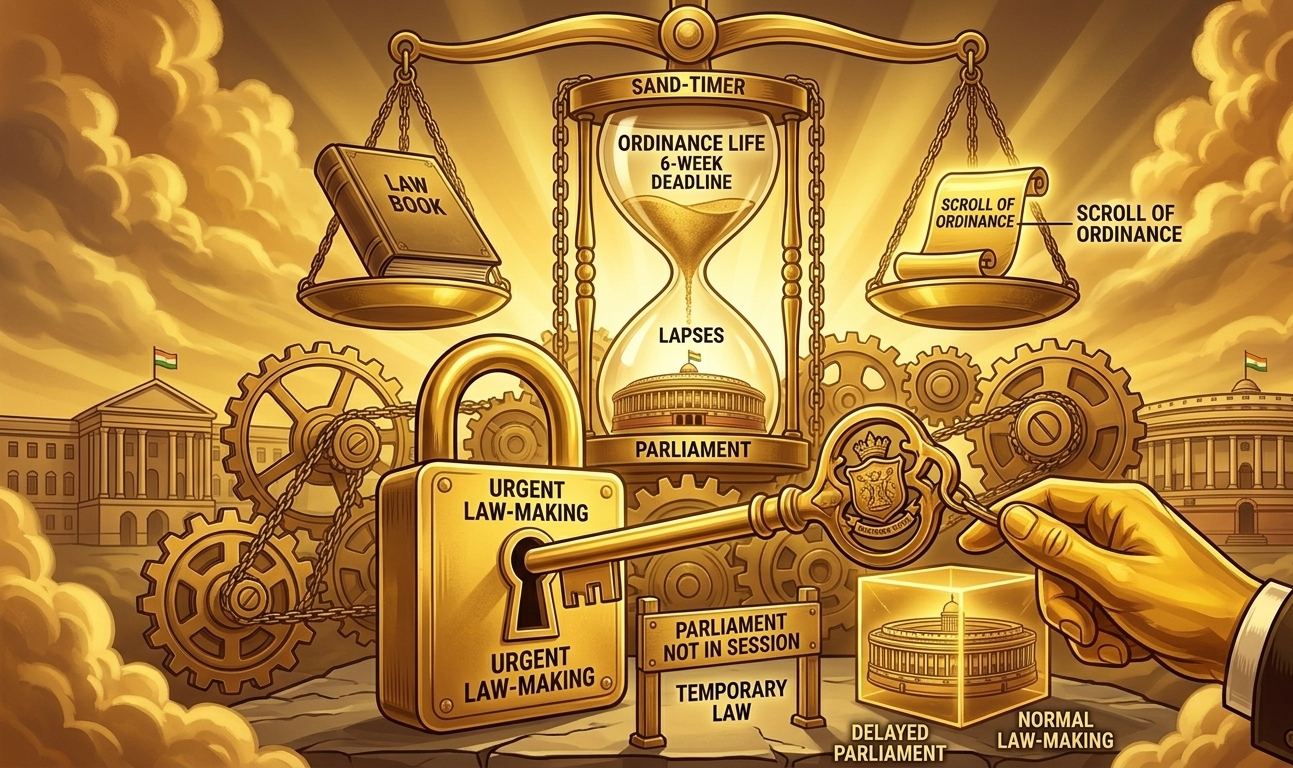
What is a Presidential Ordinance?
A Presidential Ordinance is a temporary law issued when Parliament is not in session to handle urgent situations. It has the same force as a law but must be approved by Parliament within a limited time. While it enables quick action, it can be controversial if used to bypass legislative debate.
2 నిమిషాల పఠనం →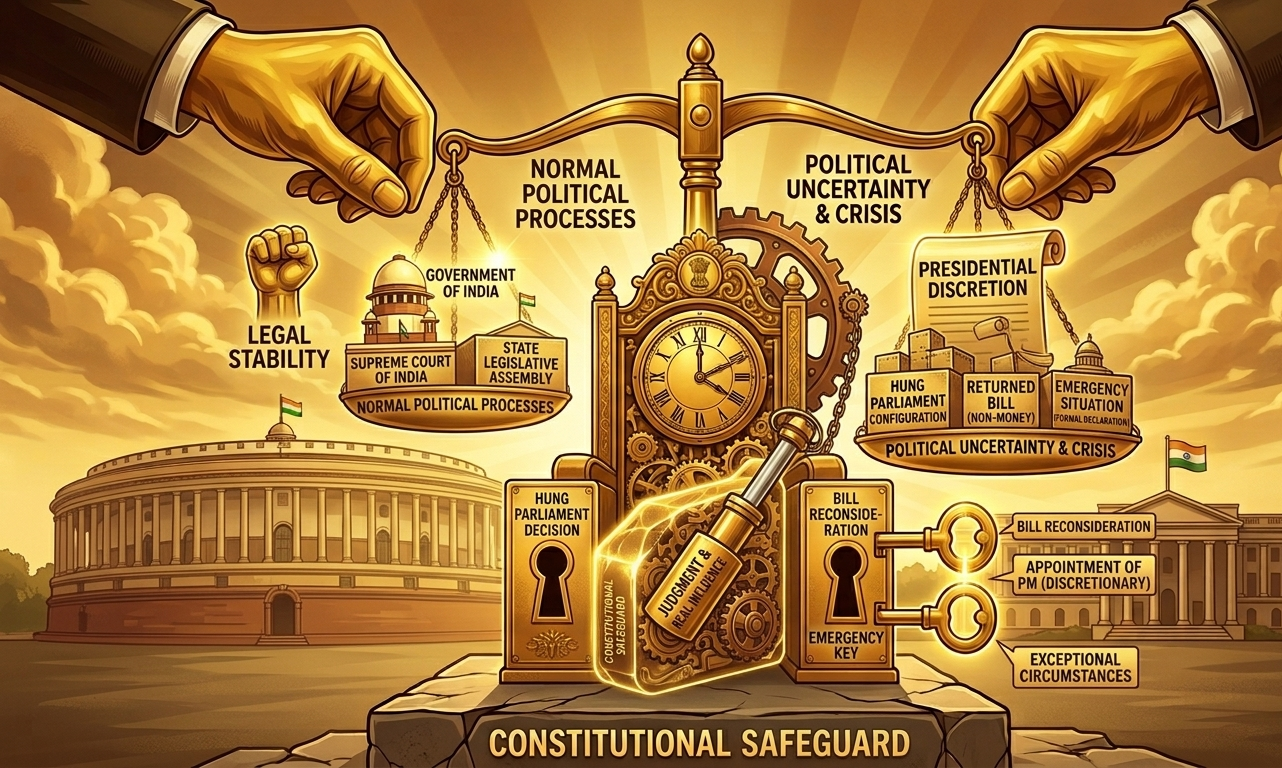
When can the President use real power?
The President of India usually acts on ministerial advice, but real power appears during exceptional situations. In moments like a hung Parliament or constitutional uncertainty, the President must exercise judgment. These powers are limited but crucial for maintaining stability and constitutional balance.
2 నిమిషాల పఠనం →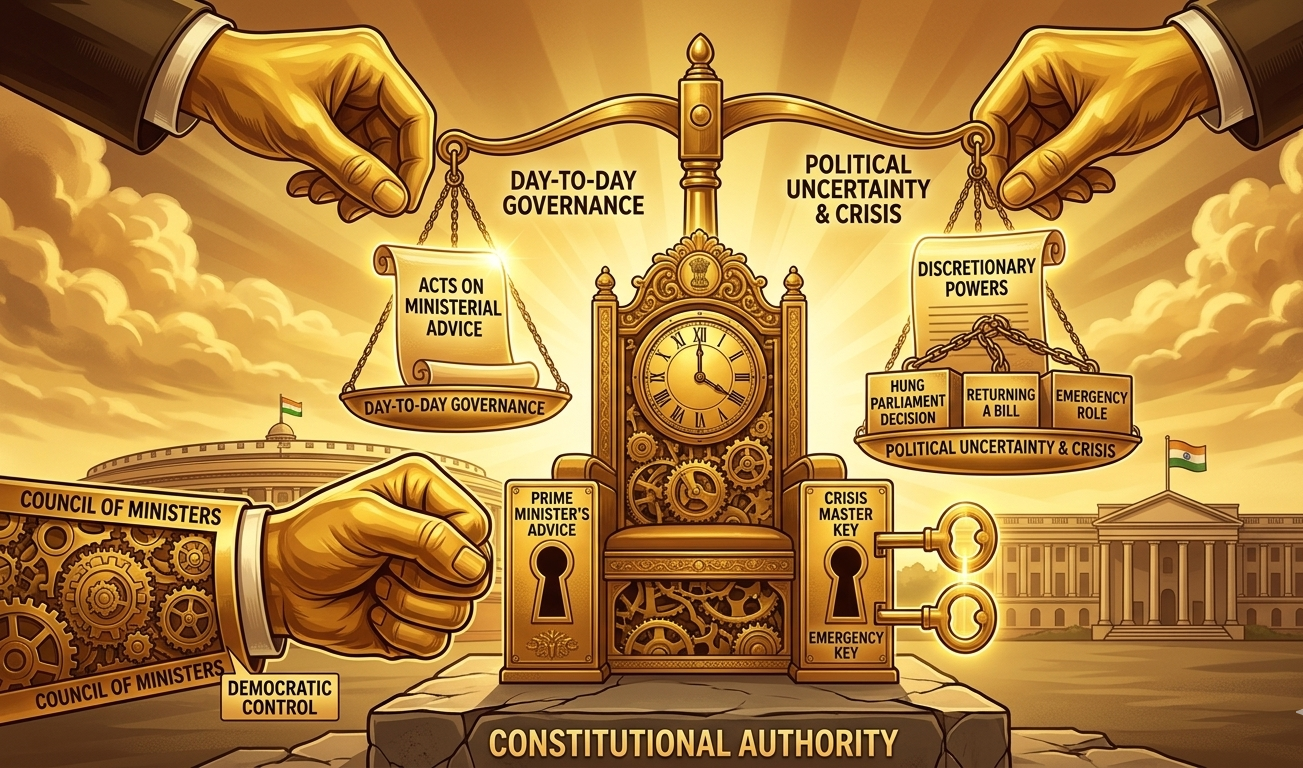
Is the President just a symbolic head?
The President of India is often seen as a ceremonial head, but that view is incomplete. While most powers are exercised on the advice of the government, the President holds important constitutional authority and limited discretion in key situations. The role is largely ceremonial in routine governance, but becomes significant during political uncertainty.
2 నిమిషాల పఠనం →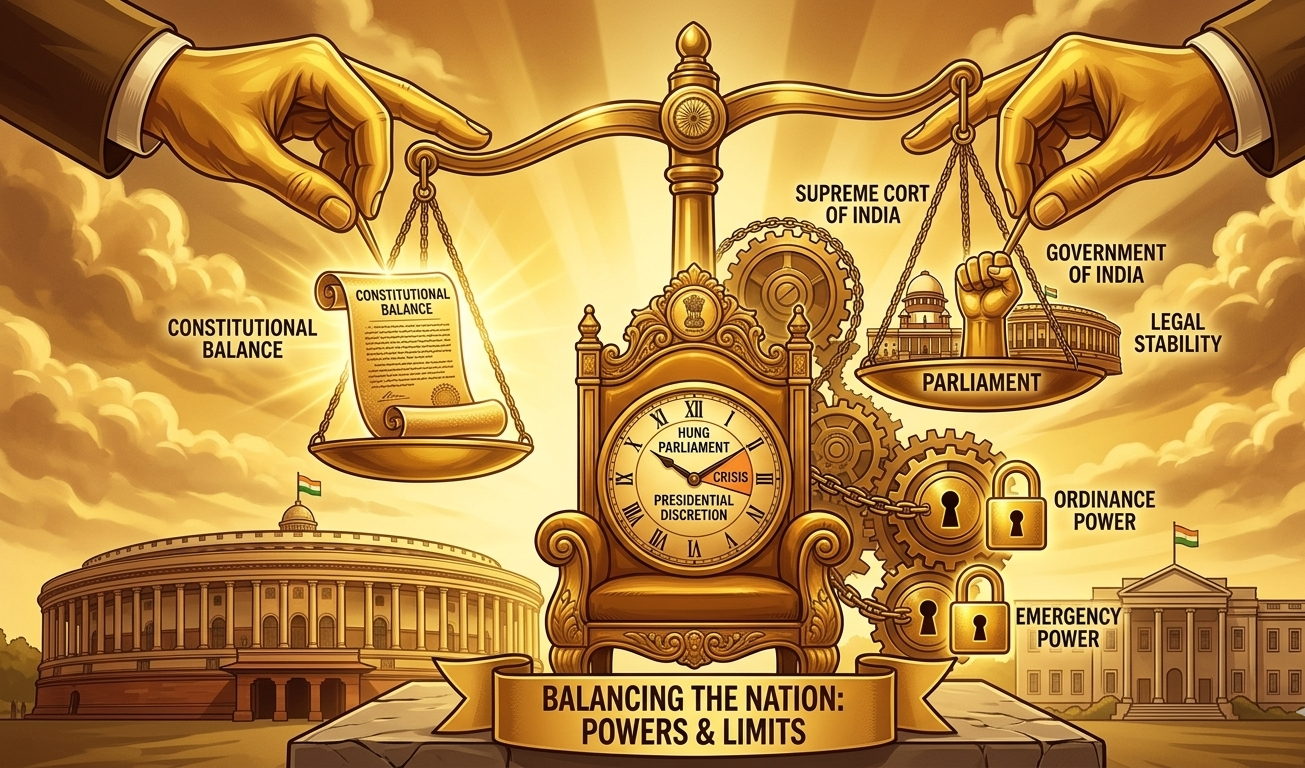
Powers of the President
The President of India holds significant constitutional powers, but most are exercised on the advice of the Council of Ministers. While the position appears powerful on paper, it is largely ceremonial in practice. However, in exceptional situations, the President plays a crucial role in maintaining constitutional balance.
2 నిమిషాల పఠనం →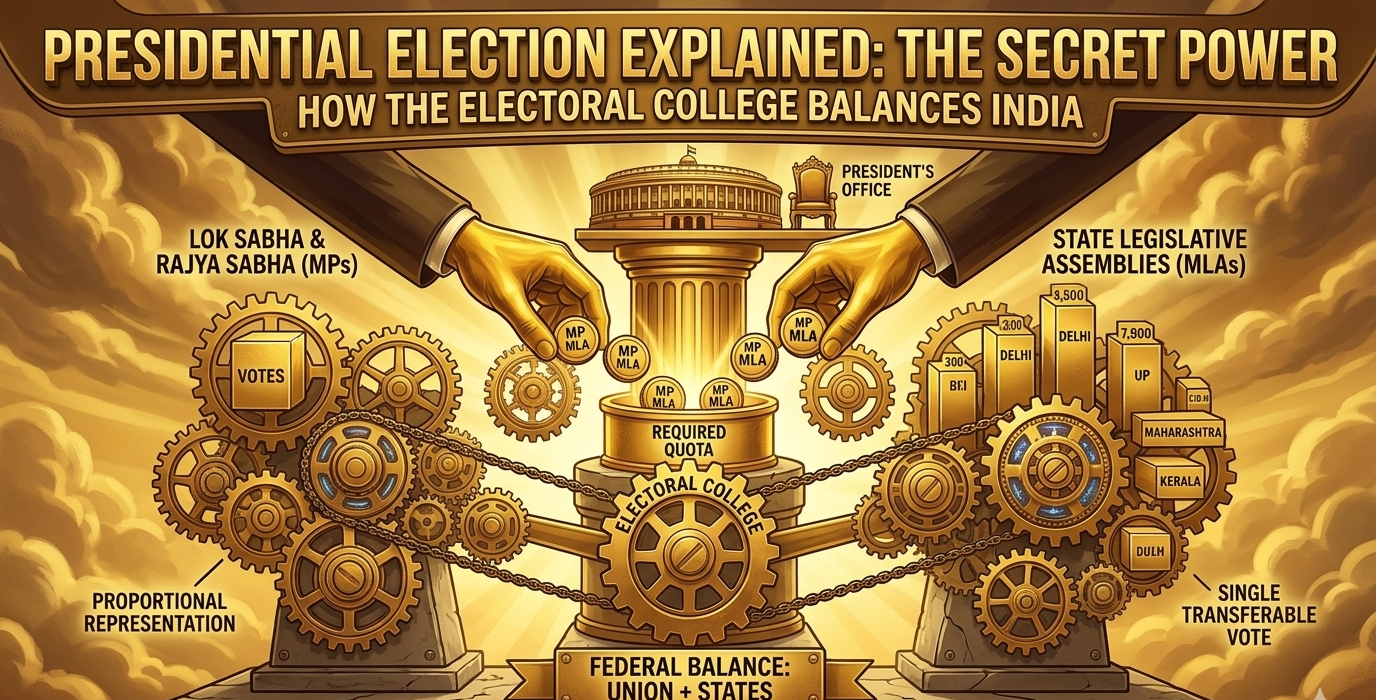
How is the President elected?
The President of India is elected indirectly through an Electoral College consisting of elected MPs and MLAs. This system balances representation between the Union and the states using proportional representation. While it ensures broader consensus, it also reduces direct public involvement in the selection process.
2 నిమిషాల పఠనం →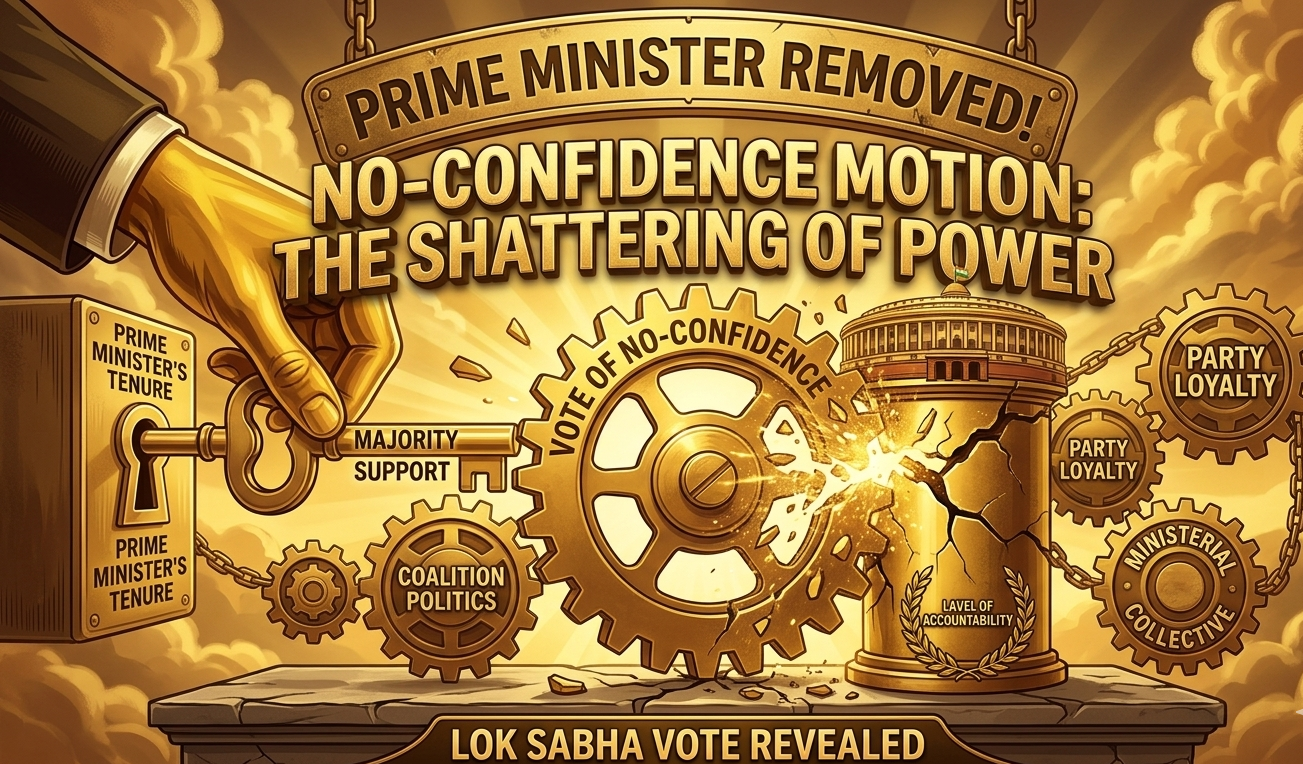
Can a Prime Minister be removed?
A Prime Minister in India can be removed from office if they lose the support of the Lok Sabha. Unlike a fixed-term system, their position depends on maintaining a majority. This ensures accountability but can also create instability in certain political situations.
2 నిమిషాల పఠనం →What is Collective Responsibility?
Collective Responsibility is a key principle of parliamentary democracy where all ministers are jointly accountable for government decisions. The Council of Ministers must act as a single unit and maintain the confidence of the Lok Sabha. While this ensures unity and stability, it can also limit individual dissent within the government.
2 నిమిషాల పఠనం →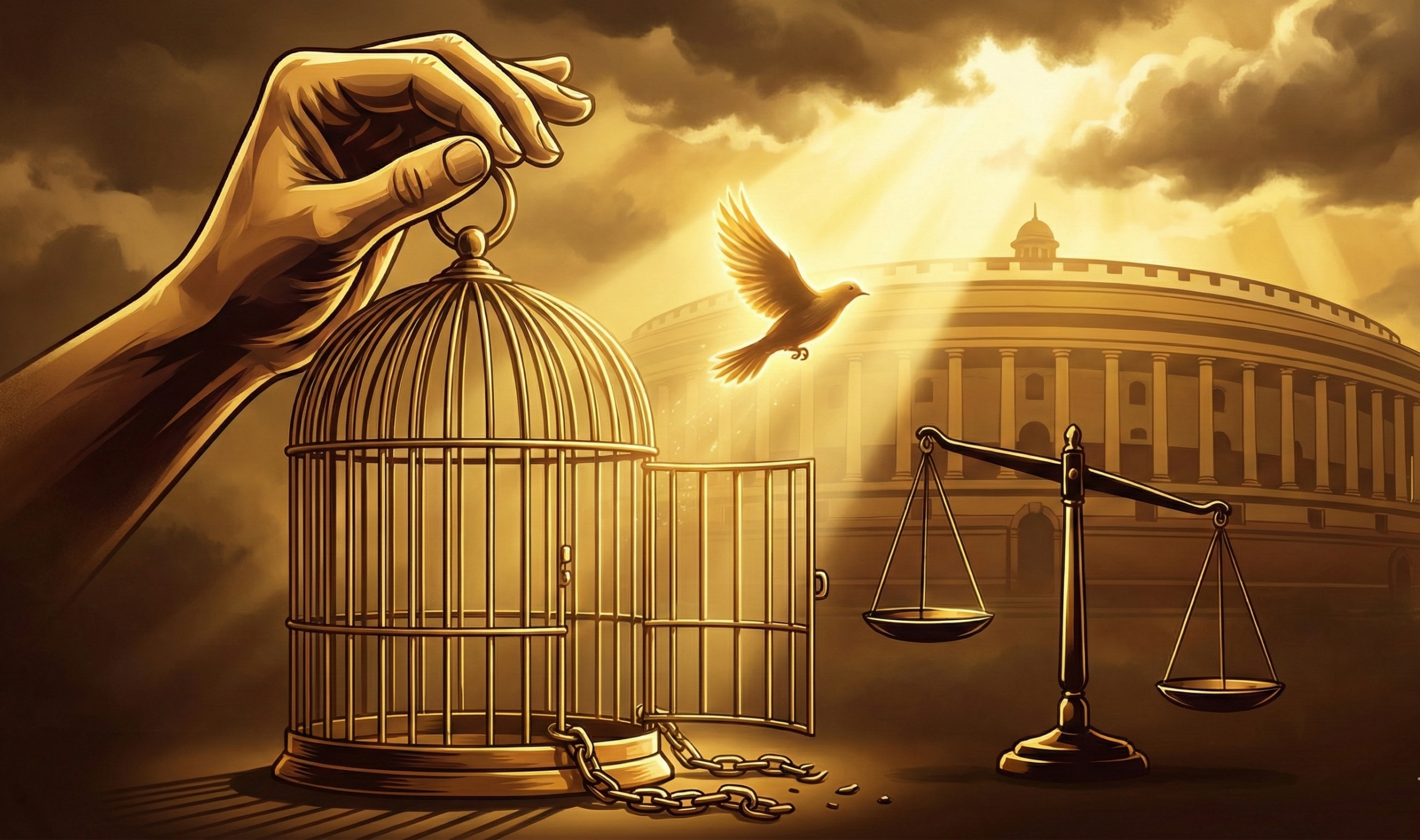
Powers and functions of the Prime Minister
The Prime Minister of India holds the highest executive authority and directs the functioning of the government. As head of the Council of Ministers, the PM controls policy, administration, and political strategy. While this enables strong leadership, it also raises concerns about concentration of power if checks are weak.
2 నిమిషాల పఠనం →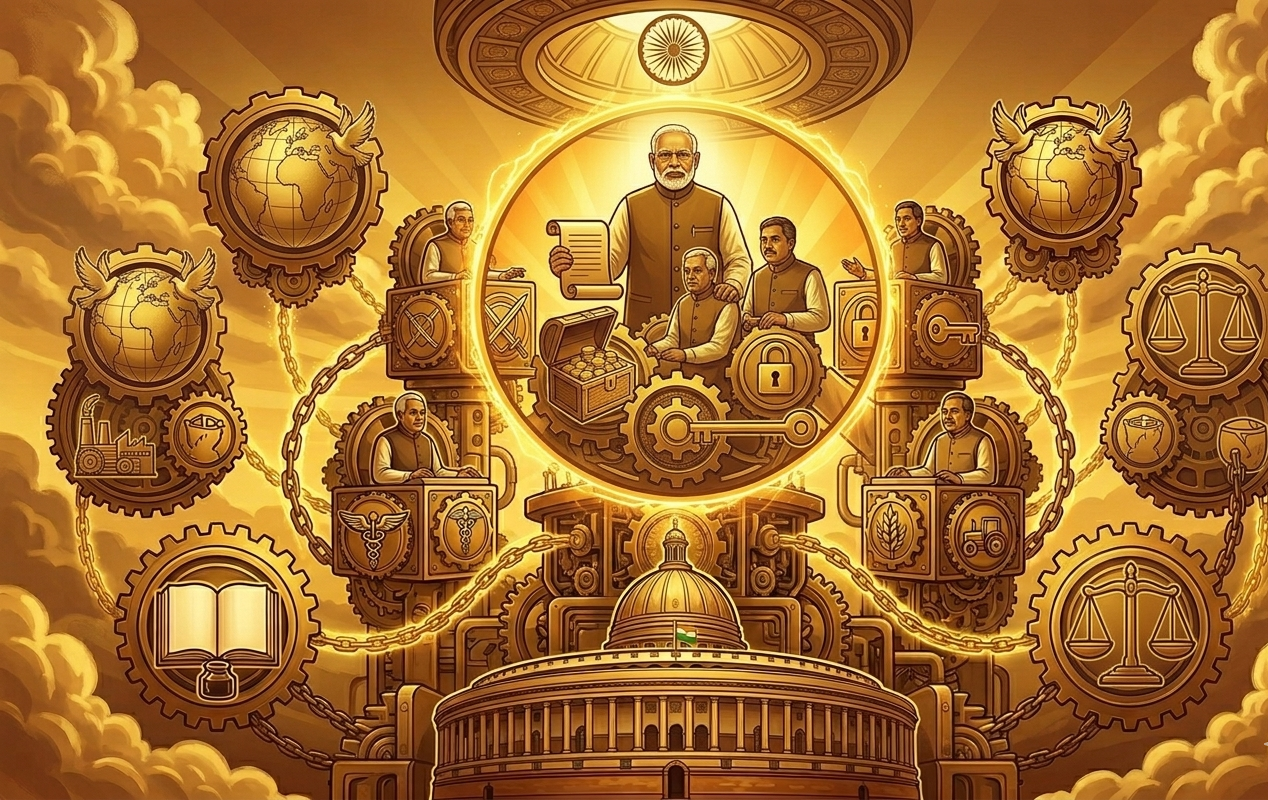
Difference between Cabinet Ministers and Council of Ministers
The Cabinet and the Council of Ministers are not the same. While the Council includes all ministers, the Cabinet is a smaller group of senior leaders who make key decisions. In practice, real executive power is concentrated within the Cabinet, not the entire council.
2 నిమిషాల పఠనం →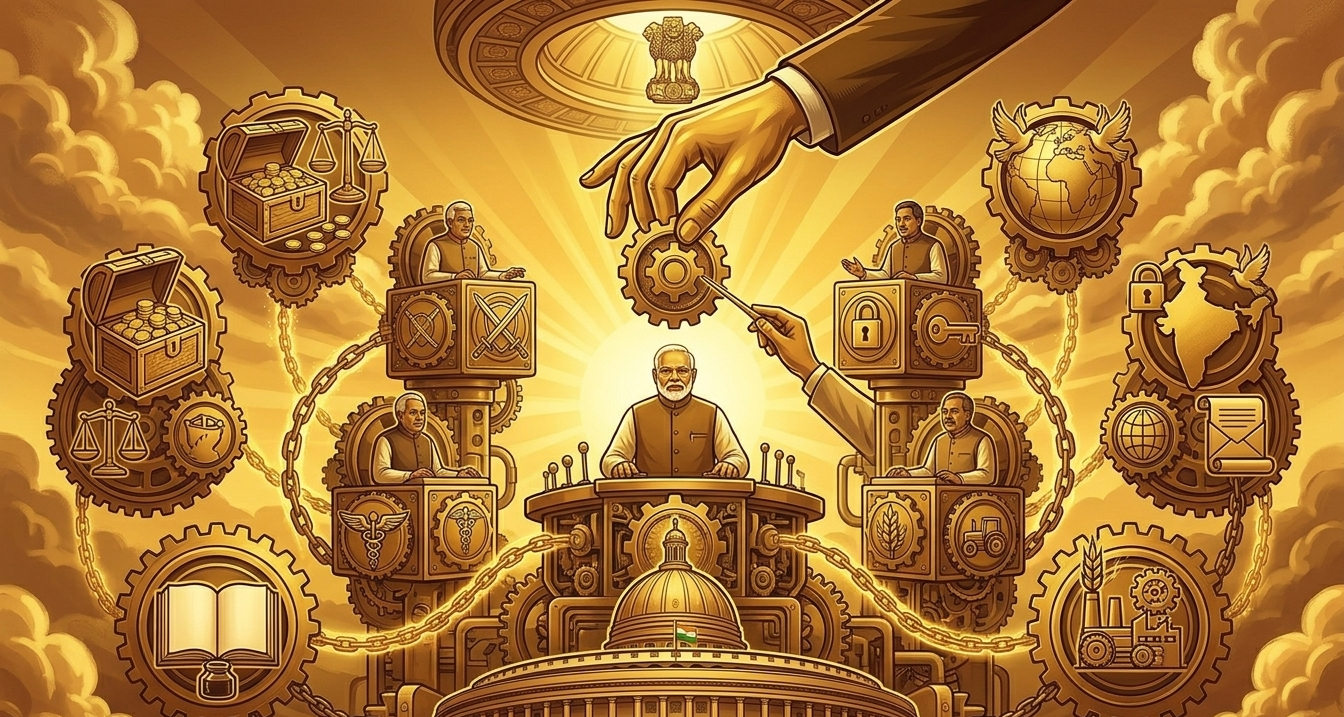
What is the Council of Ministers?
The Council of Ministers is the core executive body that assists the Prime Minister in governing the country. It consists of ministers handling different departments and operates on the principle of collective responsibility. While it ensures division of work and specialization, its effectiveness depends on leadership and political balance.
2 నిమిషాల పఠనం →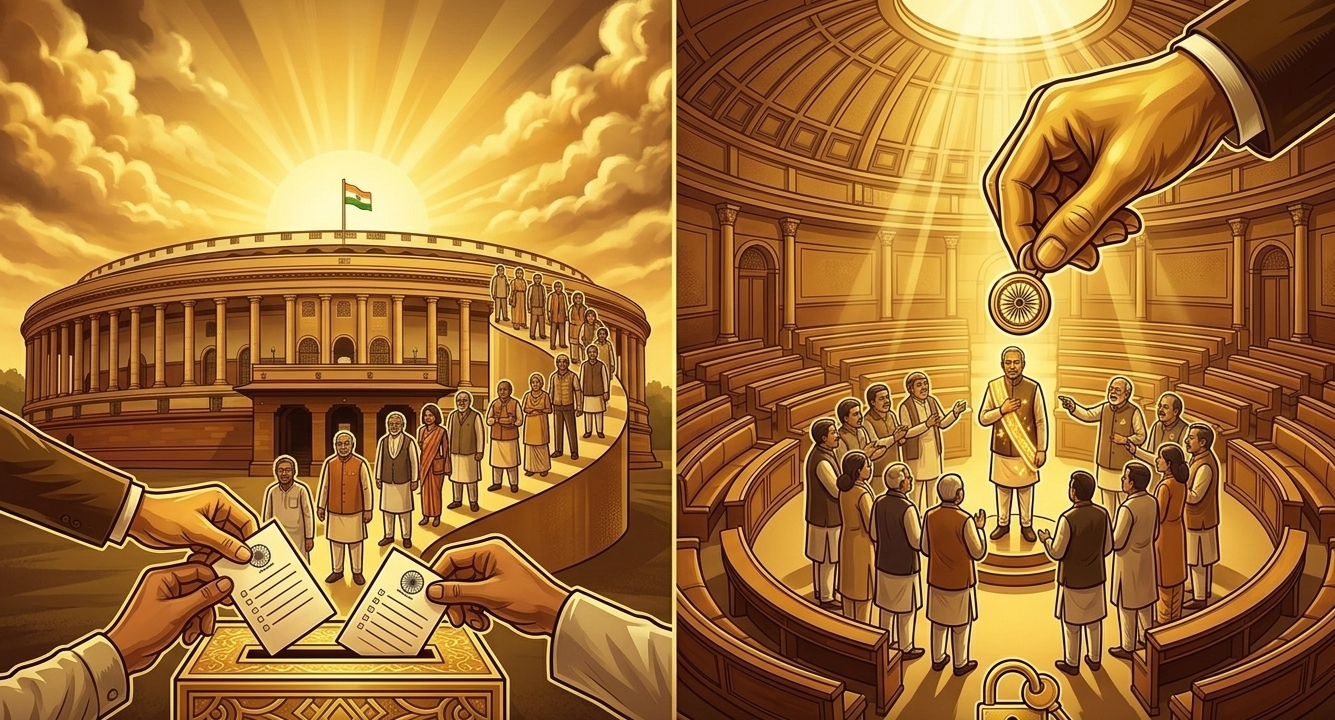
How is the Prime Minister elected?
The Prime Minister of India is not directly elected by citizens but chosen through the parliamentary process. Voters elect Members of Parliament, and the majority party or coalition selects its leader as Prime Minister. This system ensures accountability to Parliament while allowing flexibility in leadership.
2 నిమిషాల పఠనం →Who is the Prime Minister of India and what do they do?
The Prime Minister of India is the central executive authority responsible for running the government and shaping national policy. Appointed by the President but dependent on Lok Sabha majority support, the PM combines political leadership with administrative control. The role is powerful, but its impact depends on how responsibly that power is exercised.
2 నిమిషాల పఠనం →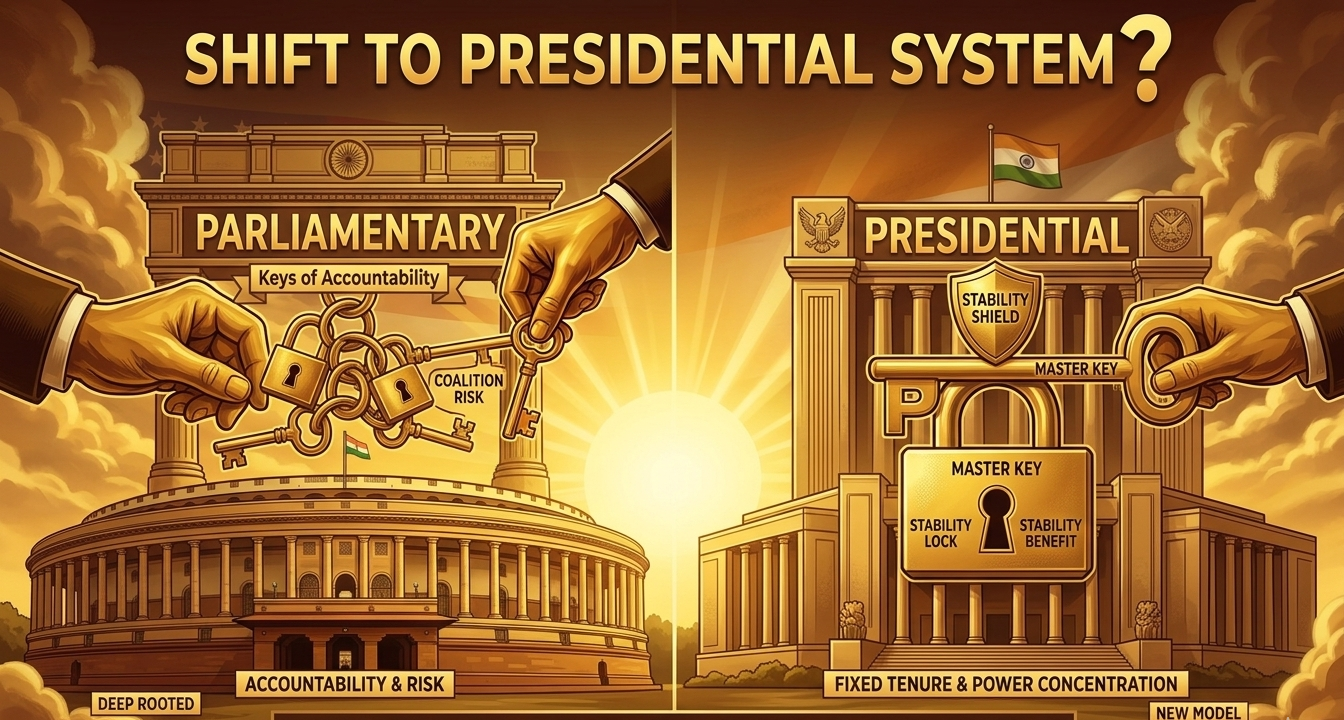
Can India shift to Presidential System? Pros and Cons
India can shift to a presidential system, but doing so would require major constitutional changes and political consensus. While it may offer stability and fixed leadership, it also raises concerns about reduced accountability and concentration of power. The real question is whether such a shift suits India’s political and institutional realities.
2 నిమిషాల పఠనం →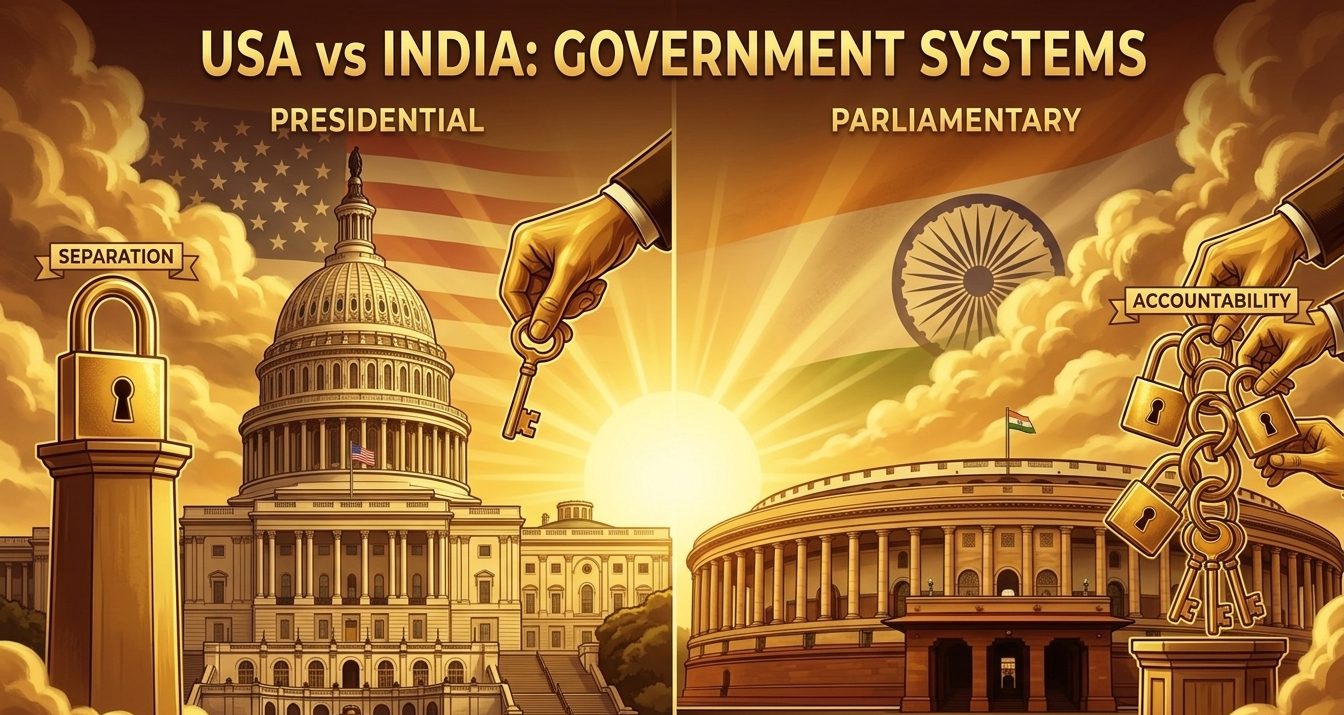
Why USA follows Presidential but India follows Parliamentary
The USA and India follow different governance systems based on their historical context and political priorities. While the USA adopted a presidential system to ensure stability and separation of powers, India chose a parliamentary system to promote accountability and flexibility. These choices reflect different solutions to different governance challenges.
2 నిమిషాల పఠనం →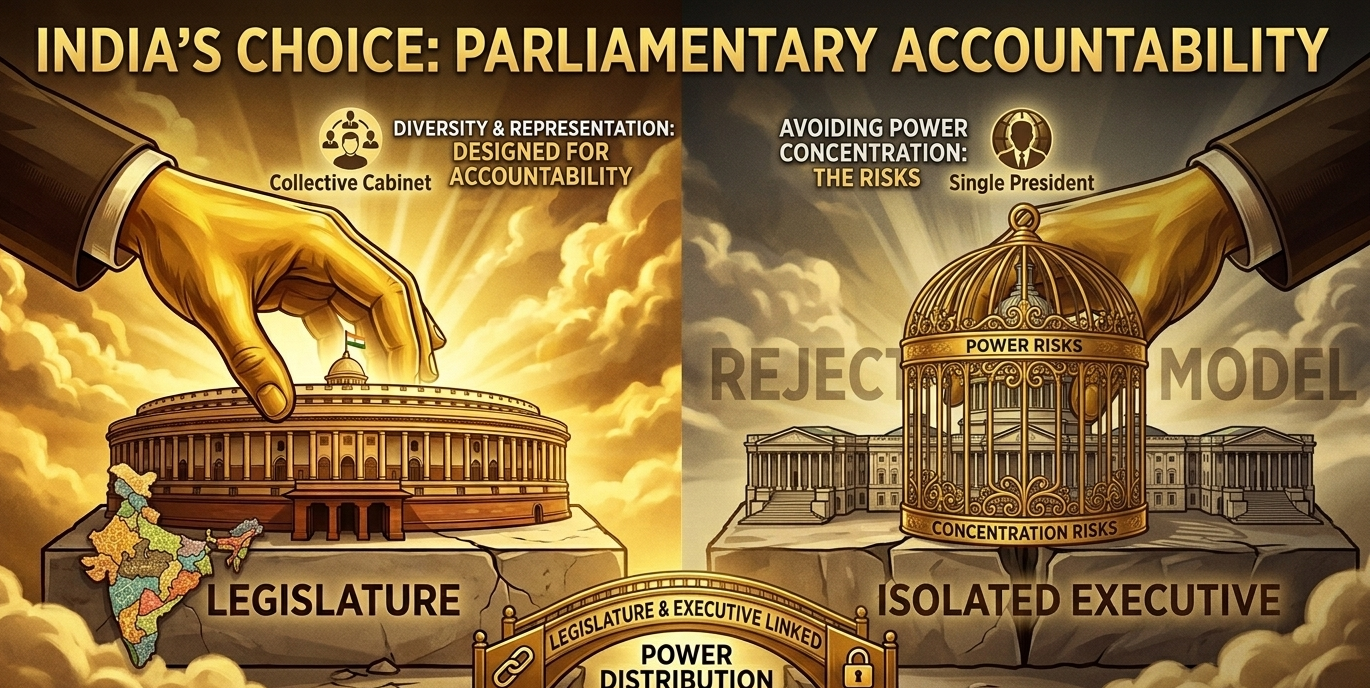
Why India chose Parliamentary System over Presidential System
India adopted the parliamentary system to ensure accountability, flexibility, and representation in a highly diverse society. By linking the executive to the legislature, it prevents concentration of power while allowing governments to adapt to changing political conditions. However, its success depends on political maturity, as it can lead to instability or dominance if misused.
2 నిమిషాల పఠనం →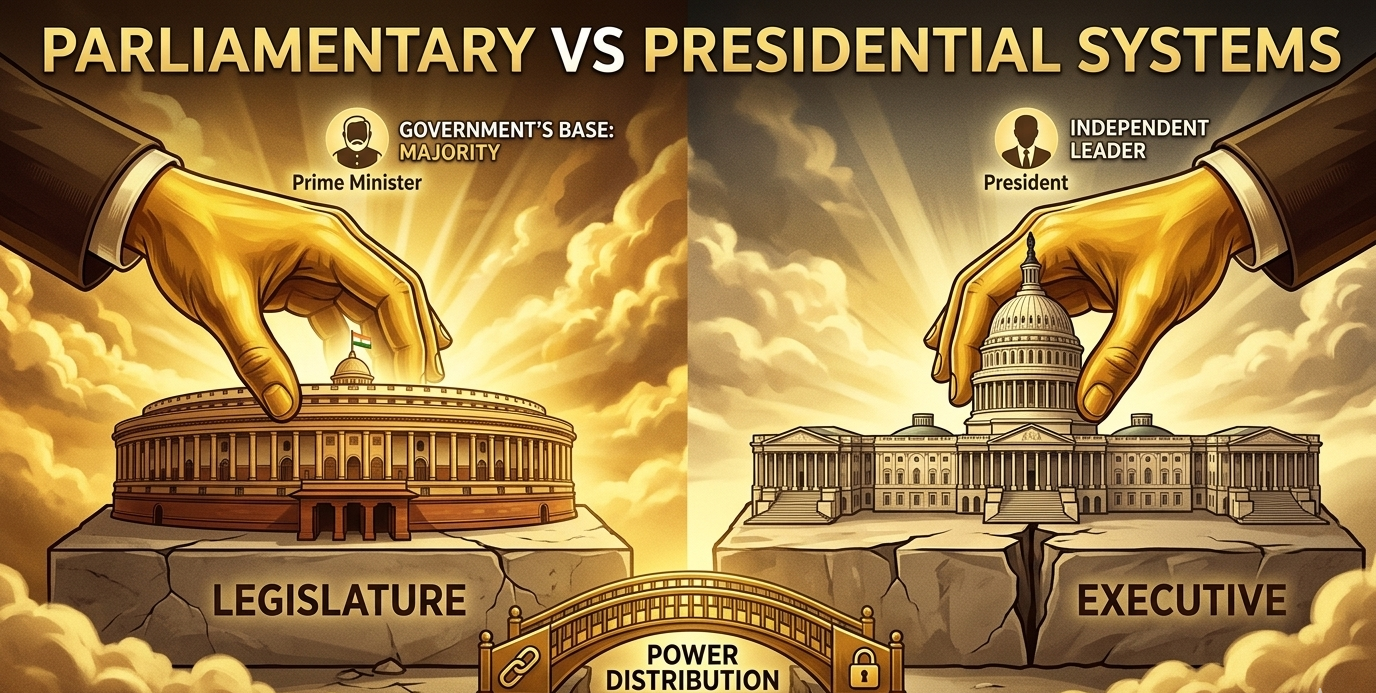
Difference between Parliamentary and Presidential System
Parliamentary and presidential systems differ in how executive power is structured and exercised. Parliamentary systems link the executive to the legislature, ensuring accountability but risking instability. Presidential systems separate powers, providing stability but often causing deadlock. These differences shape how effectively governments function in real-world political conditions.
2 నిమిషాల పఠనం →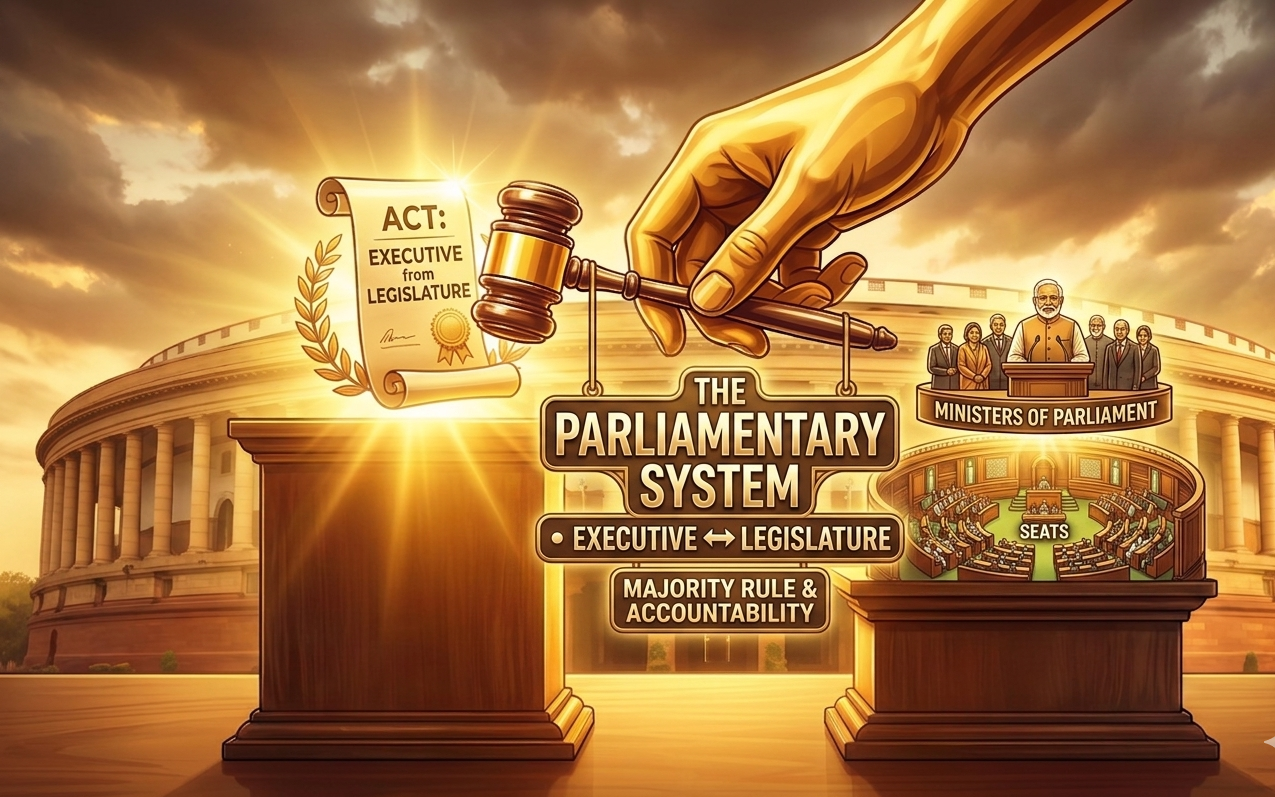
What is a Parliamentary System?
The parliamentary system links the executive directly to the legislature, ensuring real-time accountability.Governments survive only with majority support, making political stability crucial Core principles like collective responsibility and no-confidence motions keep power in check.Effective in strong majorities—but vulnerable to instability and dominance when misused.
2 నిమిషాల పఠనం →