Civil
The Statute of Limitation Only Bars the Remedy and Does Not Extinguish the Debt
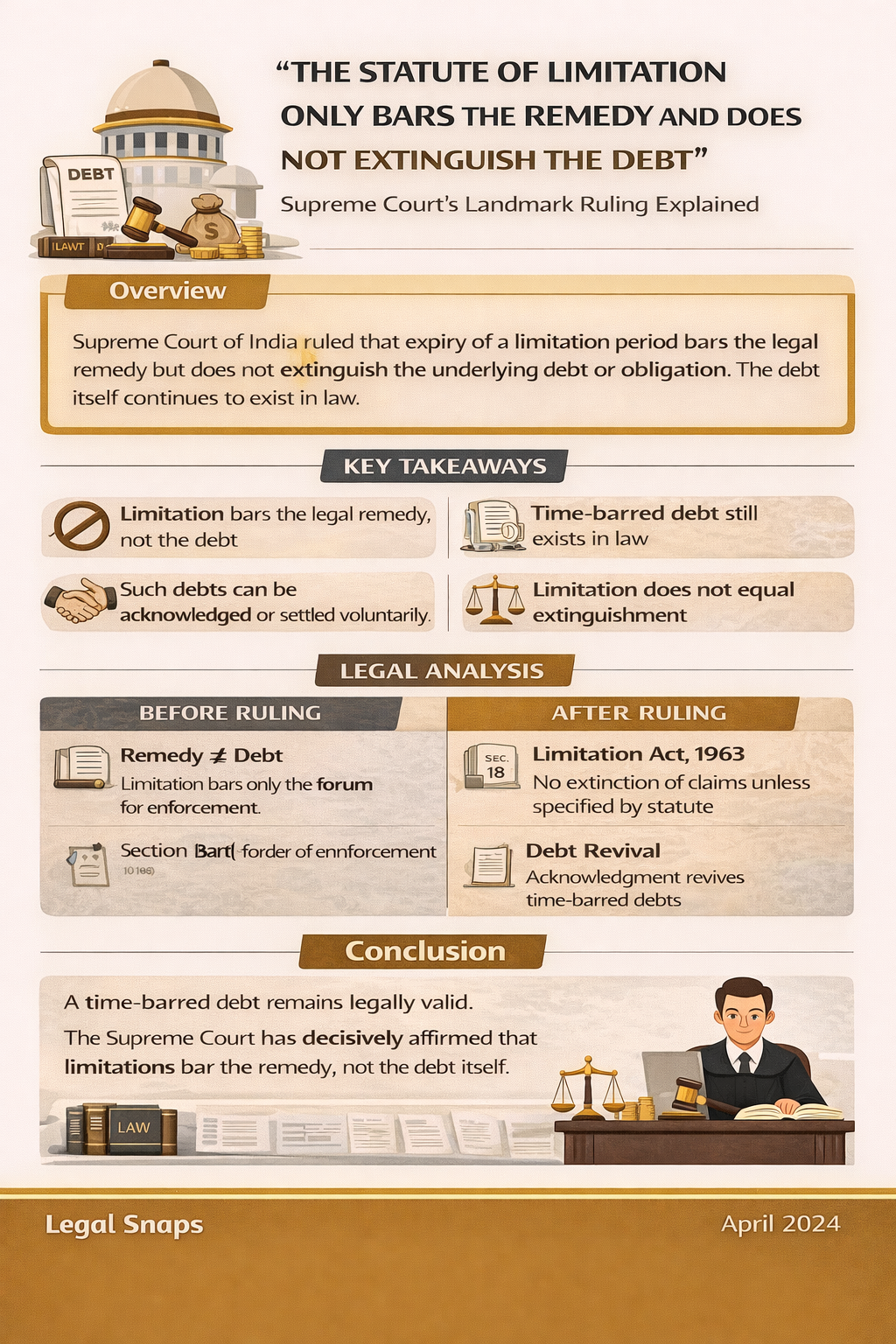
The Supreme Court clarifies that limitation bars the remedy, not the debt.A time-barred claim does not extinguish the underlying obligation.Expiry of limitation prevents suit it does not erase liability.Only express statutory extinguishment can destroy the right itself.
Overview
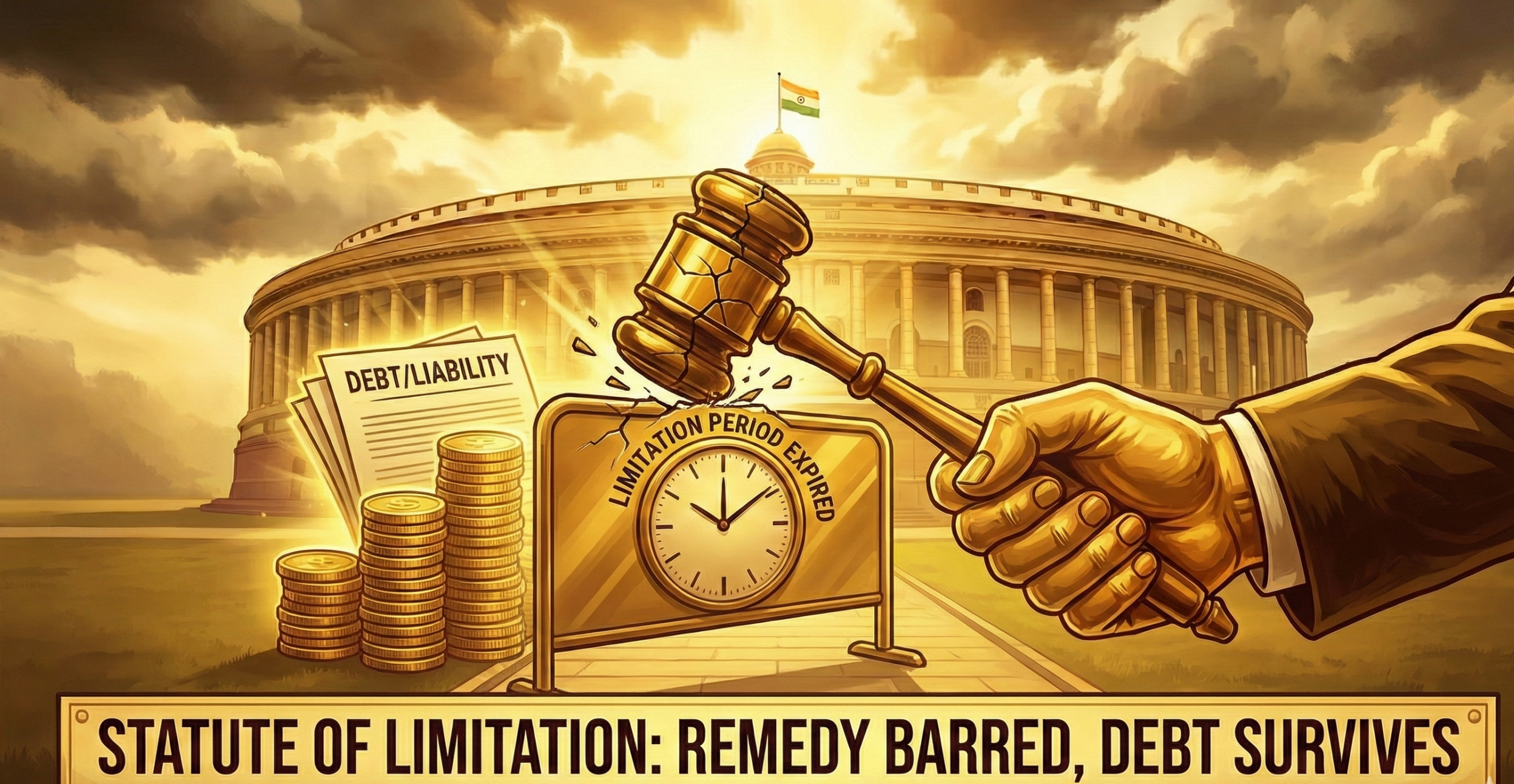
The Supreme Court has reiterated that the statute of limitation bars the legal remedy but does not extinguish the underlying debt or obligation. Expiry of limitation prevents enforcement through courts, yet the debt continues to exist in law unless expressly extinguished by statute. This clarification has significant implications across contract law, insolvency proceedings, and financial recoveries.
Key Points
- Limitation bars the remedy, not the right.
- Time-barred debts continue to exist legally.
- Debt may still be acknowledged or settled voluntarily.
- Extinguishment occurs only if statute expressly provides.
- Reinforces principles under the Limitation Act, 1963.
Analysis
The Court reaffirmed the distinction between a substantive right and the procedural remedy to enforce it. Limitation restricts the forum for enforcement but does not eliminate the underlying obligation.
Under the Limitation Act, rights are extinguished only where expressly stated, such as in limited property contexts. For money claims, expiry of limitation merely bars judicial recovery.
A time-barred debt may still be acknowledged or revived under statutory provisions. Voluntary payments remain legally valid, preserving contractual morality and accountability.
The ruling has implications for insolvency, banking disputes, and financial recoveries, ensuring that limitation serves procedural certainty without enabling unjust enrichment.
Conclusion
The Supreme Court has clarified that limitation laws are procedural shields, not substantive erasers. Expiry of limitation bars the remedy but does not extinguish the debt unless expressly provided by statute. A debt does not die with time — only the right to sue does.