Civil
Restoring Justice Through Restitution
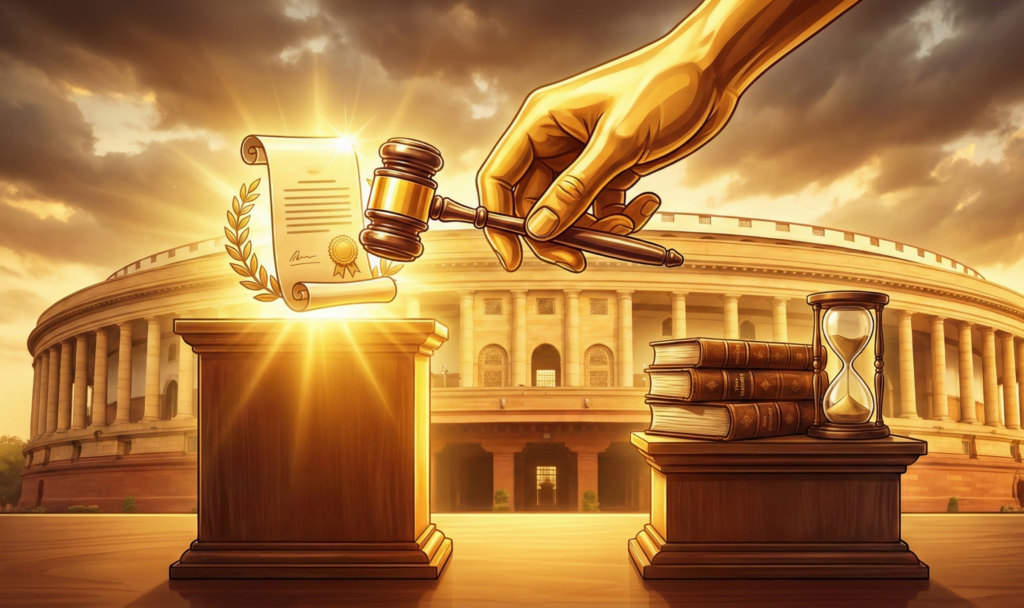
The Supreme Court has reaffirmed that restitution is a mandatory judicial duty when a decree is reversed.No party can retain benefits obtained from an erroneous order.Courts must restore parties to the position they would have occupied but for the mistake.Justice demands undoing unjust enrichment not merely correcting the record.

Overview
In Bhikchand v. Shamabai, the Supreme Court of India reaffirmed the doctrine of restitution, holding that no party should unjustly benefit from an act, order, or decree that is later set aside or reversed. The Court emphasized that restitution is not merely discretionary but a substantive obligation flowing from justice, equity, and good conscience.The ruling reinforces that courts must actively restore parties to the position they would have occupied but for the erroneous legal advantage.
Key Points
- Restitution is a mandatory judicial duty, not charity.
- No party can retain benefits from a reversed decree.
- Courts must undo unjust enrichment.
- Restitution applies irrespective of fault.
- Justice requires restoration of the original position.
Analysis
The Supreme Court reiterated the foundational doctrine that an act of the court shall prejudice no one. When a judgment, order, or decree is overturned, all consequential benefits flowing from it must also be reversed. Restitution ensures that legal correction is not merely theoretical but practical, restoring substantive justice between parties.
The Court clarified that restitution is not a matter of sympathy or discretion. It is a legal consequence that automatically follows reversal of an erroneous decree. A party cannot be permitted to profit from a judicial mistake, nor can procedural delays defeat the obligation to restore what was wrongly gained.
Addressing unjust enrichment, the judgment makes it clear that retaining benefits after reversal is inequitable and contrary to settled principles of fairness. Courts must intervene to neutralize unfair advantage and ensure neither party suffers due to a temporary or incorrect judicial determination.
Importantly, the Court confirmed that restitution can be ordered under inherent judicial powers and cannot be defeated by technical objections. Whether the case involves property, money decrees, possession orders, or interim relief later vacated, the guiding principle remains restoration of the original position.

Conclusion
The Supreme Court’s ruling in Bhikchand v. Shamabai powerfully reinforces that justice does not end with reversal of an erroneous order — it begins with restitution. By mandating restoration of benefits wrongly obtained, the Court has upheld a foundational principle of fairness: no litigant should gain from a mistake of law or judicial process.This judgment strengthens civil jurisprudence by ensuring that corrective justice is complete, meaningful, and equitable. Courts exist not only to decide disputes, but to restore balance when legal errors create unjust consequences.