Civil
Consumer Wins in Supreme Court: Chit Fund Payments Must Be Refunded
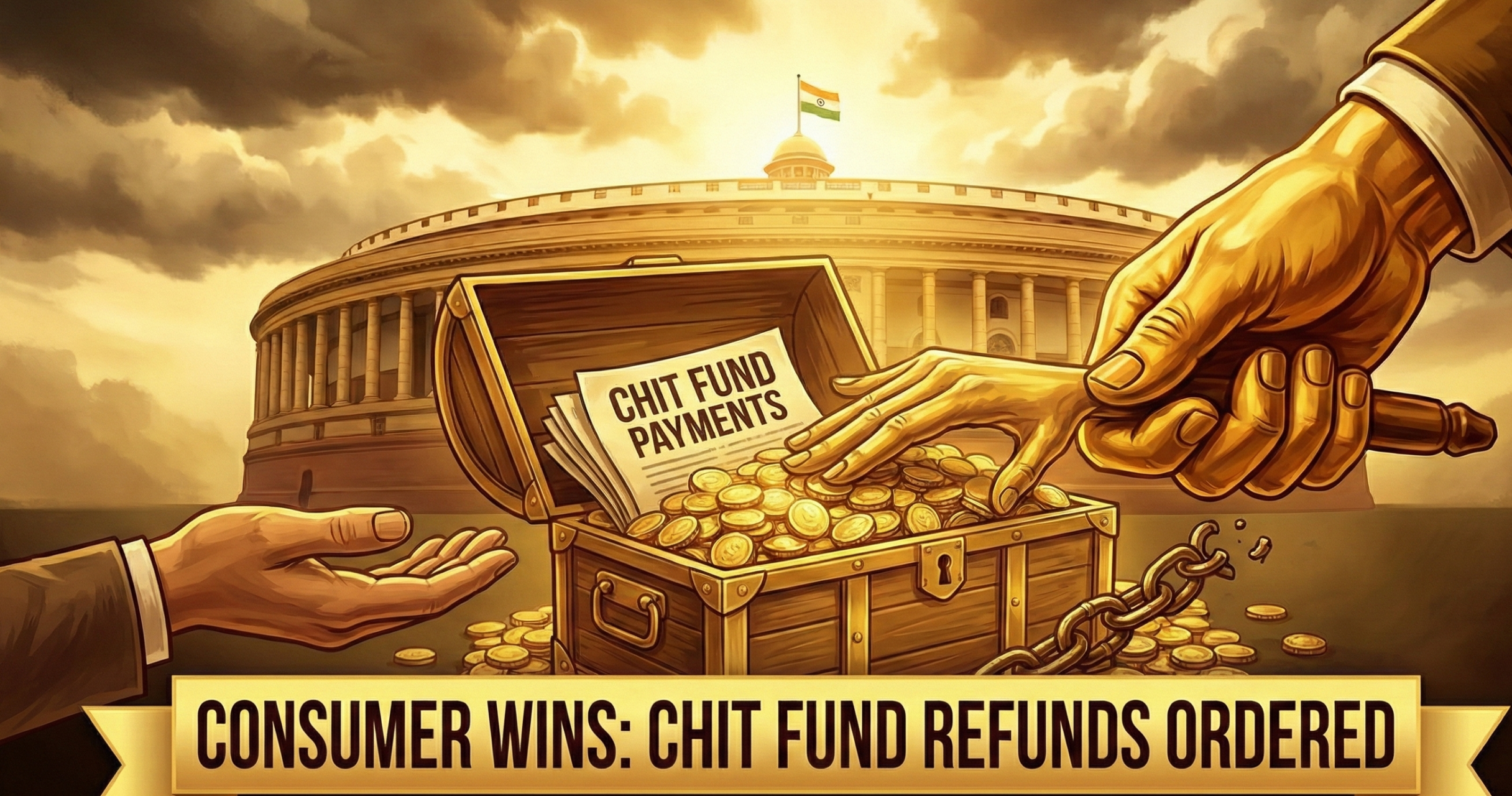
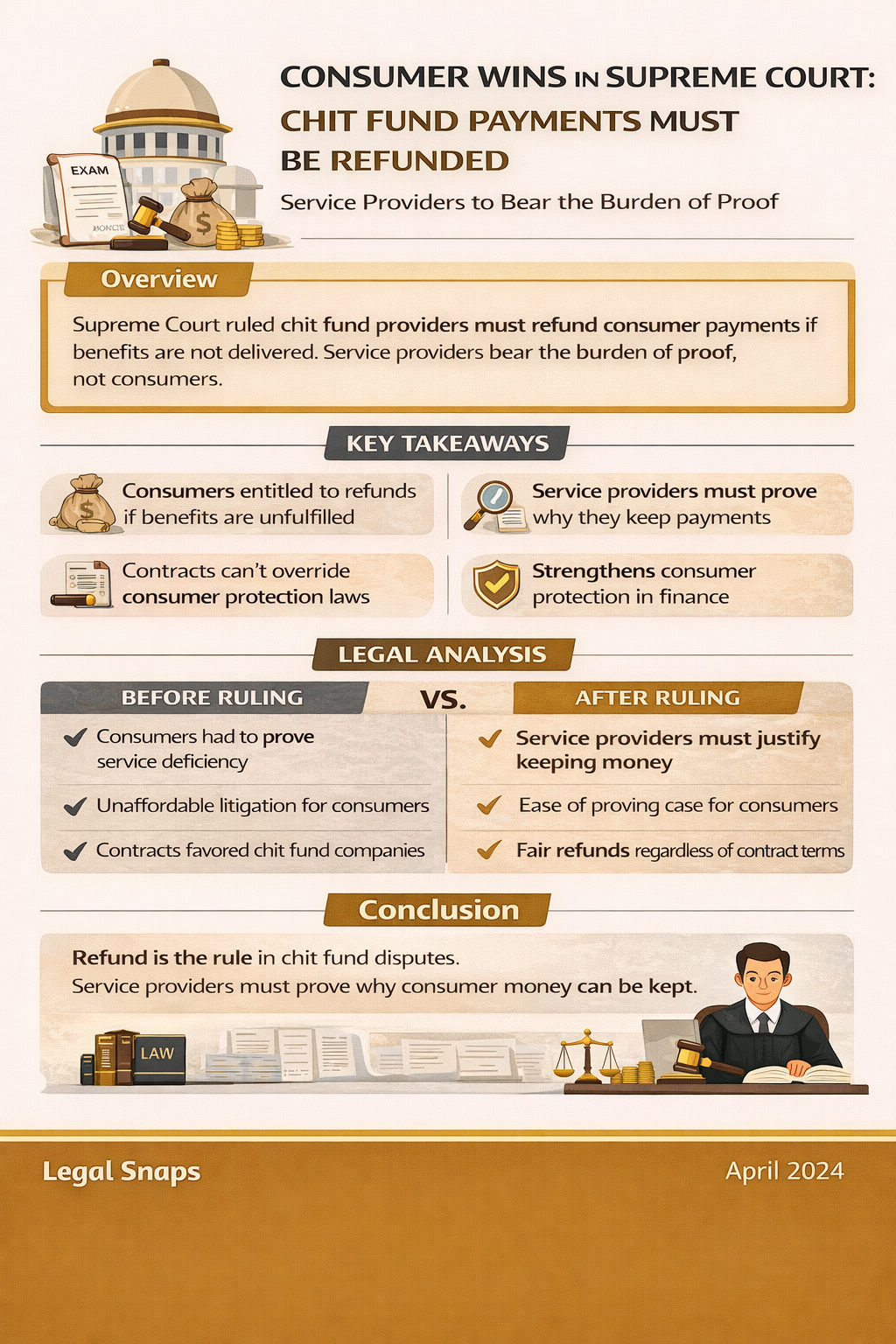
The Supreme Court has ruled that chit fund companies must refund consumer payments if promised benefits are not delivered.The burden of proof lies on the service provider not the consumer. Contractual clauses cannot override statutory consumer protection.Failure to refund amounts constitutes deficiency in service under consumer law.
Overview
The Supreme Court of India has delivered a consumer-friendly ruling holding that chit fund service providers are liable to refund amounts collected from consumers when the promised service or benefit is not delivered. The Court clarified that the burden of proof lies on the service provider—not the consumer—to justify retention of the money. This judgment significantly strengthens consumer protection jurisprudence in financial schemes, chit funds, and quasi-investment services where information asymmetry and power imbalance often disadvantage consumers.
Key Points
- Refund mandatory if promised benefits are not delivered.
- Burden of proof lies on service providers.
- Contractual clauses cannot override consumer rights.
- Deficiency in service attracts liability.
- Financial intermediaries cannot shift evidentiary burden.
Analysis
The Court recognised the unique nature of chit fund transactions, which involve recurring financial commitments based on trust. Consumers typically lack access to internal financial records, placing them at a structural disadvantage. Allowing service providers to rely on technical defences would undermine consumer justice and dilute statutory protections.
A central contribution of the judgment is the clear allocation of evidentiary burden. Once a consumer proves payment and non-receipt of the promised benefit, the service provider must demonstrate lawful entitlement to retain the funds. This aligns with established principles that the party in control of documentation and financial records bears the responsibility of explanation.
The ruling also reinforces that failure to deliver promised benefits amounts to deficiency in service under consumer protection law. Where misrepresentation or unfair contractual structuring is involved, liability becomes even stronger. The Court refused to allow standard-form agreements to shield exploitative financial practices.
By prioritising statutory consumer protections over one-sided contractual clauses, the Supreme Court has strengthened accountability in financial services. The decision promotes transparency, deters exploitative schemes, and lowers litigation barriers for aggrieved consumers.
Conclusion
The Supreme Court has made it clear that chit fund operators and financial service providers cannot retain consumer money without lawful justification. Refund is the rule when promised services fail. By placing the burden of proof squarely on service providers, the judgment reinforces consumer rights, strengthens financial accountability, and advances the protective purpose of consumer law. When services fail, it is the service provider—not the consumer—who must explain why the money should not be returned.